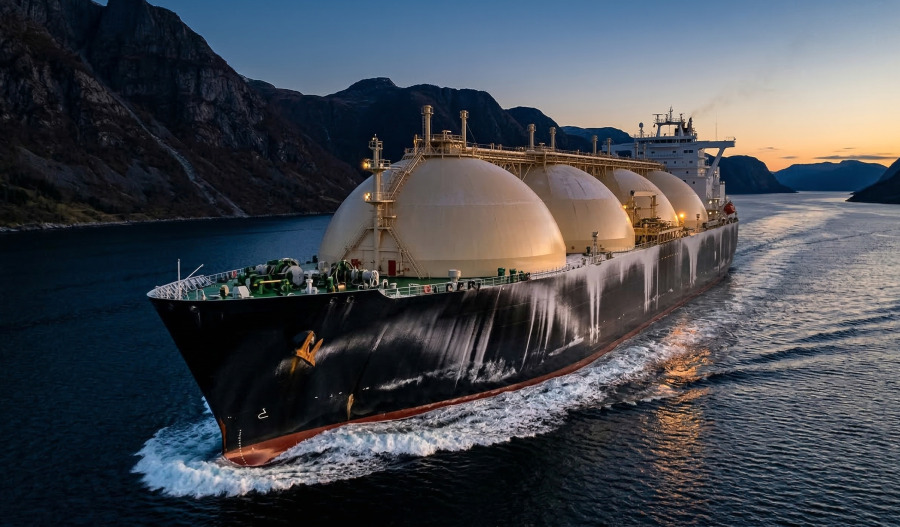
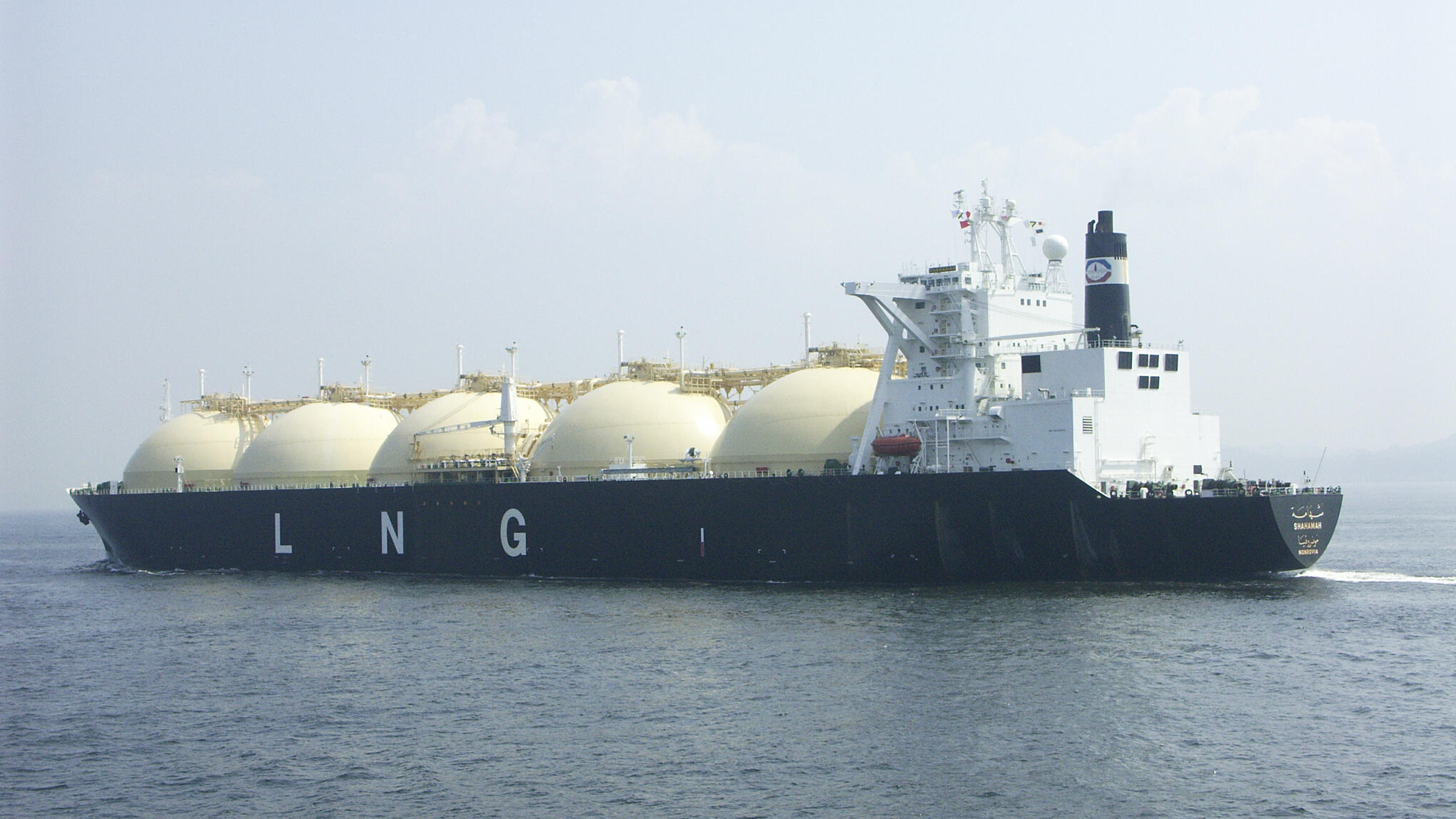
While several Gulf nations, along with India, have declared force majeure on oil and gas shipments since the Iran war started – a legal move that excuses them from supply obligation due to events beyond their control – United States LNG exporters could be major beneficiaries of global disruption.
Analysis by Energy Flux estimates that U.S. LNG exporters could generate about $4 billion in windfall profits in the first month of the disruption alone.
The surge of U.S. LNG exporters is currently experiencing follows a complete halt on 2 March 2026 in Qatari LNG production, which typically accounts for around 20% of global supply.
Gas prices soared immediately following the country’s halt of gas production, and global gas markets are expected to experience shortages for weeks, if not longer.
Highest bidder
Interestingly, U.S. producers – which exported around 108 million metric tons of LNG last year – don’t have the capacity to increase LNG production beyond current levels; they’re currently maxed out.
However, given that their customer contracts don’t have fixed destinations - a unique feature of the U.S. LNG industry - they have the ability to reroute volume to where the demand is greatest.
In other words, while U.S. LNG cannot replace lost supply from Qatar, buyers who really need the gas and are willing to pay a high enough price will end up getting it.
U.S. producers deployed this playbook back in 2022 - after Russia’s invasion of Ukraine – which suddenly left Europe high and dry.
Fast forward to 2026 and it’s understood that at least nine U.S. LNG cargoes originally bound for Europe have already been diverted to Asia to capitalise on higher spot prices.

US$33bn within four months
Assuming the current supply situation continues to deteriorate, Seb Kennedy, global gas and LNG analyst and founder of Energy Flux, recently told Al Jazeera that U.S. LNG windfall profits could reach US$33 billion above the pre-Iran average within four months.
Over eight months, Kennedy expects that figure to rise to $108 billion.
“The lack of visibility over the likely duration of force majeure, and of the broader military conflict, is injecting extreme uncertainty into global oil, gas and LNG prices,” said Kennedy.
While profits from a single U.S. LNG cargo shipped to Europe doubled to over $50 million by early March; diversions to Asia remain more enticing as the inter-basin price spread widens.
There’s clear evidence that global gas benchmarks have decoupled; the European TTF (Title Transfer Facility) surged as much as 40–49%, while the Asian JKM (Japan Korea Marker ) spiked nearly 60% to over $25/MMBtu.
Given that these gains largely come at the expense of European consumers, Kennedy notes, as Europe is the main destination for U.S. LNG and remains heavily reliant on those supplies to refill gas storage and ensure winter supply security.
However, while Asian gas prices are more enticing for U.S. LNG producers, Europeans appear to be in no real rush to buy all the LNG they can get their hands on, especially given the greater availability of U.S. LNG on the spot market and EU methane regulations.
Major US producers
Meantime, while the disruption has severely damaged Qatar's reputation for reliability, major U.S. producers like Cheniere Energy (NYSE: LNG), Venture Global (NYSE: VG) Sempra (NYSE: SRE), and privately owned Freeport LNG are positioned to benefit from the acute contraction in global supply.
Shares of Cheniere and Venture Global, the two biggest U.S. producers, surged about 7% and nearly 24%, respectively, after Qatar’s production went offline.
“With the largest available incremental LNG capacity in the world, the United States will play a critical role during this historic disruption in the market,” Venture Global CEO Michael Sabel recently told analysts.
Meantime, while it’s unclear how long the shutdown in Qatar will last, production can only restart when the Strait of Hormuz is open to traffic, and the LNG can be loaded onto ships.
However, some analysts envisage Russian LNG entering the discussion if there’s a prolonged loss of supply from Qatar.
“The reintroduction of Russian volumes, however, hinges on lifting all sanctions and Europe buying most Russian LNG to support shipping logistics,” noted Jan-Eric Fahnrich, a senior analyst at Rystad Energy.
“This is very unlikely because it is diametrically opposed to U.S. national interests, he concluded, noting that Russian supply would undermine U.S. expansion plans.