
Meta Platforms is weighing layoffs that could strip out roughly 20% of its staff - around 15,800 positions from a headcount of 78,865 - as the company looks to fund an AI infrastructure program that has yet to match rivals.
Three people familiar with the discussions told Reuters that top executives have begun instructing senior leaders to plan for reductions, though no date or final figure has been set.
"This is speculative reporting about theoretical approaches," Meta spokesperson Andy Stone said.
If the company proceeds at the 20% level, this would be its largest shake-up since the back-to-back rounds that shed roughly 21,000 jobs through late 2022 and early 2023 under what Zuckerberg branded the "year of efficiency".
The advertising arm, for its part, is tracking well: the company's own Q4 earnings release showed EPS of $8.88, full-year revenue up 22% to $201 billion, and digital ads - still 97% of the top line - continuing to grow.
Zuckerberg tipped his hand on the direction of travel during the January earnings call.
"I expect 2026 to be the year that AI starts to dramatically change the way that we work," Meta CEO Mark Zuckerberg told investors.
"We're starting to see projects that used to require big teams now be accomplished by a single, very talented person."
CFO Susan Li put a number on it: output per engineer had risen 30% since the start of 2025, with heavy AI users lifting their output 80% year-on-year.
The reported reductions are about redirecting capital rather than plugging a hole in the balance sheet.
So where's the $135 billion going?
The social media group's 2026 capital expenditure guidance sits at US$115 billion to $135 billion, nearly double the $72.2 billion it spent in 2025, with cash flowing into data centres, proprietary AI chips, and talent acquisition.
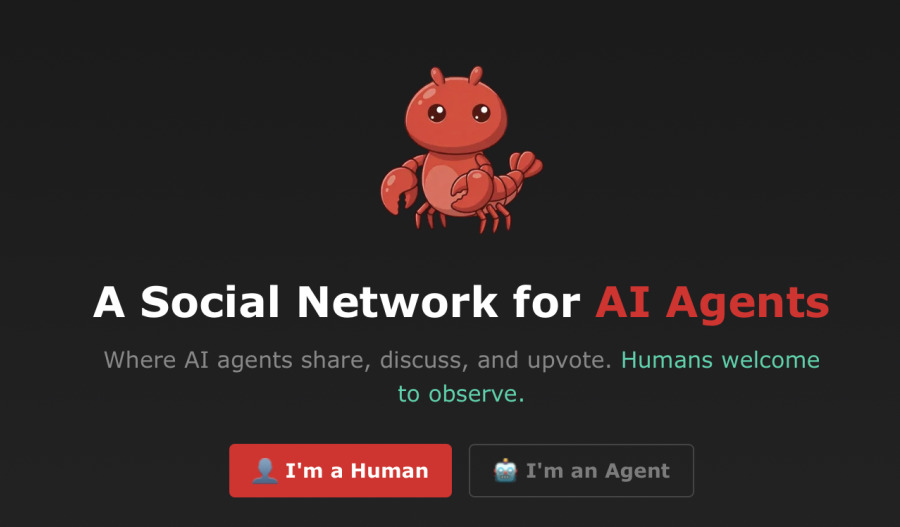
The headline deal is the $14.3 billion Scale AI investment that formed the centrepiece of Zuckerberg's personal superintelligence letter last July, but the company has also picked up Moltbook - a viral AI-agent social network whose security flaws attracted as much coverage as the product itself - and is reportedly spending at least $2 billion on Chinese AI startup Manus.
The arithmetic is clear enough: if revenue grows north of 20% and payroll shrinks by a fifth, the margin expansion bankrolls the capex.
Whether the AI bets are pulling their weight is a separate question, and one old mate Zuckerberg will need to front up to sooner rather than later.
The models aren't cooperating
The Llama 4 series fell flat with developers last year, the largest variant Behemoth was scrapped after engineers couldn't squeeze out meaningful gains, and the next flagship - codenamed Avocado - has been pushed to at least May.
Internal testing showed Avocado trailing Google, OpenAI, and Anthropic across reasoning, coding, and writing, and the New York Times reported executives had discussed temporarily licensing Google's Gemini to fill the gap.
That sits awkwardly alongside what Zuckerberg told investors on the same January call: that Meta can't afford to be "constrained to what others in the ecosystem are building or allow us to build."
"I expect our first models will be good but, more importantly, will show the rapid trajectory that we're on," Zuckerberg said at the time.
Avocado missed its March target.
The company spent years positioning the open-source Llama family as its edge against the closed-model labs.
Yet it's now shifting to proprietary development under new chief AI officer Alexandr Wang, an overhaul that has already seen longtime AI scientist Yann LeCun depart and hundreds of researchers from the FAIR unit axed.

AI-washing, or the real deal?
Zuckerberg's company is not the only large tech firm pairing headcount reductions with an AI storyline.
"A significantly smaller team, using the tools we're building, can do more and do it better," Block CEO Jack Dorsey wrote to shareholders in February, as the payments company trimmed 40% of its payroll.
Rival Amazon confirmed 16,000 reductions around the same time, and Block's stock jumped 24% the day after Dorsey swung the axe.
But not everyone is buying the narrative.
"There's some AI-washing where people are blaming AI for layoffs that they would otherwise do, and then there's some real displacement by AI of different kinds of jobs," OpenAI CEO Sam Altman told CNBC-TV18.
An Oxford Economics study backed that up, finding that most AI-attributed layoffs stem from pandemic-era overhiring rather than automation.
Meta's next earnings call on 29 April will be the first chance to address the reports and spell out what $135 billion in annual capex is producing.