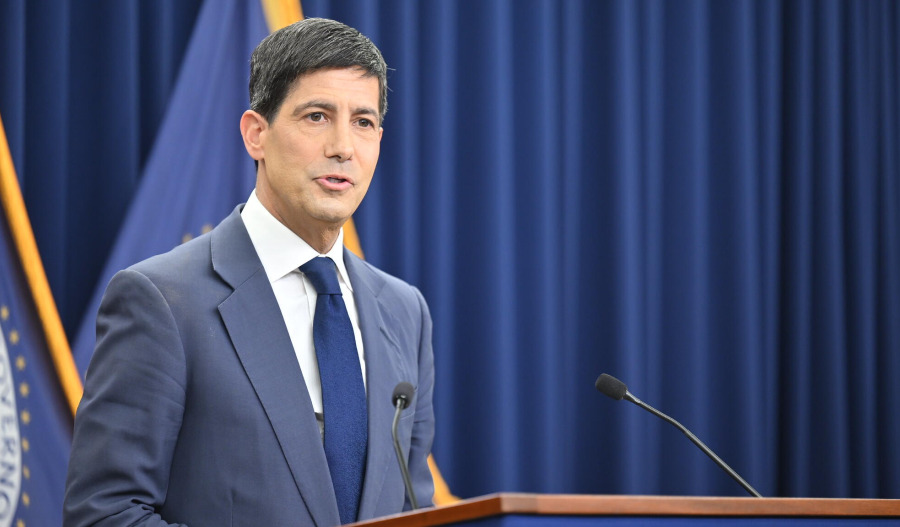
Federal Reserve Chair Kevin Warsh on Tuesday reaffirmed his commitment to overhauling the United States central bank's approach to monetary policy, describing inflation as an "unfair burden" on households and businesses and pledging what he called a "regime change" at the Federal Reserve.
Warsh, who took office two months ago, said the central bank has already begun implementing broad reforms, including the creation of five internal task forces to review key areas of the Federal Reserve's operations.
The groups will examine the Fed's communications strategy, technology, balance sheet, economic data collection and analysis, and its framework for assessing inflation.
“In six weeks, we have caused, I think, a sea change in new thinking-the beginning of a set of reforms that are going to be put in place across at least five dimensions in monetary policy,” he said.
“We made a lot of progress in six weeks, but I think it’s important to use this opportunity wisely.”
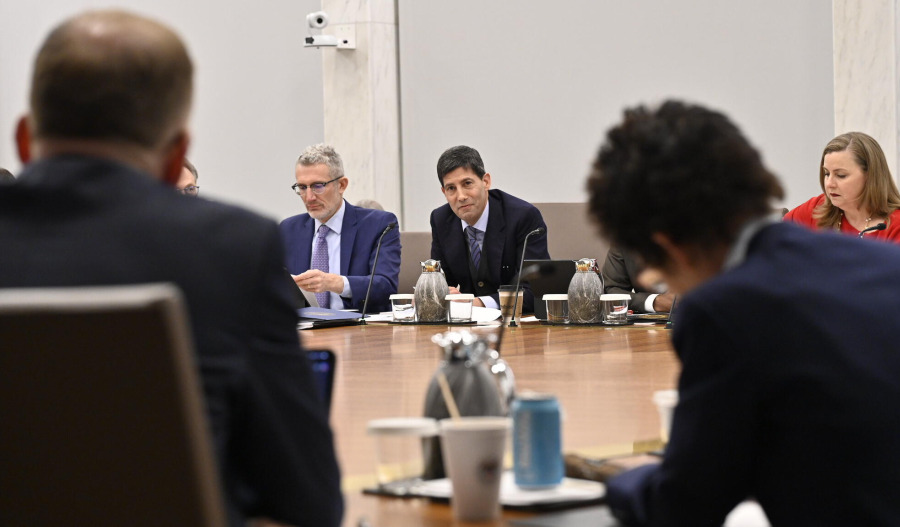
Fed chairs are required to testify before Congress twice each year to present the central bank's monetary policy report and answer lawmakers' questions.
Addressing lawmakers, Warsh said the current period represents a pivotal moment for the institution.
“Today we are at a hinge point in history. It’s up to all of us to meet this moment,” said Warsh in his testimony.
He reiterated that maintaining price stability remains the Federal Reserve's primary objective.
“The Fed’s number one objective is to get monetary policy right - or as near to it as we possibly can. That is our clear and constant aim, the star we steer by,” he added. “And if we get policy right - and we will - the inflation surge of the last five years will be a thing of the past.”
Warsh inherited a Federal Reserve that has struggled to return inflation to its longstanding 2% target after price growth accelerated sharply from 2021.

He again criticised the central bank's flexible average inflation targeting framework introduced in 2020, which allowed inflation to temporarily run above target following periods of below-target inflation.
“That central bank wasn’t the first central bank to ask for a little more inflation and end up with a lot more. It was a mistake,” he said. “The framework did not succeed in its objectives, and I am pleased that before my arrival, that my predecessors took that and cast it aside.”
Warsh also stressed that while energy prices and global events can influence inflation in the short term, sustained inflation is ultimately driven by monetary policy.
“While monthly price fluctuations are inevitable - especially in an unsettled world - underlying inflation over longer time horizons is determined largely by monetary policy,” he said.
“The members of our Committee have no tolerance for persistently elevated inflation. And we share a resolute commitment to restoring price stability.”
Despite his concerns about inflation, Warsh said the U.S. economy continues to expand at a solid pace, highlighting business investment as one of its strongest features.
He pointed to the rapid construction of AI data centres and growing demand for artificial intelligence infrastructure as major drivers of capital spending.
“The rapid pace - which appears to be accelerating - reflects, in large part, the construction of data centers and the immense demand for the AI-related equipment and software that fill them,” he said.
Warsh added that artificial intelligence is likely to become an increasingly normal part of business investment across the economy.
“We don’t know the extent to which the economy will benefit from the AI buildout,” he added. “Yet it seems inevitable that what is now called ‘AI investment’ will soon be called just ‘investment.’”
He has previously argued that an AI-driven productivity boom could prove disinflationary, although that view remains debated among economists and other Federal Reserve officials.
Warsh said the five internal task forces represent the beginning of "a new chapter at the Federal Reserve" and are intended to modernise how the institution operates.