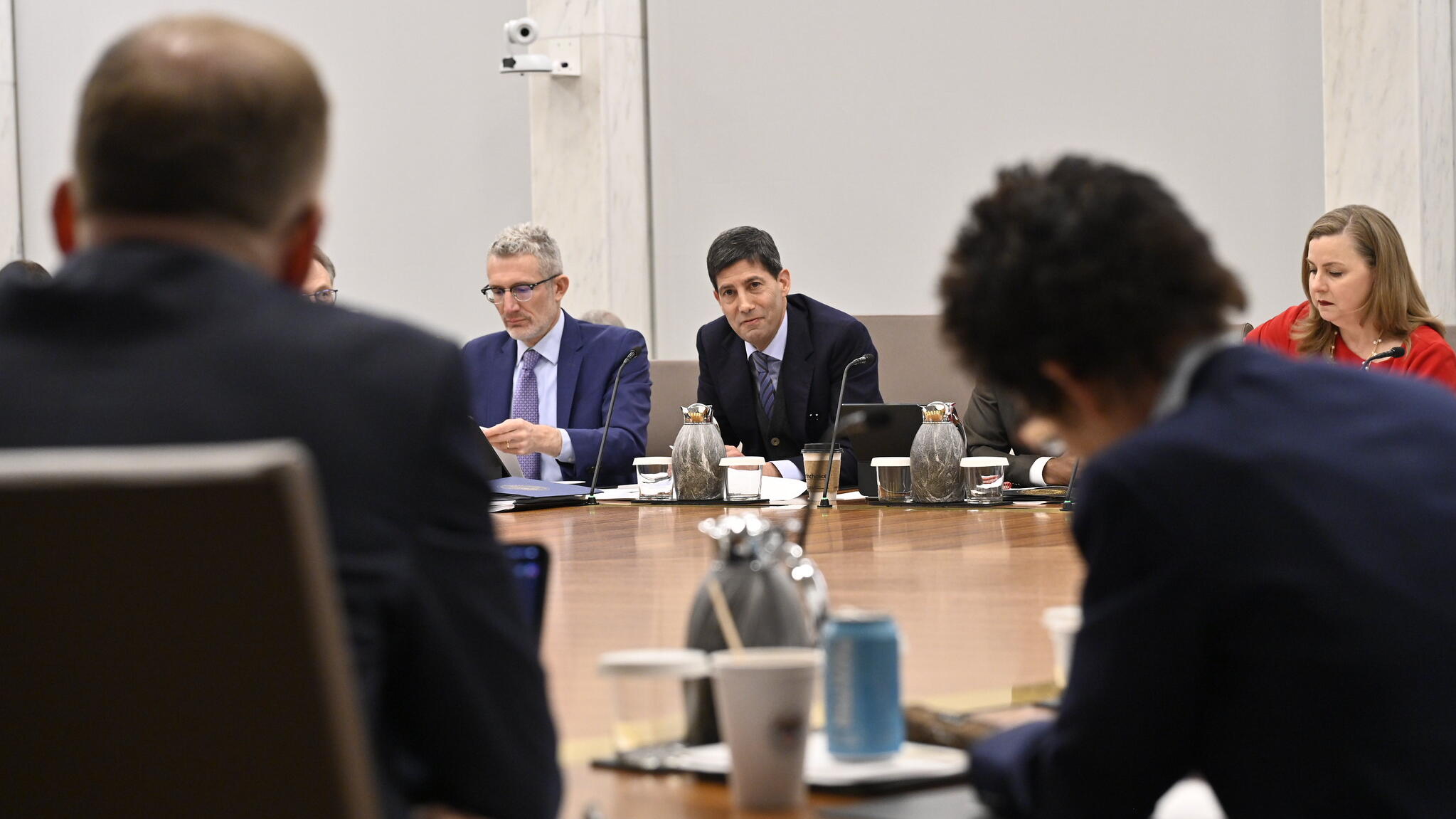
Federal Reserve officials were divided over the direction of United States interest rates at their June policy meeting, with policymakers debating whether easing inflation could justify rate cuts or whether persistent price pressures would require further tightening, according to minutes released on Wednesday (Thursday AEST).
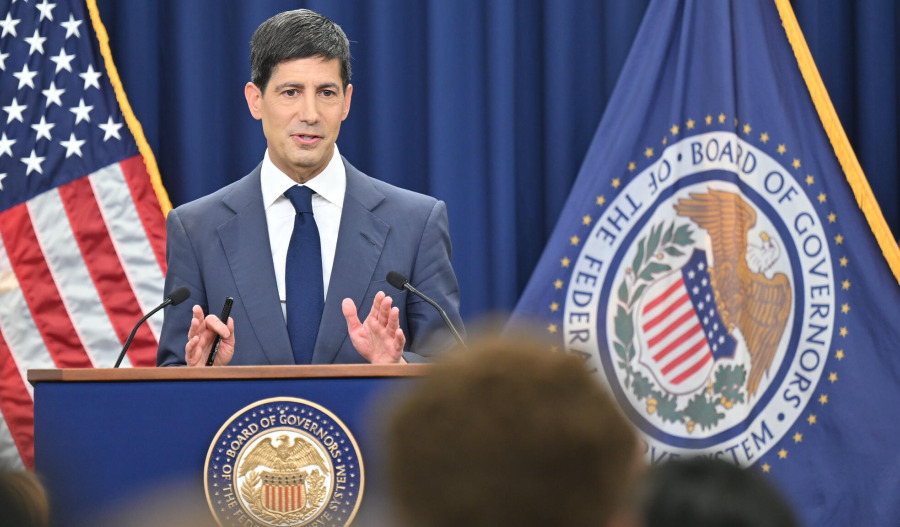
The 16-17 June meeting was the first chaired by Federal Reserve Chairman Kevin Warsh, with the Federal Open Market Committee (FOMC) unanimously voting to leave the benchmark federal funds rate unchanged at 3.5%-3.75%, where it has remained throughout 2026.
Speaking after the meeting, Warsh described the internal debate as a "family fight", although the minutes revealed no signs of significant disagreement beyond differing economic outlooks.
The committee's closely watched "dot plot" of individual rate projections, which did not include Warsh's forecasts, continued to point narrowly toward one interest rate hike this year, followed by one rate cut in each of the following two years.
According to the minutes, many officials believed the federal funds rate would finish the year at or slightly below its current level.
“Many participants indicated that the appropriate level of the federal funds rate would be within or slightly below the current target range at the end of this year.”
However, a similarly large group anticipated higher rates would be needed.
“Many other participants, however, assessed that the appropriate level of the federal funds rate would be above the current target range at the end of this year.”
Officials acknowledged inflation had remained elevated over the past year, initially driven by President Donald Trump's tariffs before being compounded by the conflict in the Middle East.
While falling energy prices have recently eased some pressures, policymakers remained cautious about the inflation outlook.
The minutes said participants generally expected inflation to remain elevated in the near term before moderating as tariff effects, higher energy costs and supply disruptions linked to the Strait of Hormuz gradually faded.

“Participants judged that the risks to the inflation outlook were still tilted to the upside.”
The committee also discussed the growing influence of artificial intelligence on inflation, noting strong investment in AI infrastructure was expected to continue supporting demand for technology products and electricity.
“Ongoing strong demand for AI infrastructure would likely sustain upward pressure on prices for technology products and electricity.”
Warsh has previously argued that while AI may temporarily lift demand, productivity gains should ultimately prove disinflationary.
Following the meeting, the FOMC issued a significantly shorter policy statement than usual, removing much of the standard language describing economic conditions and the committee's policy framework.
Several officials supported the move toward more concise communications.
“A number of participants noted that it was an opportune time to consider significant changes to the FOMC’s postmeeting statement.”
“A majority of participants remarked that they saw advantages in shortening the statement.“
The committee also removed language that had previously signalled a bias toward policy easing, with the minutes noting:
“Most participants emphasised that they preferred not to repeat the Language.“
The minutes were released less than two months after Warsh took over as Federal Reserve chair following his nomination by President Donald Trump.
Since assuming the role, Warsh has pledged to overhaul several aspects of the central bank's operations, including its communications strategy, and announced the formation of five internal task forces to review key areas of the Fed's work.