United States benchmark indices extended declines on Thursday (Friday AEDT), as investors weighed escalating geopolitical tensions in the Middle East alongside signals that interest rates may remain elevated for an extended period.
The Dow Jones Industrial Average fell 0.4% to 46,021.4, and the S&P 500 declined 18.2 points, or 0.3%, to 6,606.5, both marking their lowest closing level since 21 November 2025. The Nasdaq Composite dropped 61.7 points, or 0.3%, to 22,090.7, its lowest level since 20 November.
Energy markets were mixed, with U.S. West Texas Intermediate crude futures easing 0.2% to settle at US$96.14 per barrel. In contrast, Brent crude, the global benchmark, rose 1.2% to $108.65 per barrel, its highest close since July 2022.
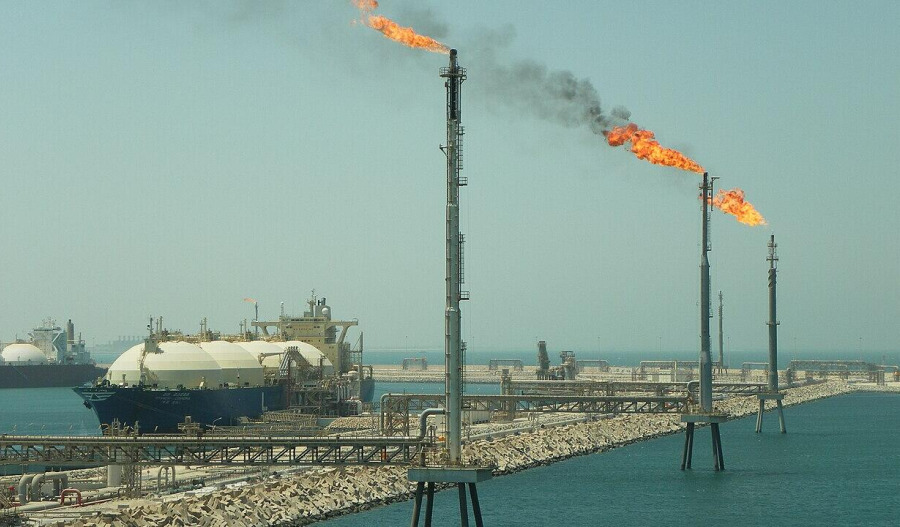
Oil market volatility comes as shipping through the Strait of Hormuz remains severely disrupted. In response, leaders from the United Kingdom, France, Germany, Italy, the Netherlands and Japan said in a joint statement that they stand ready to support efforts to ensure safe passage through the critical energy corridor.
Investor sentiment was further pressured by comments from Federal Reserve Chair Jerome Powell, who warned that the economic outlook remains uncertain amid the ongoing U.S.-Israeli conflict with Iran, which has driven a surge in energy prices and heightened inflation risks.
As widely expected, the Federal Reserve left interest rates unchanged at its latest meeting.

Market pricing indicates that traders are increasingly resigned to a prolonged period of elevated borrowing costs.
According to the CME Group FedWatch Tool, markets are now pricing a 43.1% chance of a rate cut by January 2027.
Global central banks are adopting a similarly cautious stance. Both the Bank of England (BoE) and the European Central Bank (ECB) kept rates on hold, citing ongoing uncertainty linked to geopolitical tensions and their potential inflationary impact.
In corporate news, Micron Technology shares fell 3.8%, despite the memory chipmaker projecting third-quarter revenue above expectations after reporting a sharp rise in second-quarter results, driven by strong demand for memory chips.
Tesla dropped 3.2% after the National Highway Traffic Safety Administration intensified its investigation into approximately 3.2 million vehicles equipped with the company’s Full Self-Driving (FSD) system, amid concerns the technology may fail to adequately detect hazards in low-visibility conditions.
On the bond markets, yields were mixed. The benchmark 10-year Treasury yield eased 0.4% to 4.249%, while the 2-year yield rose 0.4% to 3.795%.