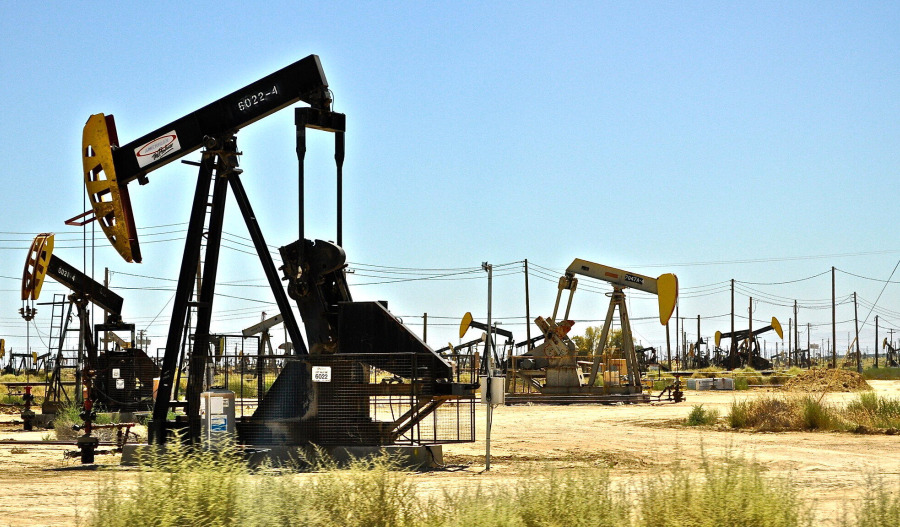
United States benchmark averages finished lower on Monday (Tuesday AEST) as a sharp rise in oil prices stoked inflation concerns and increased expectations that the Federal Reserve could keep monetary policy tighter for longer.
The Dow Jones Industrial Average fell 374.1 points, or 0.7%, to 53,185.9, while the S&P 500 declined 25.6 points, or 0.3%, to 7,686.1. The Nasdaq Composite slipped 31.5 points, or 0.1%, to 26,370.9.
Oil prices surged as the conflict in the Middle East intensified, weighing on risk appetite and pushing U.S. Treasury yields higher.
Investors were also assessing Federal Reserve Chair Kevin Warsh's hawkish remarks at the Jackson Hole Symposium on Friday.

Meanwhile, Iranian President Masoud Pezeshkian said Tehran remained committed to finding a negotiated solution to the conflict, following several days of renewed airstrikes and escalating tensions after U.S. President Donald Trump imposed additional economic sanctions.
The prolonged standoff and continued disruption around the Strait of Hormuz have heightened concerns that higher energy prices could feed into broader inflationary pressures, potentially prompting the Fed to raise interest rates as early as September.
Financial markets were pricing in a 65.4% probability of a 25-basis-point rate increase at the Fed's September policy meeting, according to CME Group FedWatch Tool.
Among individual stocks, GameStop rose 2.9% after the company said it would fund approximately 27% of a previously announced $1.4 billion debt exchange with cash on hand rather than issuing new shares, helping to avoid further dilution.
On the bond markets, the 10-year Treasury yield rose 0.5% to 4.754%, while the two-year yield fell 0.3% to 4.346%.