Oil prices climbed more than 3% on Monday after the United States attacked an Iranian island in the Strait of Hormuz and Tehran retaliated, as the conflict entered its sixth month.
By 3:50 pm AEST (5:50 am GMT), Brent crude futures had risen $2.81, or 3.2%, to $90.91 a barrel, while U.S. West Texas Intermediate (WTI) crude gained $2.54, or 3.1%, to $85.94 a barrel.
U.S. forces struck two launchers on Iran's Larak Island in the Strait of Hormuz on Sunday, marking the first known American strikes against Iran since late July.
Iran responded by attacking two U.S. air bases in Jordan, Iranian media reported on Monday, citing the Islamic Revolutionary Guard Corps.
ING commodities strategists noted that the key question was whether the latest attacks would trigger further strikes and discourage shipping companies from using the Strait of Hormuz.
"Obviously, the key is whether this ignites further rounds of strikes from both sides, and whether it leaves shippers hesitant to navigate the Strait of Hormuz.

"Oil producers in the region have grown more comfortable shuttling crude through the key chokepoint in recent weeks.
"Reports have 6-8m b/d transiting the strait, although we assume an average of 5m b/d. Further escalation could put these flows under renewed pressure."
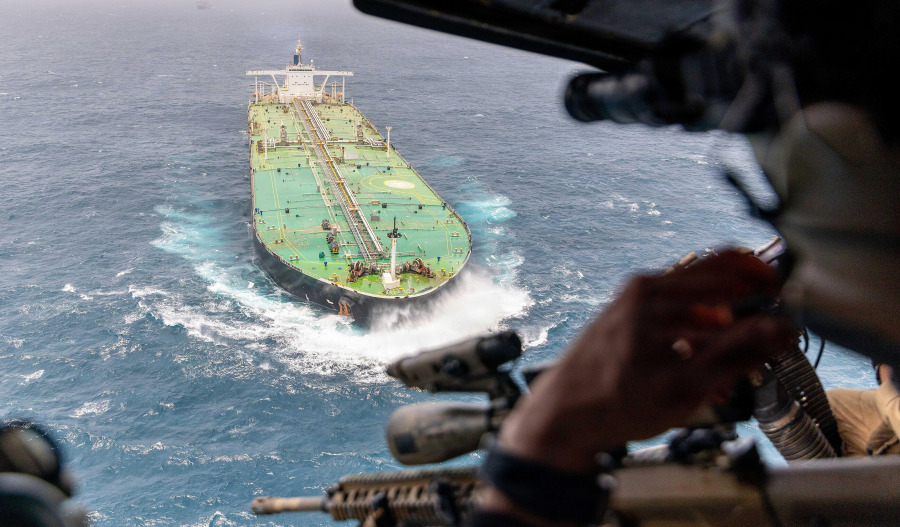
The number of visible commodity vessels passing through the strait over the weekend fell to five a day, Reuters reported, citing shipping data.
Meanwhile, the United Kingdom Maritime Trade Operations said on Sunday that a tanker was struck by a projectile while travelling inbound through the Strait of Hormuz on Saturday.
U.S. Treasury Secretary Scott Bessent also told Reuters on Sunday that Washington was likely to impose new secondary sanctions on Iran each week.
President Donald Trump said on Sunday that oil from a recently announced deal with Venezuela would be used to replenish the U.S. Strategic Petroleum Reserve, which has fallen close to its lowest level in 44 years.