Major United States equity benchmarks closed mixed on Monday (Tuesday AEDT), as rising oil prices and escalating geopolitical tensions offset optimism surrounding potential diplomatic progress with Iran.
The Dow Jones Industrial Average edged higher, gaining 49.5 points or 0.1% to finish at 45,216.2. In contrast, the S&P 500 fell 25.1 points or 0.4% to 6,343.7, while the Nasdaq Composite declined 153.7 points or 0.7% to 20,794.6.
Investor sentiment was weighed down by a continued surge in energy prices. West Texas Intermediate crude futures rose 3.3% to settle at US$102.88 per barrel, marking their highest close since July 2022.
Meanwhile, Brent crude futures climbed 2% to US$107.39 per barrel and remain on track for their largest monthly gain on record, with a rise of approximately 47.4% in March.
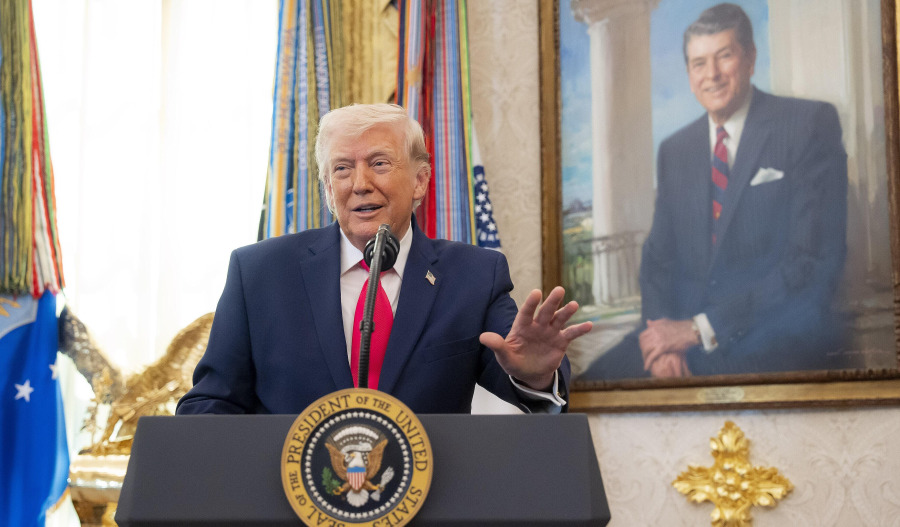
Geopolitical developments remained a key driver. Donald Trump said the United States was engaged in “serious discussions” with what he described as a “more reasonable regime” in Iran, raising hopes for a potential resolution to the conflict.
However, he reiterated that Tehran must reopen the Strait of Hormuz or face possible U.S. strikes on critical infrastructure, including oil facilities and power plants.
In a post on Truth Social, Trump stated that “great progress has been made” in talks aimed at ending military operations, but warned that failure to reach a deal “shortly” could result in the U.S. targeting key Iranian assets, including oil wells and the Kharg Island export hub.
The remarks followed earlier comments from the president suggesting Tehran had accepted most elements of a U.S. 15-point plan and agreed to allow additional oil shipments through the Strait of Hormuz.

Monetary policy also remained in focus, with Jerome Powell noting in a speech that inflation expectations remain “well anchored beyond the short term”, despite rising energy prices.
He acknowledged that the Federal Reserve may eventually need to respond but noted that policymakers are not yet in a position to act, given the uncertainty surrounding the economic impact.
On the corporate front, asset management stocks advanced after the U.S. Department of Labor issued long-awaited guidance clarifying how trustees can incorporate alternative assets into 401(k) retirement plans.
Shares of Blackstone rose 3.3%, while KKR gained 2.1%.
Wall Street entered the session following a difficult week, with all three major indices posting their fifth consecutive weekly decline. Both the Dow and Nasdaq have now entered correction territory, as persistent concerns over higher energy costs weigh on growth expectations.
Looking ahead, markets are preparing for a shortened trading week, with U.S. exchanges set to close on Good Friday.
However, the closely watched March nonfarm payrolls report is still scheduled for release on the same day.
On the bond markets, the 10-year Treasury yield fell 1.8% to 4.35%, while the two-year yield declined 2% to 3.836%.