United States retail sales rose more than expected in May amid continued resilience in the American economy, even as households faced higher fuel prices and persistent inflationary pressures linked to the ongoing conflict involving Iran.
The Commerce Department reported that retail sales increased 0.9% in May, following a downwardly revised 0.4% gain in April.
Markets had expected a more modest 0.5% rise.
Sales advanced 6.9% compared with a year earlier, marking a fourth consecutive month of gains and adding to recent evidence of solid job growth and sustained household spending.
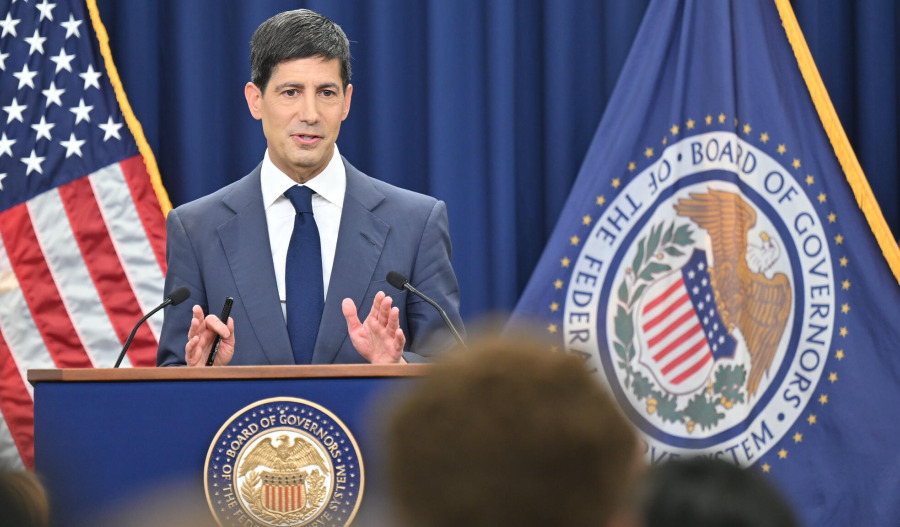
The data comes as the Federal Reserve maintained interest rates in the 3.50% to 3.75% range at its latest meeting, while signalling that borrowing costs may need to rise further to contain inflation pressures linked to higher energy prices and geopolitical instability.
The central bank described economic activity as “expanding at a solid pace despite elevated uncertainty” stemming from the Middle East conflict.
Motor vehicle purchases helped drive the gains, while gasoline prices also played a significant role in lifting nominal spending.
Service station receipts rose 3.4% in May, contributing to the overall increase in retail activity.
Gasoline prices had surged to four-year highs during the conflict but have since eased, with the national average slipping below US$4 a gallon for the first time since April.

Recent diplomatic developments between the United States and Iran, including an interim agreement to end hostilities and reopen the Strait of Hormuz, have helped stabilise energy markets, although U.S. President Donald Trump warned the deal remains conditional.
“Just in case you have any question, we'll be giving this out, so you can read it, and you can see,” Trump told reporters regarding the agreement.
“If it doesn't get done in 60 days, that's all right. We go back to bombing. I don't want to do that, because it's so good, but we might have to, because we're never going to let them have a nuclear weapon.”
Retail categories showed broad-based strength. Auto sales rebounded 1.2%, while non-store retailers, including online platforms, climbed 1.5%.
Furniture sales rose 1.0%, and gains were also recorded in health, clothing, and sporting goods segments.
However, some weakness emerged in discretionary services. Food services and drinking places, a closely watched indicator of household financial health, dipped 0.1%, while electronics and appliance stores fell 0.5%.
Core retail sales, which exclude volatile categories such as autos, gasoline, building materials and food services, increased 0.7% in May after rising 0.5% in April.
This measure is closely aligned with the consumer spending component of gross domestic product (GDP).
Stronger-than-expected retail activity has led analysts to revise near-term growth forecasts higher. The Atlanta Federal Reserve now estimates second-quarter GDP growth at an annualised 3.0%, up from 2.8% previously, following additional evidence of inventory accumulation and resilient demand.