United States stock futures edged higher on Wednesday night (Thursday AEST) after a lower close on Wall Street, as investors digested the Federal Reserve’s signal that interest rates could rise in the coming years.
By 10 am AEST (12 am GMT), Dow futures were up 0.4%, S&P 500 futures gained 0.6%, and Nasdaq 100 futures advanced 1%, pointing to a modest rebound following the prior day’s sell-off.
The move came after the Federal Reserve held interest rates steady at its latest policy meeting, keeping the benchmark federal funds rate in a range of 3.50% to 3.75%.
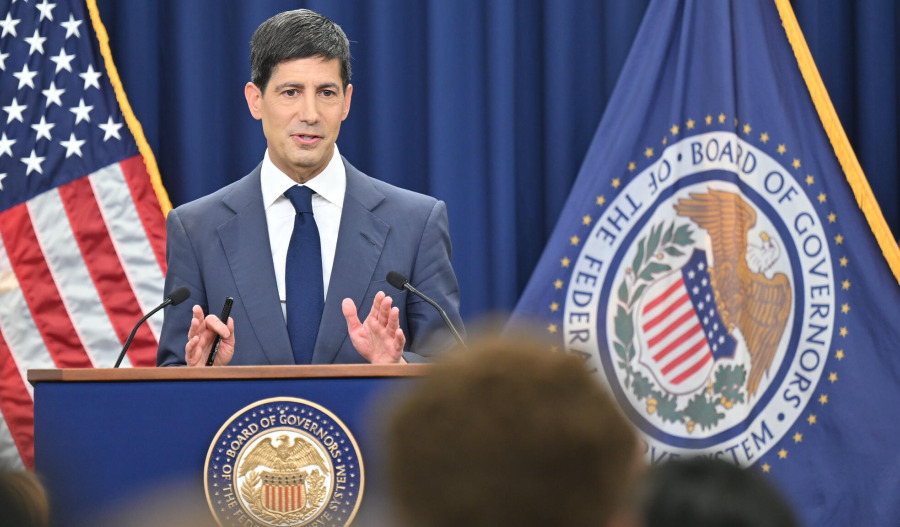
The decision marked the first meeting chaired by Kevin Warsh, with policymakers also releasing updated projections that shifted expectations towards tighter policy over the medium term.
The Fed’s “dot plot” showed several officials now anticipate higher interest rates in 2026, with the median projection rising to 3.8% from 3.4% in March.
The shift suggests that at least one rate hike could be on the table over the coming years, even as no immediate change in policy was made.

Warsh did not submit an individual rate forecast, a move consistent with his criticism of the Fed’s forward guidance tools.
Wall Street reacted to the updated outlook, with major indices falling across the board during Wednesday’s regular session.
The Dow Jones Industrial Average dropped 1%, after briefly touching a record intraday high earlier in the day.
The S&P 500 fell 1.2%, while the Nasdaq Composite declined 1.3% as technology stocks led losses amid higher rate expectations.
Bond markets also moved in response to the outlook, with the two-year U.S. Treasury yield climbing to a high of 4.22%, reflecting expectations that monetary policy could remain tighter for longer.
Looking ahead, investors will focus on corporate earnings from Accenture and Kroger ahead of the next trading session.
Economic data releases, including U.S. leading indicators, the Philadelphia Fed Index for June, and weekly initial jobless claims for the week ending 13 June, are also expected to provide further signals on the health of the U.S. economy and labour market conditions.