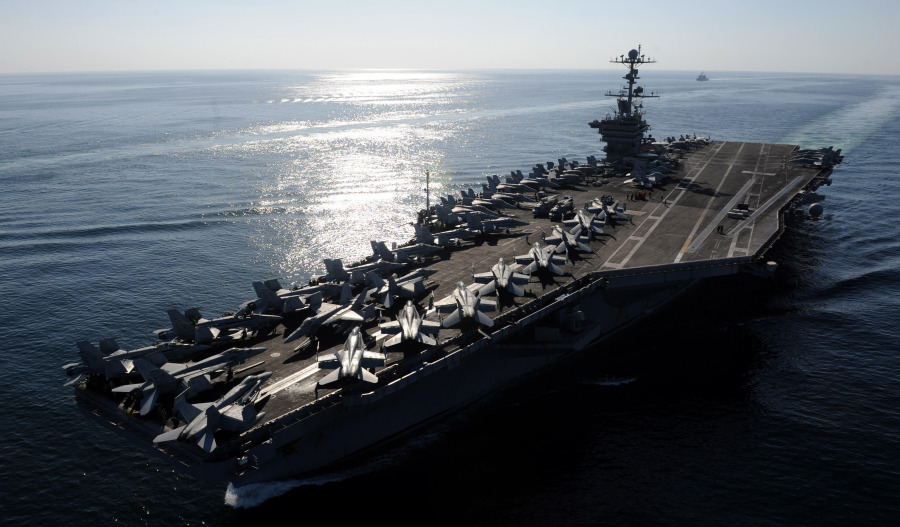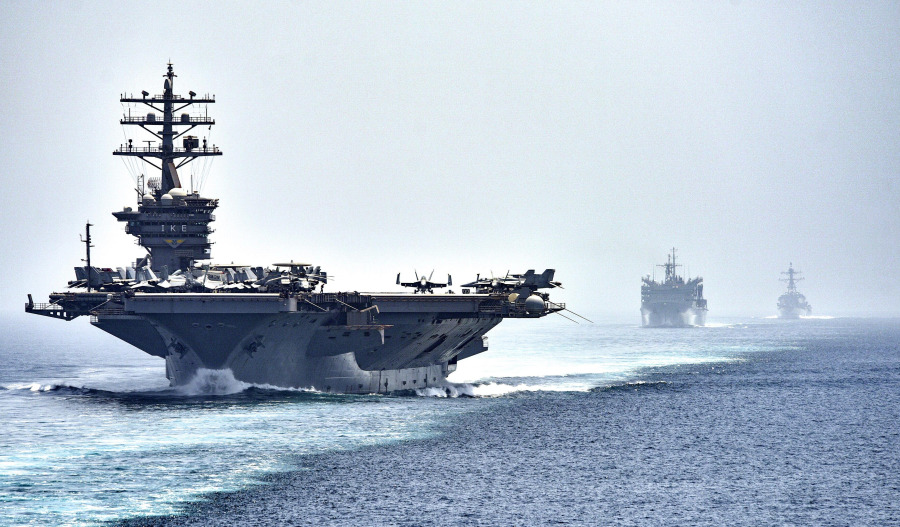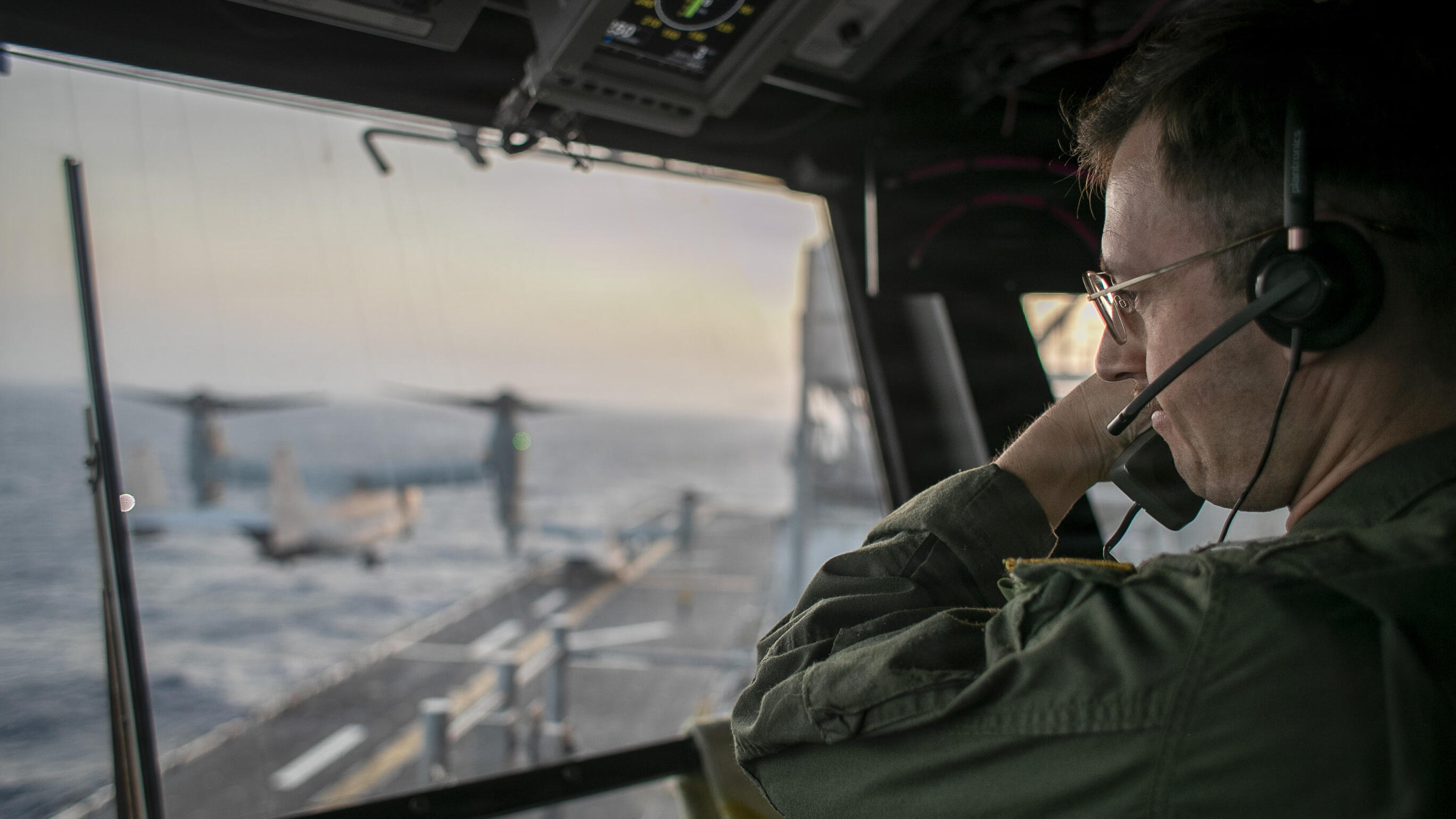
The United States launched a sixth consecutive night of airstrikes against Iran on Thursday, intensifying military operations as tensions over the Strait of Hormuz continued to escalate despite ongoing diplomatic efforts across the region.
According to U.S. Central Command (CENTCOM), the latest strikes began at around 2 pm ET time in order to "further degrade Iranian military capacities".
Officials did not disclose the specific targets, although Iranian state media reported loud explosions in the southern port city of Bandar Abbas, which sits along the Strait of Hormuz.
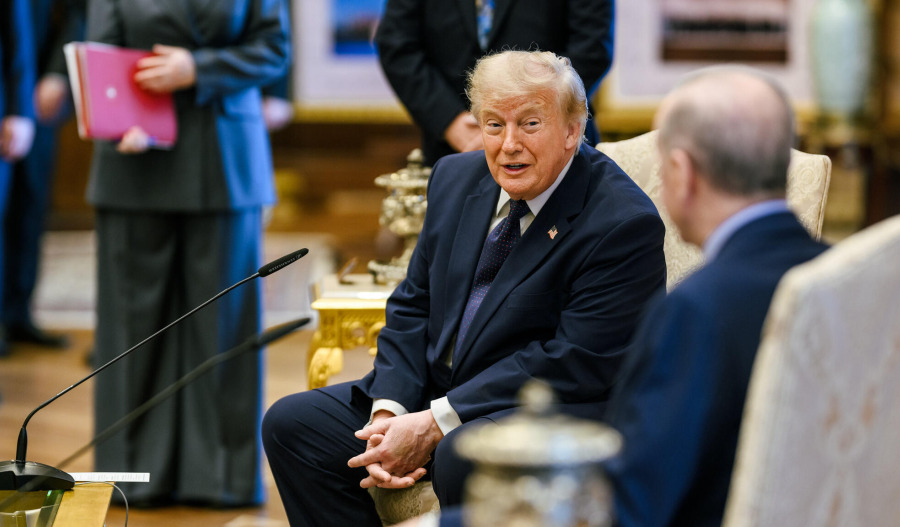
Speaking earlier in the day, White House Press Secretary Karoline Leavitt said President Donald Trump would continue military action to safeguard one of the world's busiest energy shipping lanes.
"The president is not going to allow them to fire on the ships in the strait," Leavitt said. "The president has proved not just to Iran that we can hit them anytime, anywhere, any place."
Meanwhile, CENTCOM said U.S. Marines boarded the commercial tanker M/T Wen Yao in the Gulf of Oman to ensure compliance with the naval blockade of Iranian ports reinstated by President Trump earlier this week.
The military said the blockade has already forced three commercial vessels to alter course after attempting to bypass restrictions, while one oil tanker, the Curaçao-flagged M/T Belma, was disabled during enforcement operations.

"The Strait of Hormuz and the surrounding waters remain free and open, except for vessels attempting to violate America's steel wall blockade," CENTCOM said in a statement.
The renewed military campaign has heightened concerns over the security of global energy supplies, with the Strait of Hormuz serving as a critical transit route for roughly one-fifth of the world's oil shipments.
Diplomatic efforts to contain the conflict also continued, with Pakistan stepping up engagement with regional leaders in an effort to return Washington and Tehran to negotiations.
Pakistan's Foreign Ministry expressed "deep concern over the escalation of tensions", according to CBS News, warning that renewed conflict would undermine regional stability.
Foreign Ministry spokesman Tahir Andrabi said Islamabad remained actively engaged with regional partners to promote de-escalation and dialogue.
"Renewed conflict serves no one's interests," Andrabi said, urging all parties to exercise maximum restraint and avoid actions that could further destabilise the region.
He said Prime Minister Muhammad Shehbaz Sharif had recently spoken with Iranian President Masoud Pezeshkian and Qatari leaders, encouraging restraint following the renewed outbreak of hostilities.
Pakistan also confirmed that Deputy Prime Minister and Foreign Minister Ishaq Dar held follow-up discussions with Iranian Foreign Minister Seyed Abbas Araghchi on 12 July, with both sides agreeing to maintain close diplomatic communication and pursue a peaceful resolution.