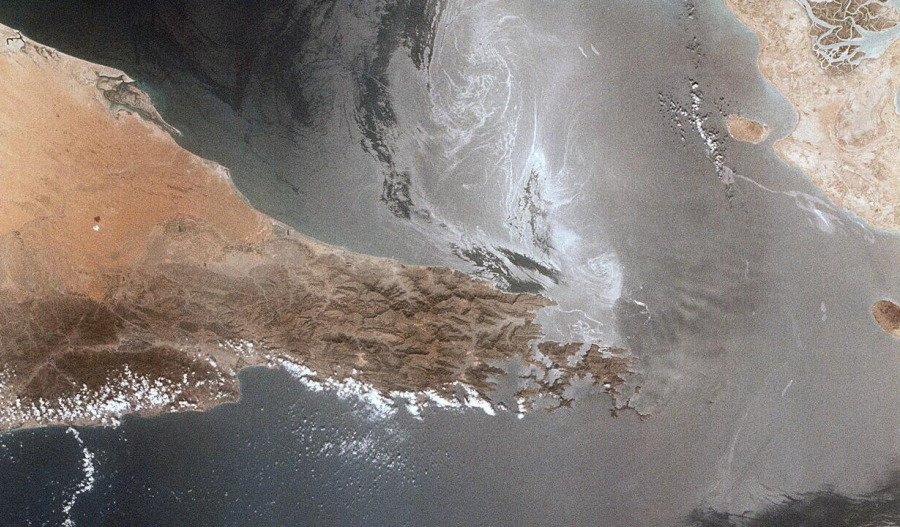
Iran said on Wednesday it had attacked 10 ships near the Strait of Hormuz after the United States sank five Iranian oil tankers, in the biggest wave of attacks on shipping by both sides since the start of the conflict.
The attacks sent oil prices surging, with benchmark Brent crude futures breaking above US$100 a barrel for the first time since July.
At least one seafarer aboard a tanker was reported killed, and another was listed as missing.
The incidents followed a month of relative calm, during which the U.S. sought to pressure Iran through economic measures.
Iran said it had fired ballistic missiles at a U.S. military base in Jordan.
Jordan said it intercepted 18 missiles, with the remaining two falling harmlessly in unpopulated areas. A U.S. official said all American troops were accounted for.

Iran's Revolutionary Guards said they would sharply escalate their response to any further attacks and said Iran would soon release maps of a new, enlarged off-limits maritime zone extending as far as Chabahar on the coast near Pakistan.
President Donald Trump said Tehran was trying to influence the November U.S. midterm elections, which will determine whether his Republican Party retains control of Congress.
"I think war is going to end immediately after the election because they can't hold out any longer. They're desperate to try and affect the election," he told reporters.
Fighting between Saudi Arabia and the Houthis in Yemen has also intensified in recent days, opening a second theatre of war that threatens energy supplies from the Middle East.
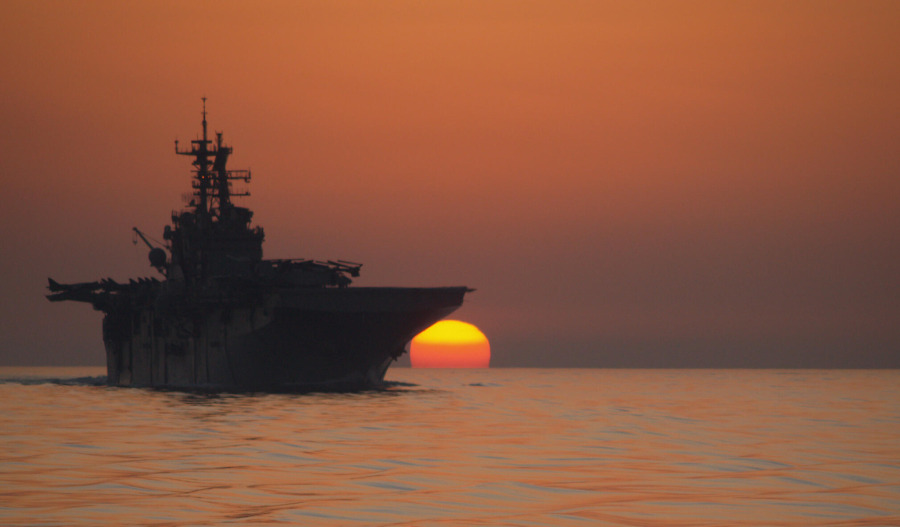
The U.S. said it destroyed five Iranian oil tankers overnight, releasing video showing ships ablaze before they sank. U.S. Central Command (CENTCOM) said the attacks were a response to the Revolutionary Guards targeting a U.S. Navy warship twice with ballistic missiles.
No Americans were harmed, the U.S. said.