United States officials have said no new negotiations with Iran are planned, despite President Donald Trump's repeated claims that talks were set to begin on Monday.
According to CBS News, discussions remain limited to existing indirect negotiations involving U.S. Middle East envoy Steve Witkoff, Jared Kushner and the U.S. negotiating team, with Iranian officials communicating through mediators rather than in direct talks.
The comments came after Trump said on Sunday that a "deal is imminent, having to do with the Hormuz Strait and also, ultimately, the denuclearisation of Iran", after cancelling planned military strikes that he said would have been the "biggest attacks since World War II".
Iran's foreign ministry dismissed suggestions that direct negotiations with Washington were underway.
"To avoid any misunderstanding, it is important to clarify what the current negotiations are about and who they are with. We are not negotiating with the United States at this time," foreign ministry spokesperson Esmaeil Baqaei said.
"Our negotiations are with Oman and are focused on reaching an understanding on a route that will ensure the safe passage of shipping through the Strait of Hormuz," he said.
Trump later described Iran's leadership as "unbelievably duplicitous" after Tehran rejected his assertion that talks would begin immediately.
Speaking to reporters, the president maintained negotiations would progress rapidly.
"I mean they're going to go quickly, one way or the other. It's not very complex," Trump said. "We're talking about the strait, the opening of the strait, having it open, literally by tomorrow. Completely open. And that's phase one, and phase two is we then will talk about the nuclear capacity … the denuclearisation of Iran."

Earlier, Trump reiterated that Iran would remain under pressure until an agreement was reached.
"Well, you don't know, I don't know, I think we're going to maybe get something," the president said when asked about negotiations. "But I want to give them every last chance before decapitation. Very tough to do what we have planned, still planned. We'll see what happens."
"I'm very proud of the fact that I will give people, I'll give people a chance," he added.
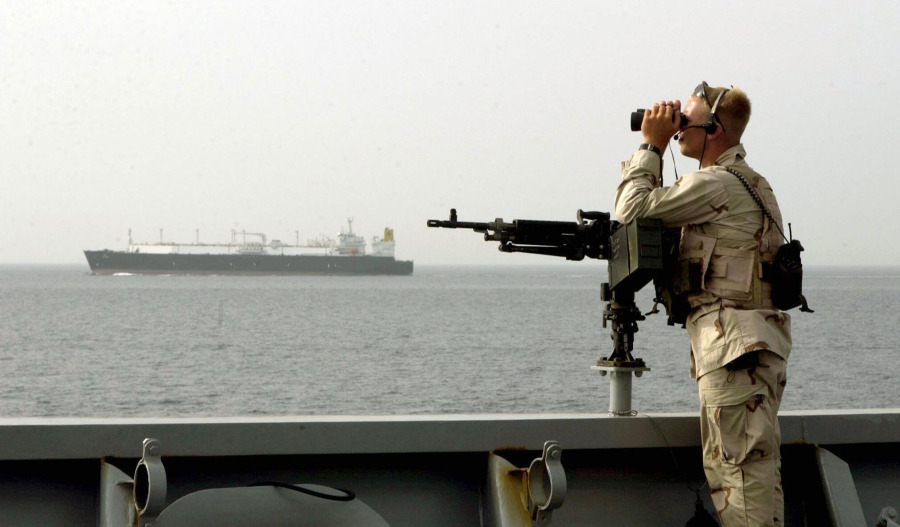
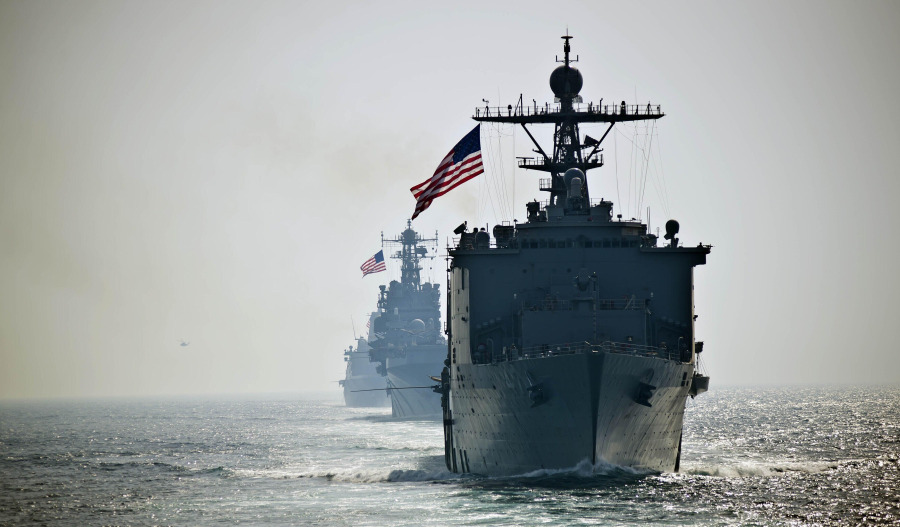
Meanwhile, U.S. Central Command (CENTCOM) said in a post on X that it had redirected 44 commercial vessels as part of its blockade against Iran, adding that U.S. forces had disabled two vessels and boarded another two.
On shipping, data firm Kpler said traffic through the Strait of Hormuz and the Bab el-Mandeb remained constrained following the conflict.
Kpler said the Strait of Hormuz recorded nine confirmed transits on Sunday, including two sanctioned vessels and two shadow fleet ships. Seven vessels used a route established by Iran that requires shipping companies to coordinate with Tehran and potentially pay a toll.
In the Bab el-Mandeb, Kpler recorded 30 vessel crossings, down from 41 on 31 July, with 20 ships exiting the Red Sea and 10 entering.
The firm said operators should continue treating both waterways as contested.
"Until U.S., Iranian and Omani signals converge into clear navigation arrangements, operators should treat both chokepoints as contested rather than normalised."