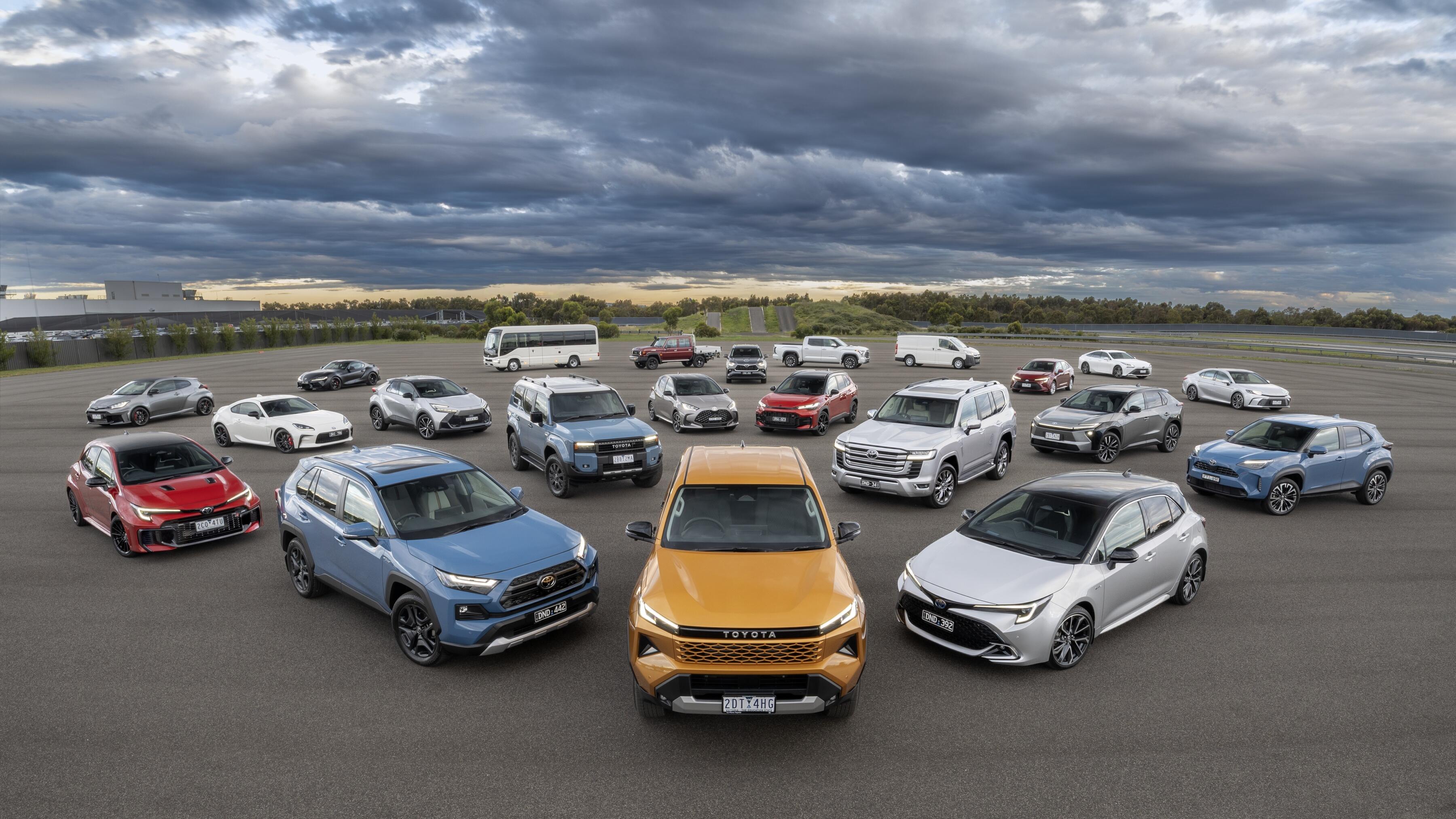
Toyota Motor Corporation (TSE: 7203) (NYSE: TM) delivered a quiet rebuke to the politics of trade by closing 2025 with global vehicle sales of just over 10.5 million, its strongest result in two years and enough to hold onto the title of the world’s biggest carmaker.
Sales across Toyota and its Lexus luxury brand rose 3.7% from the year before, comfortably ahead of Volkswagen Group and Hyundai Motor Group.
The standout market was the United States, where Toyota’s results read like a contradiction.
American sales jumped 7.3% to 2.93 million vehicles, even after President Donald Trump imposed tariffs on imported cars.
Those levies were initially set at 25% before being cut to 15% following negotiations with Japan.
Despite tariffs, which are a tax charged on imported goods, Toyota managed to absorb the extra costs instead of pushing through broad price rises, betting that steady prices would keep buyers coming through showroom doors.
That calculation appears to have paid off.
Hybrids sat at the centre of the strategy with models like Prius and RAV4, which combine a petrol engine with an electric motor to reduce fuel use without requiring charging, continued to attract U.S. buyers wary of fully electric vehicles.
The hybrid push gave Toyota volume at a time when rivals were being forced to juggle pricing and margins.
The cost of this approach is far from trivial, with Toyota estimating that U.S. tariffs will slice around 1.45 trillion yen, roughly US$$9.7 billion, from earnings in the financial year ending March 2026.
However, even with that hit, the company lifted its full-year operating profit forecast late last year, pointing to cost controls and resilient demand outside the U.S.
Manufacturing geography explains much of the difference, with around 80% of Toyota vehicles sold in the U.S. built locally, limiting exposure to import taxes.
The Japanese carmaker has spent years expanding American production, particularly for hybrid models, long before tariffs returned to the political agenda.
That contrasts sharply with Hyundai, with the South Korean group also enjoying solid global revenue growth of more than 6% last year, supported by hybrid demand in the U.S.
However, its operating profit fell almost 20%, with tariffs costing an estimated 4.1 trillion won.
Hyundai’s vulnerability lies in its reliance on imports, with only around 40% of its U.S. sales domestically produced in 2025.
While the company plans to lift that figure above 80% by 2030 through expansion in Georgia, the gap is hurting now.
The risks were underlined again this week when Trump threatened to raise tariffs on South Korean vehicles back to 25%, arguing Seoul had been too slow to implement a trade deal that lowered duties to 15%.
Hyundai shares fell almost 5% on the warning.
Meanwhile, Toyota, by comparison, looks insulated rather than immune.
But while its strategy has created a buffer against sudden policy shifts, it does not eliminate uncertainty.
Any move to extend tariffs to parts or raw materials would test even locally assembled vehicles.
For now, investors appear comfortable.
Toyota shares rose after the sales figures, and the company is due to report third-quarter earnings on 6 February.
Analysts expect operating profit to rebound close to 30% from a year earlier.