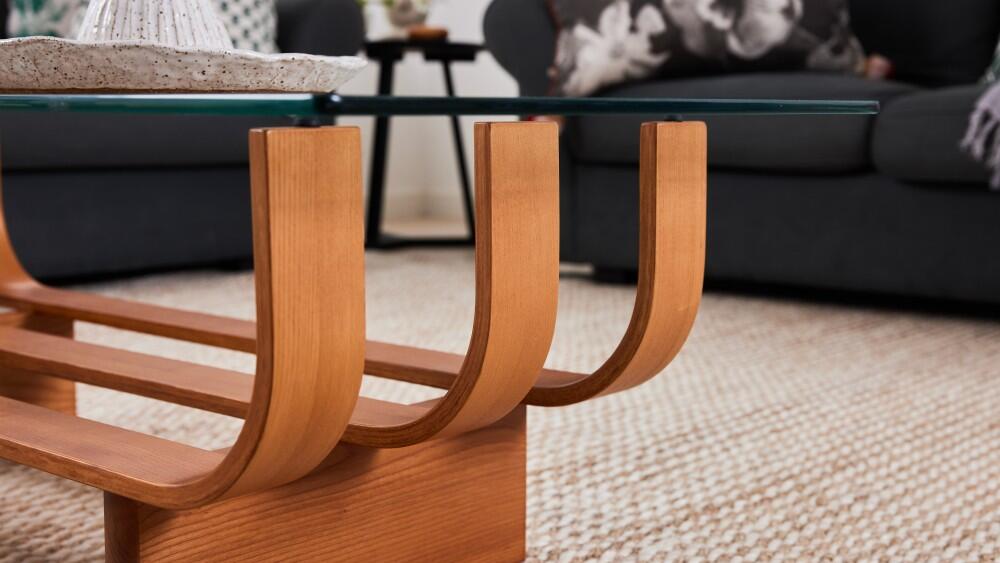
Toni Briggs-Brown re-launched TH Brown after realising the 115-year-old heritage furniture brand still had legs.
Following taking over the brand, Briggs-Brown defined herself as a refounder of the business as she was refining the brand and bringing it into the future.
“To me, every founder is not taking anything from someone who finds a founder of a new business or a founder of a new brand, but making the commitment to relaunch a brand and take it to the next generation,” she tells Azzet.
“That's probably where we came from with that refounder positioning.”
Booming industry
The Australian furniture industry was growing by around 5.98% each year in 2025, with the typical Australian household sending around A$3,016 per year on furniture and household equipment.
In 2024, the market was valued at $10.86 billion and is expected to grow to $15.35 billion by 2030.
While the furniture industry is competitive, Briggs-Brown also emphasises how supportive it can be.
“For the most part, I’ve found that everyone is supportive,” she says.
“I think it’s because if we all succeed, if people are committed to buy Australian-designed or Australian-manufactured, that supports the whole industry.”
Australia is currently the company’s biggest market, followed by New Zealand and the U.S., and Briggs-Brown says she hopes the company can expand into more global markets in the future.
“If I could see us in 10 years' time, we're in homes globally, more than we are now,” she says.
“We're talking to potential stockists at the moment in the U.S., but into Europe, also into Dubai.”
“With those are conversations we're having around who to partner with, and it's something that I take my time doing, because if I get that wrong, it can, can really pivot the direction of the business.”
When the business initially relaunched in 2017, Briggs-Brown said there was small growth as the company was still testing the waters.
Now, the company has been growing at a faster pace.
“The last, sort of, like three years, we've sort of doubled in size the last three years,” she says.
“This year we've slowed down a little bit, but we're still well in the double-digit growth.”

Slow rebuild
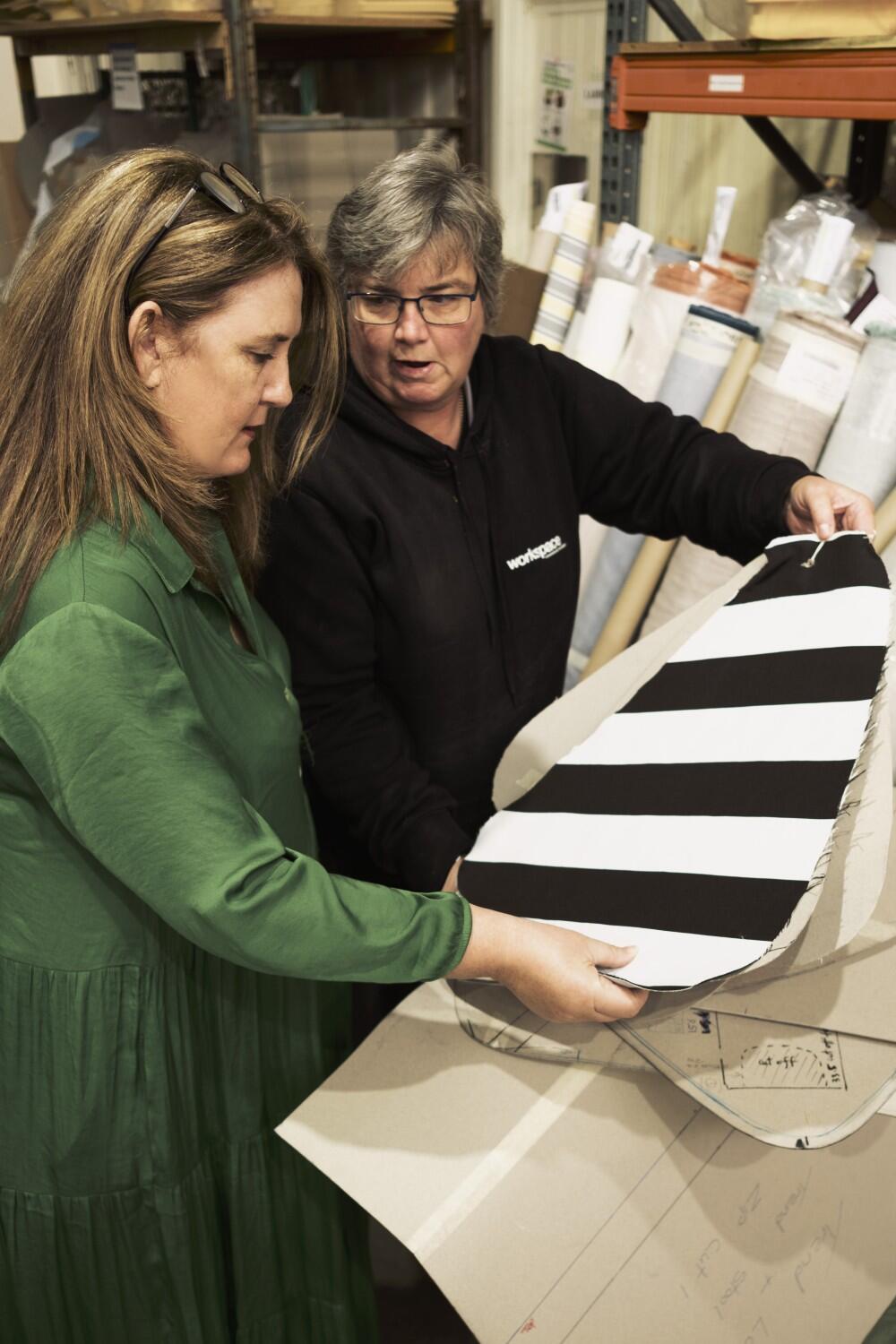
Briggs-Brown says the company deliberately took a slow approach to the rebrand to ensure the longevity and heritage of the brand.
“If we were to go a whole lot of all at once, trying to compete with each other, I don't believe we could do that successfully,” she says.
“I think when we reissue a piece, we're honouring that piece.”
The brand purposefully focuses on manufacturing one or two pieces a year.
“Each piece, once it's relaunched, it's back into the marketplace, unless there's a very valid reason for us to stop continuing manufacturing of it,” Briggs-Brown says.
“So for us, it is very much around being considered and concise.”
Briggs-Brown also says it’s important that the brand continues to manufacture its pieces in Adelaide, as it allows her to work closely with apprentices who have been with the company for decades.
“To actually be working with them and that commitment to quality craftsmanship and to be made locally was a non-negotiable for the brand,” she says.
Challenging perception
One of the biggest challenges for the business has been challenging people’s assumptions of the brand, as Briggs-Brown says, many people think it is more established than it is due to its history.
“People have a perception that because we're celebrating 115 years and we're a family business, and we're manufacturing these pieces, that we're a huge organisation,” she says.
“We have the responsibility of a heritage brand, but the reality of a startup, and I think that is something really unusual for us as a business.”
However, Briggs-Brown also says the heritage of the brand has given them an edge over the competition, along with the craftsmanship of the pieces.
“These pieces are iconic,” she says.
“I think our point of difference really is that we are an Australian icon.
“We are being produced locally, and these are pieces that tell a story and become part of your story.”
Briggs-Brown says she often looks to the past of the business to inform her future decision-making.
“I'm always looking in the rear vision mirror, but then taking that and looking at it, and how do we take that forward for the generations to come,” she says.
“I think by really committing to craftsmanship, the time that we take to make the decision to which pieces we reissue, the process we go through when we prototype those pieces, the discussion we have regarding how we approach it, whether we need to make any changes to it.
“I think that’s both a challenge and a privilege.”
This year, the brand is celebrating 115 years, and Briggs-Brown says she has taken this opportunity to speak with past customers.
“It's our 115th year, and part of what we're doing at the moment to celebrate our designs from the mid 60s and 70s is that we are going on a road show across Australia,” she says.
“We’re interviewing and photographing people's homes and hearing their stories, which has been an absolute privilege to do so far.”