Shell has more than doubled its quarterly earnings, posting US$6.9 billion for Q1 2026, as higher realised prices and strong trading results offset a massive working capital outflow.
The $11.2 billion working capital drag - tied directly to unprecedented commodity price volatility flowing from the Hormuz crisis - suppressed cash flow from operations to $6.1 billion for the quarter.
Upstream adjusted earnings climbed to $2.4 billion on realised liquids prices of $72 per barrel (bbl), up from $59/bbl in Q4 2025, while the chemicals and products division swung sharply higher on improved refining margins and stronger trading performance.
Net debt rose to $52.6 billion from $45.7 billion at year-end 2025, with gearing moving to 23% including leases - a function of the working capital build rather than any deterioration in the underlying business.
Shell CEO Wael Sawan used the earnings call to deliver one of the most direct assessments of the global crude supply picture yet heard from a major oil producer.
"The hard facts are we have dug ourselves a hole of close to a billion barrels of crude shortage at the moment, either because of locked in barrels or unproduced barrels," Shell CEO Wael Sawan told investors.
“And of course, that hole is deepening every single day, so the journey back will be a long one.”

To frame that figure: the world consumes roughly 100 million barrels per day according to OPEC data, meaning the accumulated shortfall already represents around ten days of global demand - and is still growing.
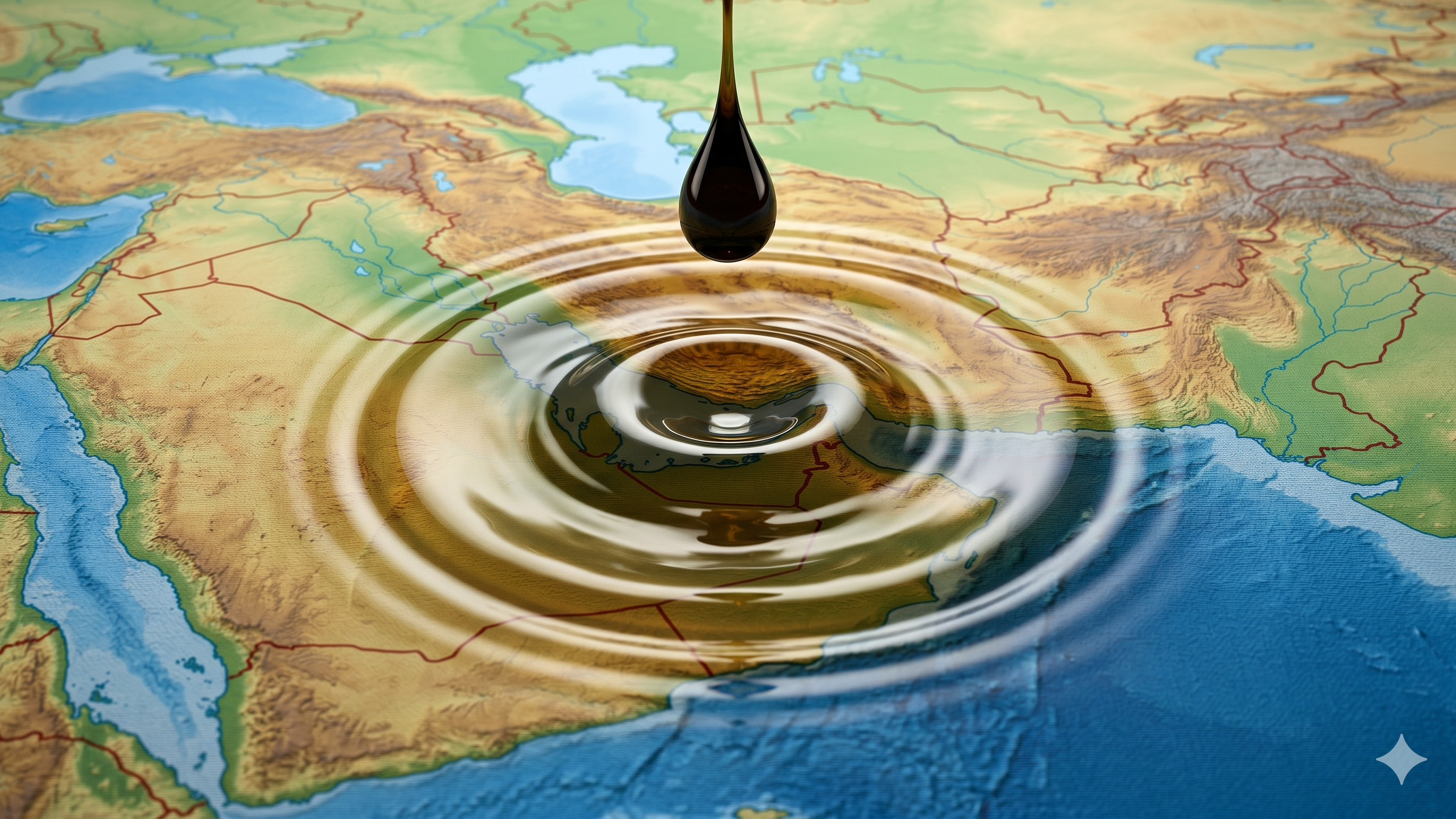
The International Energy Agency has called it the largest supply shock in the oil market's history, stemming from Iran's blockade of the Strait of Hormuz following U.S. and Israeli military strikes on February 28.
The blockade removed roughly 12% of global crude supply from circulation, with demand destruction remaining relatively modest so far - jet fuel consumption across the airline industry is down around 5%, Sawan said.
ConocoPhillips CFO Andrew O'Brien told investors on 30 April that tankers that departed the Persian Gulf before hostilities erupted have now all reached their destinations, meaning the full downstream supply impact is only beginning to show.
Shell's Q2 guidance reflects the emerging crunch directly, with Integrated Gas production guided at 580,000 to 640,000 barrels of oil equivalent per day (boepd), down sharply from 909,000 boepd in Q1, as the conflict disrupts Qatari volumes and planned maintenance rises across the portfolio.
Despite the supply-side turbulence, Shell pressed ahead with a $3.0 billion share buyback for the next three months and a 5% dividend increase to $0.3906 per share, keeping distributions consistent with its 40-50% of cash flow from operations policy.
Full-year capital expenditure guidance was confirmed at $24 billion to $26 billion, including roughly $4 billion for the acquisition of ARC Resources, which is expected to add 370,000 boepd and drive a 4% production compound annual growth rate through to 2030.
Oil prices fell more than 10% this week on renewed hopes of a U.S.-Iran deal to reopen the strait, though ExxonMobil CEO Darren Woods has estimated that normalisation of flows could take up to two months even after a reopening.