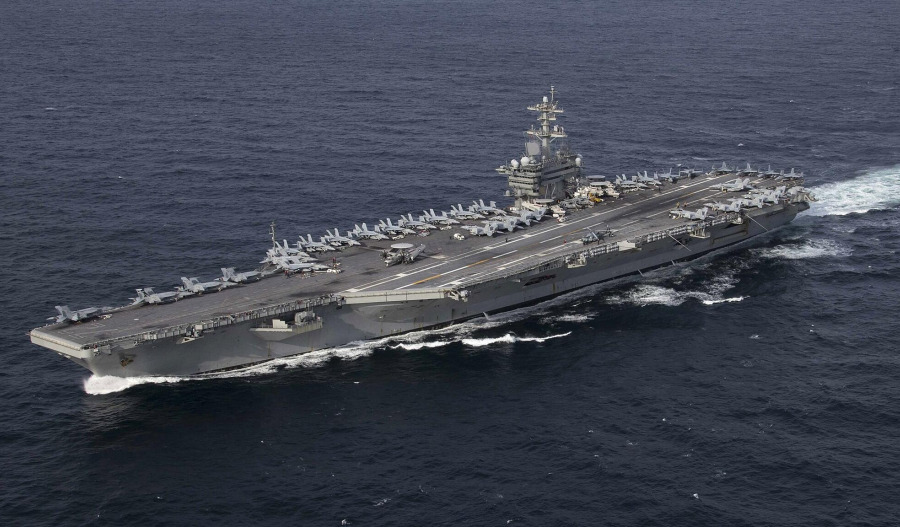
Oil prices fell during Thursday's Asian trade after the United States and Iran agreed to hold talks in Oman on Friday, easing immediate concerns that escalating tensions could lead to military conflict and disrupt supply from the Middle East.
By 3 pm AEDT (4 am GMT), Brent crude futures were down $1.40, or 2%, at US$68.06 per barrel. U.S. West Texas Intermediate crude declined $1.32, or 2%, to $63.82 per barrel.
The move reversed part of the previous session’s rally, when oil prices surged around 3% on reports suggesting the planned talks between Washington and Tehran might collapse.
Later, officials from both sides confirmed that discussions would proceed on Friday, though the specific agenda remains unsettled.

Iran has indicated it is willing to discuss its nuclear programme, including uranium enrichment, with Western counterparts. The United States is also seeking to address Iran’s ballistic missile programme, its backing of armed proxy groups across the Middle East and domestic political issues, broadening the scope of potential negotiations.
Despite the renewed diplomatic engagement, uncertainty persists. Investors remain wary that U.S. President Donald Trump could still follow through on previous threats to strike Iran, which is the fourth-largest producer in the Organization of the Petroleum Exporting Countries.
Beyond potential disruption to Iranian output, traders are also concerned that exports from other Gulf producers could be affected in the event of broader instability.
Roughly one-fifth of global oil consumption moves through the Strait of Hormuz, the narrow waterway between Oman and Iran. Major OPEC producers, including Saudi Arabia, the United Arab Emirates, Kuwait and Iraq, rely heavily on the strait for crude exports, alongside Iran itself.
While the prospect of talks has reduced the recent geopolitical risk premium in oil prices, the market found some support from U.S. inventory data. Figures from the Energy Information Administration showed a 3.5 million barrel draw in the week to 30 January, greater than the 2 million barrel draw expected, while gasoline inventories rose as winter storms affected large parts of the country.