Oil prices surged above US$100 a barrel during Asian deals on Monday as the United States prepared to enforce a naval blockade on Iranian ports, heightening concerns over global supply disruptions after Washington and Tehran failed to reach a ceasefire agreement.
By 3:15 pm AEST (5:15 am GMT) Brent crude futures rose $6.98 or 7.3% to $102.18 per barrel, while U.S. West Texas Intermediate climbed $8.25 or 8.5% to $104.73 per barrel.
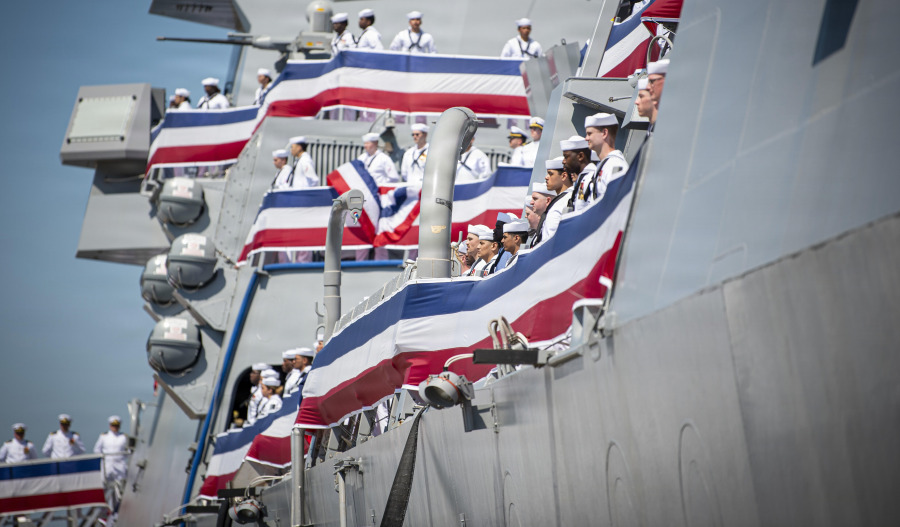
The rally followed comments from Donald Trump, who said the U.S. Navy would begin blockading the Strait of Hormuz, a critical shipping route for global oil flows, after extended negotiations with Iran failed to produce a breakthrough.
Trump acknowledged the economic implications of the move, noting that energy prices could remain elevated through November’s midterm elections.
Ryan Wells, economist at Westpac Group, noted: "Reports suggest Iran is open to further talks during the ceasefire period and safe commercial shipping, but Iran has also threatened to act against any military vessels transiting through the Strait. This follows two U.S. Navy vessels safely passing through over the weekend, purportedly to assess if mines had been laid."

The U.S. military confirmed that enforcement measures would begin imminently. United States Central Command said it would start implementing the blockade of all maritime traffic entering and exiting Iranian ports from 10 am ET on Monday.
The command added that the blockade would be “enforced impartially against vessels of all nations entering or departing Iranian ports and coastal areas”, including those in the Arabian Gulf and Gulf of Oman.
However, U.S. forces said they would not interfere with vessels transiting the Strait of Hormuz to and from non-Iranian ports, seeking to maintain broader freedom of navigation.
Iran responded with a warning from its Revolutionary Guards, stating that any military vessels approaching the strait would be considered a violation of the fragile two-week ceasefire and would be met with a decisive response.
Despite the heightened tensions, some oil shipments have continued. Shipping data cited by Reuters showed that three fully laden supertankers passed through the Strait of Hormuz on Saturday, appearing to be the first vessels to exit the Gulf since the ceasefire agreement was reached last week.
Meanwhile, Saudi Arabia signalled efforts to stabilise supply, announcing that it had restored full oil pumping capacity through its East-West pipeline to around 7 million barrels per day following earlier disruptions linked to the conflict.