Oil prices rose during Thursday's Asian deals after Iran announced the closure of the Strait of Hormuz following fresh United States military strikes, intensifying concerns over global energy supplies and raising fears of a broader regional conflict.
By 2:50pm AEST (4:50am GMT), Brent crude futures were up $1.14, or 1.2%, at $94.24 a barrel, while US West Texas Intermediate crude gained $1.22, or 1.4%, to $91.25 a barrel.
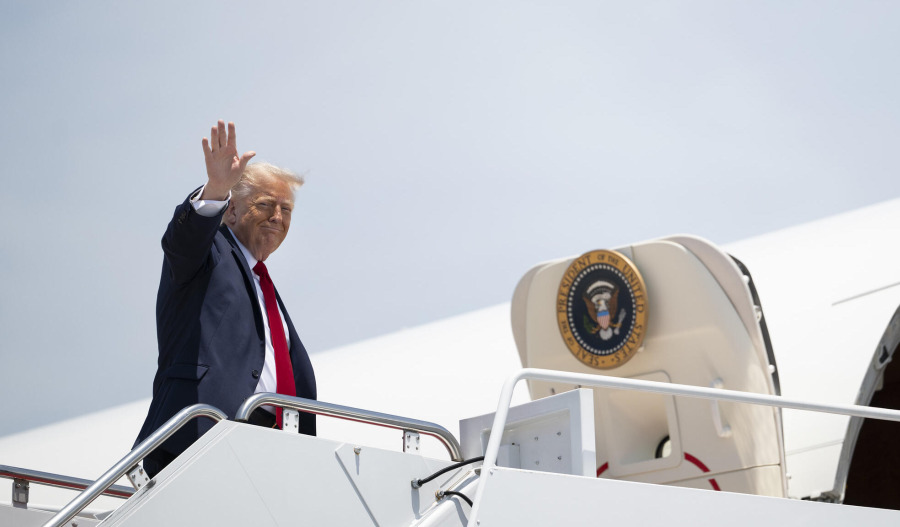
The gains followed a dramatic escalation in tensions between Washington and Tehran after U.S. forces launched additional strikes against multiple targets in Iran and President Donald Trump threatened further military action if a peace agreement is not reached.
Iran's top joint military command announced on Thursday that the Strait of Hormuz had been closed to oil tankers and commercial shipping, warning that any vessel attempting to transit the strategic waterway would be fired upon.
The Strait of Hormuz is one of the world's most important energy corridors, typically handling around one-fifth of global oil and gas shipments. Disruptions to traffic through the passage have been a major factor supporting elevated oil prices in recent months.
Analysts at ING said the latest developments reinforced expectations that a resolution to the conflict remains distant.
"It once again suggests a deal is still some way off and that energy flows from the Persian Gulf will remain heavily constrained.

"There have been media reports of increased oil flows through the Strait of Hormuz, with suggestions of around 2m b/d of crude oil and refined products (compared to pre-war flows of around 20m b/d).
"This doesn’t change our view. We had already been assuming flows of a little over 2m b/d through the Strait of Hormuz. If anything, there’s downside risk to this number in the short term, given the more recent re-escalation."
On Wednesday night (Thursday AEST), the U.S. military stated on X that commercial vessels continued to move through the strait despite the conflict.
It also said no U.S. warships operating near the waterway had been struck after Iranian state media reported that American naval vessels had been targeted by missiles and drones.
U.S. forces began launching additional strikes against multiple targets in Iran at 5:15 pm EDT (9:15 pm GMT) on Wednesday, marking the latest development in a growing military confrontation that threatens to unravel the fragile ceasefire agreed by both sides in early April.
The conflict has already significantly disrupted shipping through the Strait of Hormuz, with energy markets closely monitoring any further reduction in exports from the Persian Gulf.
Among data releases, the U.S. Energy Information Administration (EIA) Weekly Petroleum Status Report showed that crude oil inventories fell by 7.2 million barrels to 426.5 million barrels in the week ended 5 June.
The decline was substantially larger than market expectations for a drawdown of approximately 4 million barrels.