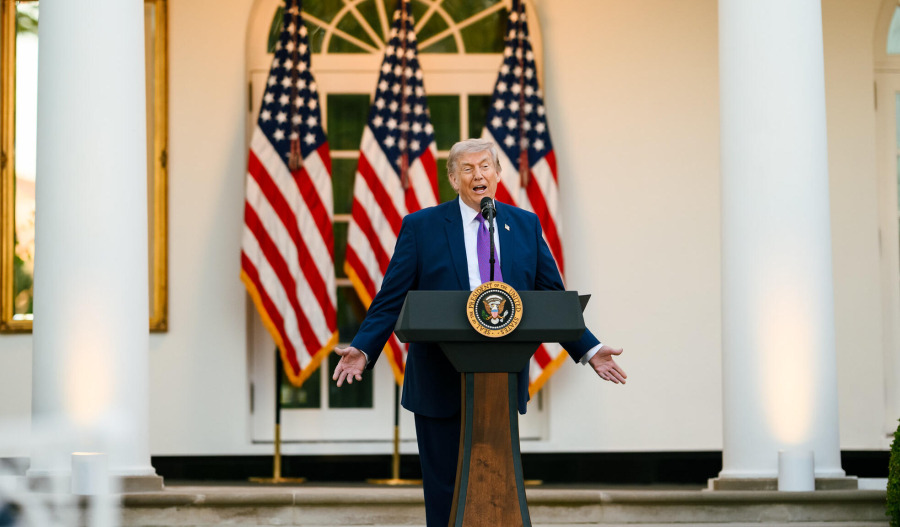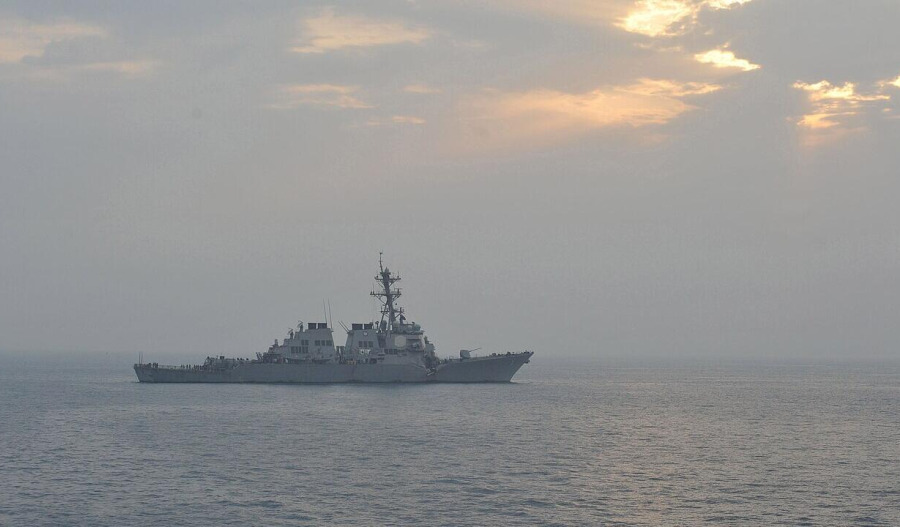
Oil prices fell during Asian trading on Tuesday after United States President Donald Trump said he had paused a planned military strike on Iran to allow negotiations aimed at ending the Middle East conflict.
By 2:40 pm AEST (4:40 am GMT), Brent crude futures for July delivery had fallen US$2.28, or 2%, to $109.82 per barrel, while U.S. West Texas Intermediate crude for July delivery dropped $1.22, or 1.1%, to $107.44 per barrel.
The declines followed a sharp rally in the previous session, when both benchmarks climbed to their highest levels since May 5 and April 30 respectively.
Trump said on Monday there was a "very good chance" the United States could reach an agreement with Iran to prevent Tehran from obtaining a nuclear weapon, hours after announcing a pause in military action to facilitate negotiations.
Analysts at ANZ said in a note to clients: "The White House said a proposal delivered by Iran through Pakistani mediators on Sunday lacked any meaningful improvement on previous versions. This included a lack of commitment on the surrender of Iran’s stockpile of high enriched uranium.
"According to the semi-official news agency Tasnim, Iran said Washington’s demand were still excessive and that it would not agree to the end of the conflict at the expense of its nuclear program.

"The apparent distance between the two sides raised concerns that an end to the conflict and the disruption to oil supplies remains indefinite"
The ongoing Middle East conflict has effectively shut the Strait of Hormuz, a critical shipping route that carries around one-fifth of global oil and liquefied natural gas supplies, intensifying fears over prolonged supply disruptions.
Iranian Foreign Ministry spokesperson Esmaeil Baghaei confirmed on Monday that Tehran’s latest position had been conveyed to the United States through Pakistan, although he did not disclose further details.
A Pakistani official, speaking anonymously, said Islamabad had relayed a fresh proposal between the two sides but cautioned that negotiations were progressing slowly.
Separately, U.S. Treasury Secretary Scott Bessent extended a sanctions waiver for an additional 30 days, allowing “energy-vulnerable” countries to continue purchasing Russian seaborne oil amid ongoing supply disruptions.
Meanwhile, ANZ analysts also noted: "The International Energy Agency reiterated that commercial oil inventories are falling fast. Global oil markets are increasingly reliant on inventories to offset supply disruptions, with both crude and product stocks projected to decline steadily under current assumptions.
"We calculate that crude inventories remain relatively elevated in aggregate. In contrast, oil product inventories are being drawn down more sharply and are on track to reach their effective downside limit as early as August, reflecting reduced refinery runs and tighter availability of refined fuels."