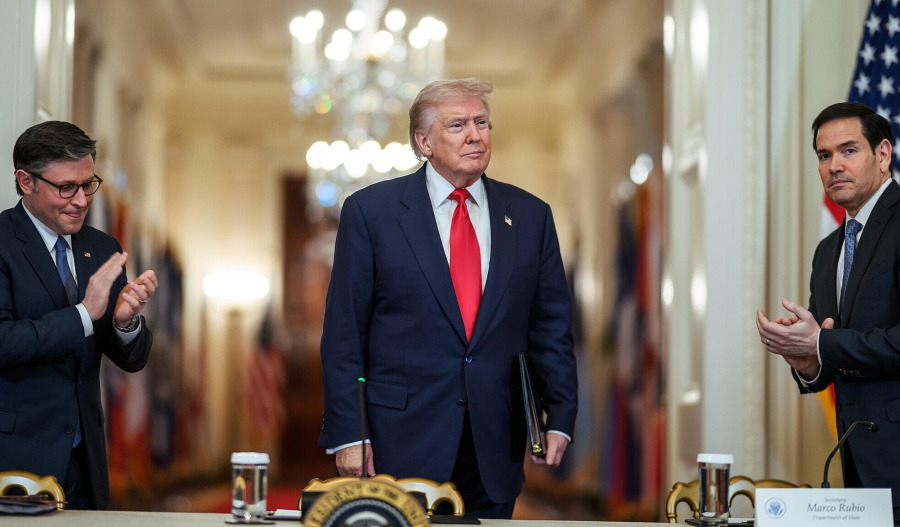
Oil prices retreated during Tuesday's Asian trade after reaching their highest levels in more than three years during the previous session, as United States President Donald Trump suggested the war in the Middle East could soon end.
By 2:45 pm AEDT (3:45 am GMT), Brent crude futures were down $5.21, or 5.3%, at $93.75 per barrel. U.S. West Texas Intermediate crude fell $5.19, or 5.5%, to $89.58.
The decline followed a dramatic surge in oil prices on Monday, when both benchmarks briefly climbed above $100 per barrel amid fears of major supply disruptions.
During the session, Brent crude touched a high of $119.50 per barrel, while WTI reached $119.48 — their highest levels since mid-2022 — after supply cuts by Saudi Arabia and other producers intensified concerns about tightening global oil markets.
ING economists commented: "Reports that G-7 finance ministers were considering a significant release of oil from strategic reserves, along with comments from President Trump suggesting that the war might end soon, sent prices plunging later in the session. At one point, Brent traded towards $85/bbl.
"Trump’s words will only go so far. Ultimately, the market will need to see a resumption of oil flows through the Strait of Hormuz to sustain a move lower in oil prices. Failing that, we are unlikely to have seen the highs yet."
Concerns about a prolonged supply shock were further eased after Russian President Vladimir Putin held a call with Trump and presented proposals aimed at achieving a rapid settlement to the Iran conflict.
Trump also told a CBS News reporter that he believes the war against Iran "is very complete" and that Washington was "very far ahead" of his initial four- to five-week estimated timeframe.
Despite the pullback in prices, tensions in the region remain elevated.

Iran’s Revolutionary Guards (IRGC) responded to Trump’s comments by warning that Tehran would determine when the conflict ends and threatened to halt regional oil exports if U.S. and Israeli attacks continue.
According to Iranian state media, an IRGC spokesperson said the country would not allow "one litre of oil" to leave the region if the strikes persist.
However, the warning did little to lift prices, with markets also reacting to reports that the U.S. is considering additional measures to curb the surge in global oil costs.
Sources said the Trump administration is weighing options, including easing sanctions on Russian oil exports and releasing emergency crude stockpiles in an effort to stabilise global energy markets.
Meanwhile, oil supply from the Gulf region has already been disrupted as the conflict intensified.
Several major producers have begun cutting output as shipping through the region faces increased risks.
Over the weekend, Iraq reduced production at its main southern oilfields by around 70% to approximately 1.3 million barrels per day, while Kuwait Petroleum Corporation also began lowering output and declared force majeure.
Saudi Arabia has also started trimming production, according to sources cited by Reuters.
Meanwhile, the Group of Seven (G7) nations said on Monday they were prepared to take "necessary measures" to respond to surging global energy costs, although they stopped short of committing to the release of emergency strategic reserves.