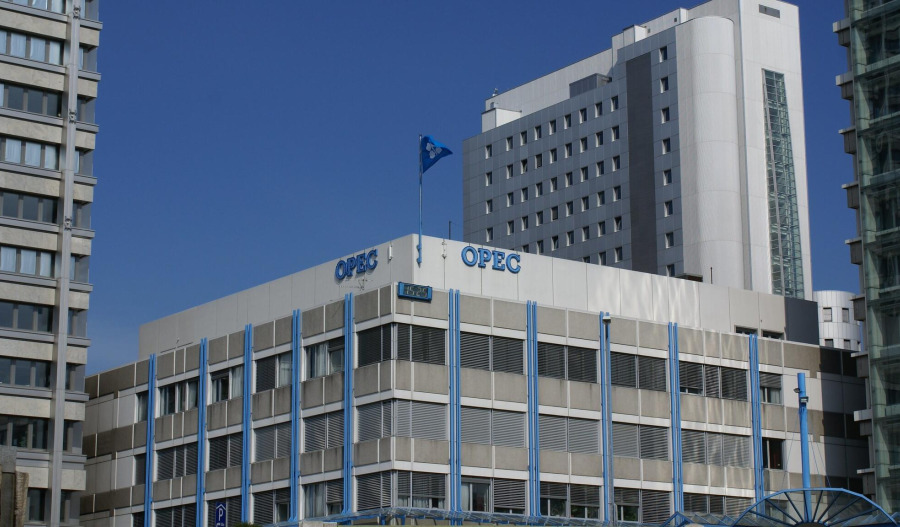
Oil prices rose during Monday's Asian deals after OPEC+ members reaffirmed their decision to keep production steady, while a drone attack that halted exports through the Caspian Pipeline Consortium and rising United States–Venezuela tensions added fresh concerns over global supply.
By 3:50 pm AEDT (4:50 am GMT), Brent crude futures were up $1.06, or 1.7%, at $63.44 per barrel, while U.S. West Texas Intermediate gained $1.07, or 1.8%, to $59.61.
Both benchmarks ended lower on Friday, marking a fourth consecutive monthly decline and longest losing streak since 2023 as expectations of higher global supply continued to pressure prices.
OPEC+ agreed to keep its oil output quotas unchanged for 2026, with major producers set to pause planned production hikes in the first quarter amid growing concerns about oversupply.

Fresh geopolitical risk also lifted sentiment. On Saturday, U.S. President Donald Trump said the airspace above and surrounding Venezuela should be considered closed, adding uncertainty surrounding one of the world’s key oil-producing nations.
Further supply concerns emerged after the Caspian Pipeline Consortium - whose shareholders include Russian, Kazakh and U.S. companies - suspended operations when a mooring at its Black Sea terminal was damaged in a Ukrainian drone strike.
In Europe, renewed doubts over a Russia–Ukraine peace agreement helped reverse the bearish tone of the previous fortnight, when optimism over negotiations had fuelled expectations that large volumes of Russian crude might soon return to the market.
Ukraine’s military said on Saturday via social media that it had struck a Russian oil refinery and the Beriev aviation plant in the Rostov region.