Oil prices rose more than 1% during Thursday's Asian deals after the United States launched fresh military strikes against Iran, reducing hopes for a diplomatic resolution to the conflict and a full reopening of the Strait of Hormuz, a key shipping route for global energy supplies.
By 3:05 pm AEST (5:05 am GMT), Brent crude futures were up $0.87, or 1.1%, at US$78.89 per barrel, while West Texas Intermediate (WTI) crude futures gained $0.81, or 1.1%, to US$74.33 per barrel.
The latest escalation followed U.S. strikes on Iranian military targets after Tehran attacked commercial shipping near the Strait of Hormuz.
President Donald Trump defended the operation in a post on Truth Social.
"This is in retribution for yesterday’s bombing of ships by Iran. If it happens again, it will get much worse!"
ING commodity strategists said the near-term outlook for oil would depend on whether Washington and Tehran could quickly de-escalate the conflict.
"Key for the oil outlook is whether the U.S. and Iran are able to quickly de-escalate this latest rise in tensions."
"The past few days’ price action makes one thing clear: markets were far too relaxed about the risks surrounding the deal - and far too bullish on how quickly regional supply could rebound.
"Vessel tracking data shows that Strait of Hormuz tanker crossings declined to just 7 yesterday, the lowest level since 21 June. This compares to a daily average of 18 over the first seven days of July.

"This data will not pick up tankers navigating the strait with their transponders turned off."
Iran also issued a strong warning following the latest U.S. military action.
"The U.S. has yet to learn that bullying and breaking its commitments no longer come without a cost. Let me be clear: If you strike, you will be struck back," Iran's top negotiator, Mohammad Bagher Ghalibaf, wrote on X.
"The Strait of Hormuz will be reopened only under 'Iranian arrangements', not through U.S. threats."
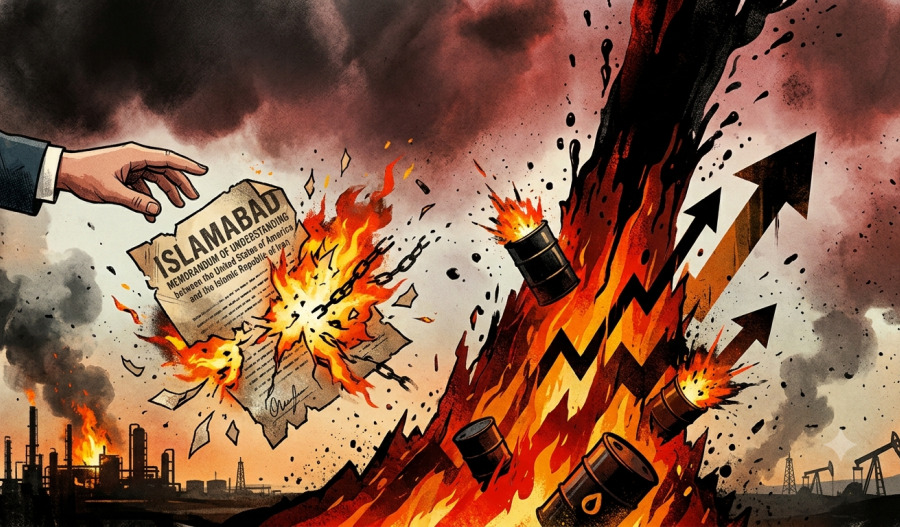
The renewed exchange of attacks has weakened hopes that the memorandum of understanding signed on 17 June would evolve into a permanent peace agreement ending the conflict, which began with U.S.-Israeli strikes on Iran on 28 February.
The U.S. military said its latest operation was designed to help secure freedom of navigation through the Strait of Hormuz, hours after Trump declared the interim ceasefire agreement was "over".
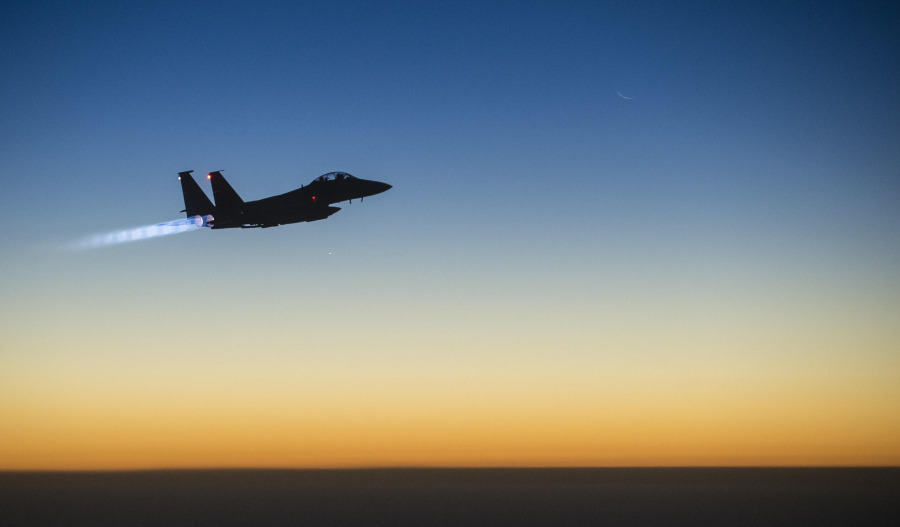
According to U.S. Central Command, American forces struck around 90 Iranian military targets, including air defence systems, coastal surveillance assets, missile and drone storage facilities, naval capabilities and logistics infrastructure along Iran's coastline.
Earlier on Wednesday, Iran said it had targeted U.S. military facilities in Bahrain and Kuwait in retaliation for previous American strikes on Iranian infrastructure.
Before the conflict began, around one-fifth of global oil and liquefied natural gas supplies passed through the Strait of Hormuz, making the waterway one of the world's most strategically important energy chokepoints. Iran's ability to disrupt traffic through the strait has remained one of its strongest sources of leverage throughout the conflict.