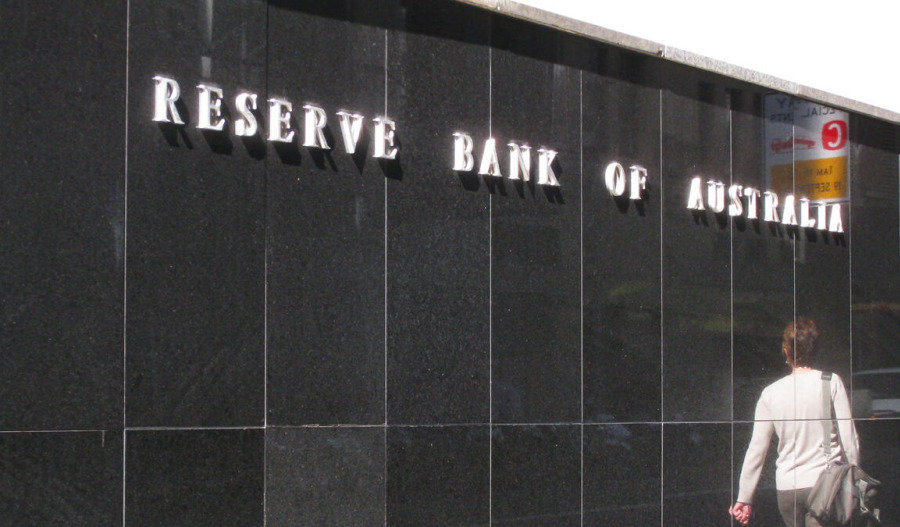

Correctly reading the tea leaves embedded with Reserve Bank (RBA) rhetoric can be tricky, and following the gaffe by former RBA governor, Phil Lowe - who misled borrowers to believe rates would remain low until 2024 – consumers are less likely to bet the rent on what the central bank nuances to the market.
However, that hasn’t stopped the market from reading a lot into the recent statement by the RBA, which said “the recent data suggest the risks to inflation have tilted to the upside, but it will take a little longer to assess the persistence of inflationary pressures”.
Based on the strength of this commentary, some market commentators were too quick to conclude that the next rate move by the RBA will be up and most probably during the second half of 2026.
RBA report card not good
At face value, it's easy to conclude that the RBA’s acumen at reining in inflation has earned it a big fat F for failure in recent years; after all, the central bank has lots of tools at its disposal to tweak the economy.
But given that the RBA - with all the resources at its disposal - can still get it wrong, early nostrums around a rate hike late in 2026 appear to be menacingly stupid.
It was only 45 days ago that the market was factoring in more cuts.
Admittedly, if the Q4 CPI prints above 0.8% quarter-on-quarter, the RBA’s resolve towards a rate hike may gather greater momentum.
However, it's a ‘big-if’, and the RBA by its own admission isn’t paying too much attention to the monthly CPI data, especially given that it’s a new data series.
What we know right now is that rates remain on hold at 3.6% until the board’s next meeting in February 2026, at which time a rate change – up or down – appears highly unlikely.
However, whether it’s wishful thinking - or they know something we don’t - the money market now has 2.1 hikes priced in by year-end 2026 with a 32% probability of a hike as early as February next year.

Two rate hikes could derail recovery
While Shane Oliver, chief economist at AMP, thinks this is an overreaction to the most recent data, he suspects the latest RBA press conference may have unwittingly fanned market speculation.
Given that the RBA may have had another 'Phil Lowe moment', the central bank might have been better served keeping its trap shut until the dust within the data created a clear picture of the road ahead.
Oliver reckons two hikes would snuff out the recovery and notes that householders with a mortgage have started to pick up spending, partly after three rate cuts, with the expectation of more to come.
He suspects that if consumers start worrying that those cuts will be reversed next year they will slow their spending, with fragile spending having relied on staged sales events (like Black Friday, EOFY, etc).
“I think the RBA is no different to other central banks and it’s always hard to get right but has become more so lately in that the world and Australia are a bit more inflation prone thanks to deglobalisation, retiring baby boomers (so more consumers relative to workers) and bigger government etc,” said Oliver.
“Don’t forget the RBA also got it wrong pre-covid with inflation below target for several years but I guess there is more tolerance for lower than higher inflation because of the impact on mortgage holders via mortgage rates.”
Based on Oliver’s take, the monthly CPI data has just confused things.
A little knowledge
In other words, we don’t know whether the further rise in October was a guide to the quarterly trend or not.
But more broadly, he thinks the monthly will be a lot more volatile, and the RBA will still end up looking at the quarterly or a 3-month average (just like they discount big moves in unemployment and wait for a few months to see if it's sustained).
While there’s clearly an argument for Australia to follow other countries and have a monthly CPI data, Oliver says there’s no evidence that not having a monthly CPI has led to worse monetary policy decisions in Australia.
“The 2-3% target is a bit arbitrary - eg other countries have 2% - But it's good enough,” Oliver told this masthead.
“Raising it would be like changing the goal posts and imply permanently higher interest rates in the economy, at least by the amount that it's raised,” he noted.
“And lowering it could create problems as the CPI tends to overstate inflation - because it’s hard to properly adjust for quality improvement in goods and services - and it would mean very little buffer before sliding into deflation.”
Time to revisit bonds?
Echoing similar sentiment to Oliver, Adam Bowe, head of Australia portfolio management at PIMCO, agrees it’s premature to conclude that the easing cycle is over.
Bowe reminds the market that pauses are a common feature of RBA monetary policy cycles, both on the way up and on the way down.
As households and businesses remove expectations of lower interest rates from their spending plans for 2026, he expects the growth and inflation data to moderate.
“With the market pricing the cash rate back above 4% and yields on 10-year Australian Commonwealth government bonds reapproaching the highs of the past 15 years, we think there is considerable value in Australian duration,” said Bowe.
Meanwhile, in light of the rash of positive and higher inflationary data since mid-October, Scott Solomon, co-portfolio manager of the T Rowe Price Dynamic Global Bond Strategy, suspects the RBA will be less ‘gung ho’ about prosecuting the likelihood of future hikes.
To do so, Solomon adds, would be a policy mistake.
“Even so, rate hikes in 2026 are a real possibility as signs of renewed inflation pressure emerge.”