
Donald Trump cancelled Thursday night's planned attacks on Iran hours after promising them, declared a peace agreement approved by all parties, and the Dow jumped more than 900 points as Brent crude slid towards US$88 per barrel.
Not bad for a 24-hour stretch in which the same account had vowed to hit Iran very hard that night and seize Kharg Island, the country's main oil export hub.
Here's the wrinkle the relief rally skipped past - the naval blockade remains in full force until the signing, so markets are pricing a peace whose critical chokepoint stays shut.
And the asset that matters most isn't crude at all, but a gas most punters associate with kids' birthday parties.
When Iranian missiles hammered Qatar's Ras Laffan complex in early March, QatarEnergy halted output and declared force majeure on long-term LNG contracts to buyers across Europe and Asia.
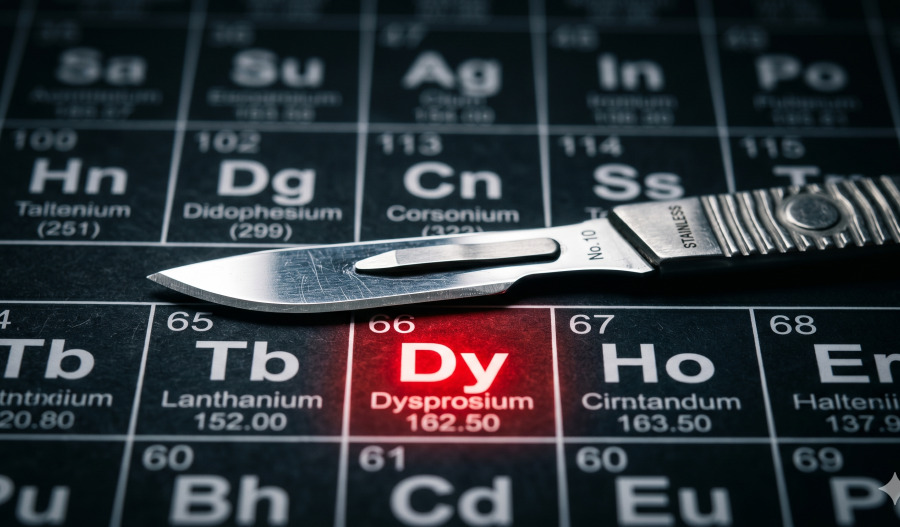
Ras Laffan also happens to yield roughly one-third of the world's helium, an element no advanced chip fab runs without, and those volumes vanished along with the LNG.
The kicker is the timing, because since hostilities kicked off in late February the S&P 500 has gained more than 7% while the index stripped of AI stocks has gone precisely nowhere.
Wall Street's licence to look through a shooting war rests entirely on a trade that sources its feedstock from inside one.
Don't hold your breath
Qatar produces between 30% and 35% of global helium as a by-product of gas extraction, every molecule of it exiting the Persian Gulf through the Strait of Hormuz.
Iran's closure of the strait to Western shipping from early March, paired with the Ras Laffan damage, knocked out both the gas and its route to market in one hit.
Spot quotes for uncontracted helium surged 70% to 100% within a week of the stoppage, according to consultants tracking the trade.
IndexBox reckons the monthly shortfall runs to 5.2 million cubic metres, with alternatives from Russia's Amur project, German storage and U.S. caverns plugging only about half the gap.
Repairs to the damaged trains haven't even begun, which makes this a duration problem rather than a price problem - a signed peace deal doesn't rebuild gas infrastructure.

Nothing else floats
"Helium rarely features in boardroom discussions, yet it is non-substitutable in advanced semiconductor manufacturing," Frost & Sullivan analysts said.
The gas cools the EUV lithography machines that print transistors at three nanometres, purges etching chambers of contamination and keeps vacuum conditions stable where a single stray particle wrecks a wafer.
Fabs hold limited on-site storage, so a sustained interruption becomes production risk within months, not years.
Demand is sprinting the wrong way for a deficit, too, with IDTechEx projecting the industry's helium consumption to grow more than fivefold over the next decade as nodes shrink and AI capacity scales.
Moody's analysts put the dependency chain plainly - GPUs rely on Qatari helium, Israeli bromine and tankers exiting the Gulf through a passage 21 miles wide.
Freight expectations
Helium is the sharpest squeeze, but the war is taxing chipmakers through every door at once.
Access to bromine and aluminium has tightened, while fab energy bills have become what William Blair analysts call the most acute problem facing manufacturers.
TSMC (NYSE: TSM), Foxconn and Infineon all flagged conflict-related disruption in their latest results, and Swiss component maker VAT Group copped a hit of up to CHF25 million rerouting shipments around the mess.
Freight moved first, with VLCC day rates surging past $400,000 to record highs in early March while LNG tanker rates jumped more than 40% across Atlantic and Pacific routes.
Taiwan, which imports nearly all of its energy as seaborne LNG, fabricates the bulk of the world's leading-edge logic - a sentence worth reading twice.
Priced for peace, built on gas
The cost channel finally showed up in Thursday's data, with U.S. producer prices rising 1.1% in May against a 0.7% forecast, lifting annual wholesale inflation to 6.5% - its highest since November 2022.
Core ran below consensus, fingering energy as the culprit, and the European Central Bank hiked a quarter point to 2.25% the same day, with the war blowing inflation off target.
Almost none of this shows up in chip valuations, which made their one major move of the war - the Philadelphia Semiconductor Index's 10% rout on 5 June - on a U.S. jobs report rather than anything Tehran did.
Contracted volumes shield most helium buyers for now, though consultants warn that protection lasts only until suppliers start declaring force majeure of their own.
What to watch:
- The signing Trump says is imminent, and whether the naval blockade - and Hormuz traffic with it - actually lifts
- QatarEnergy's repair timeline for the Ras Laffan helium trains, the number that defines how long the squeeze runs
- Force majeure spreading from LNG into helium contracts, the trigger for locked-in volumes to move to spot
- Gross margin guidance from TSMC, SK Hynix and Micron (NASDAQ:MU) next quarter, the first place feedstock inflation will surface