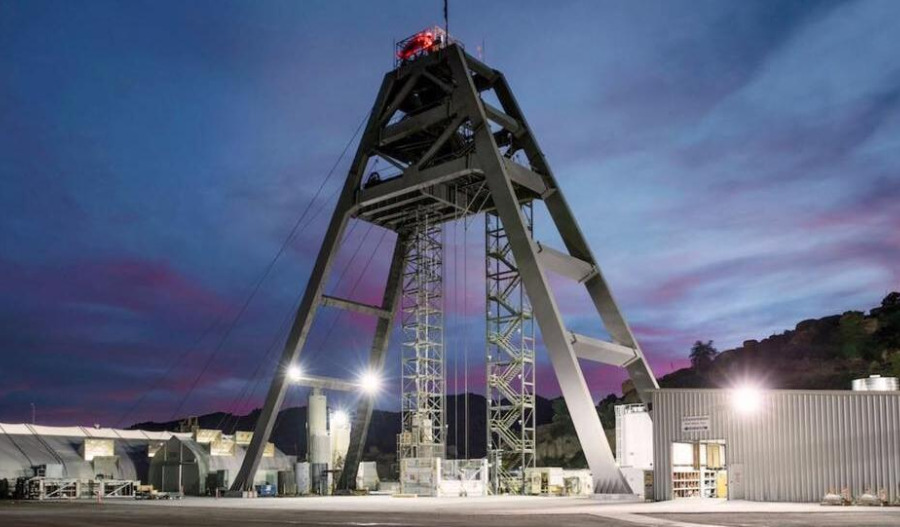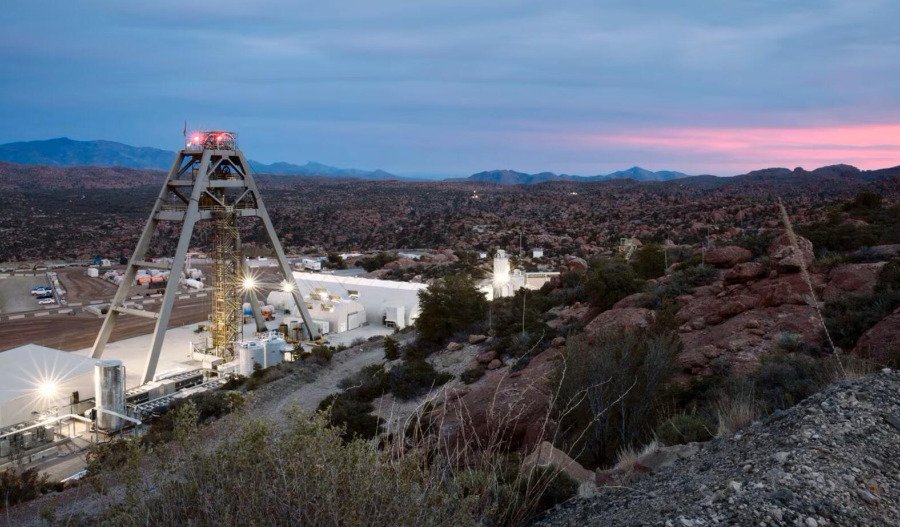
Resolution Copper - the Rio Tinto-BHP JV sitting on an estimated 40 billion pounds of copper beneath Arizona's Oak Flat - completed a landmark land exchange on 16 March, clearing the single biggest obstacle that has stalled the project since 2014.
Catch is, the land is sacred to the San Carlos Apache, the Supreme Court is fielding a last-ditch appeal, and production remains years of permitting and US$500 million in capex away.
Last Sunday, the U.S. Forest Service handed over 2,422 acres of federal land near Superior, Arizona, to Resolution Copper, completing a transfer stuck in gridlock since 2014.
The development barrier stretches back more than a decade, when the late Senator John McCain attached a land-swap rider to the National Defense Authorization Act (NDAA).
In return, the JV transferred more than 5,400 acres of environmentally sensitive land containing special status species and Native American cultural sites into National Forests and Conservation Areas.
A Ninth Circuit ruling upheld a district court decision a week ago, denying a preliminary injunction that sought to halt the handover on environmental and cultural grounds, clearing the path for the swap to proceed.
"This is a remarkable day for both Resolution Copper and Arizonans," Resolution Copper President Vicky Peacey said.
Resolution has flagged ~$500 million in preliminary capex over two years to fund drilling, infrastructure upgrades, and initial underground development alongside support for Native American tribes and local communities.
By any measure, the orebody is sizeable, with Rio reporting an inferred resource of 1.624 billion tonnes (t) grading 1.47% copper at depths exceeding 1,300m.
Oak Flat could yield up to 40 billion pounds of the red metal over 40 years, potentially satisfying up to 25% of America's copper demand.
Washington has skin in the game
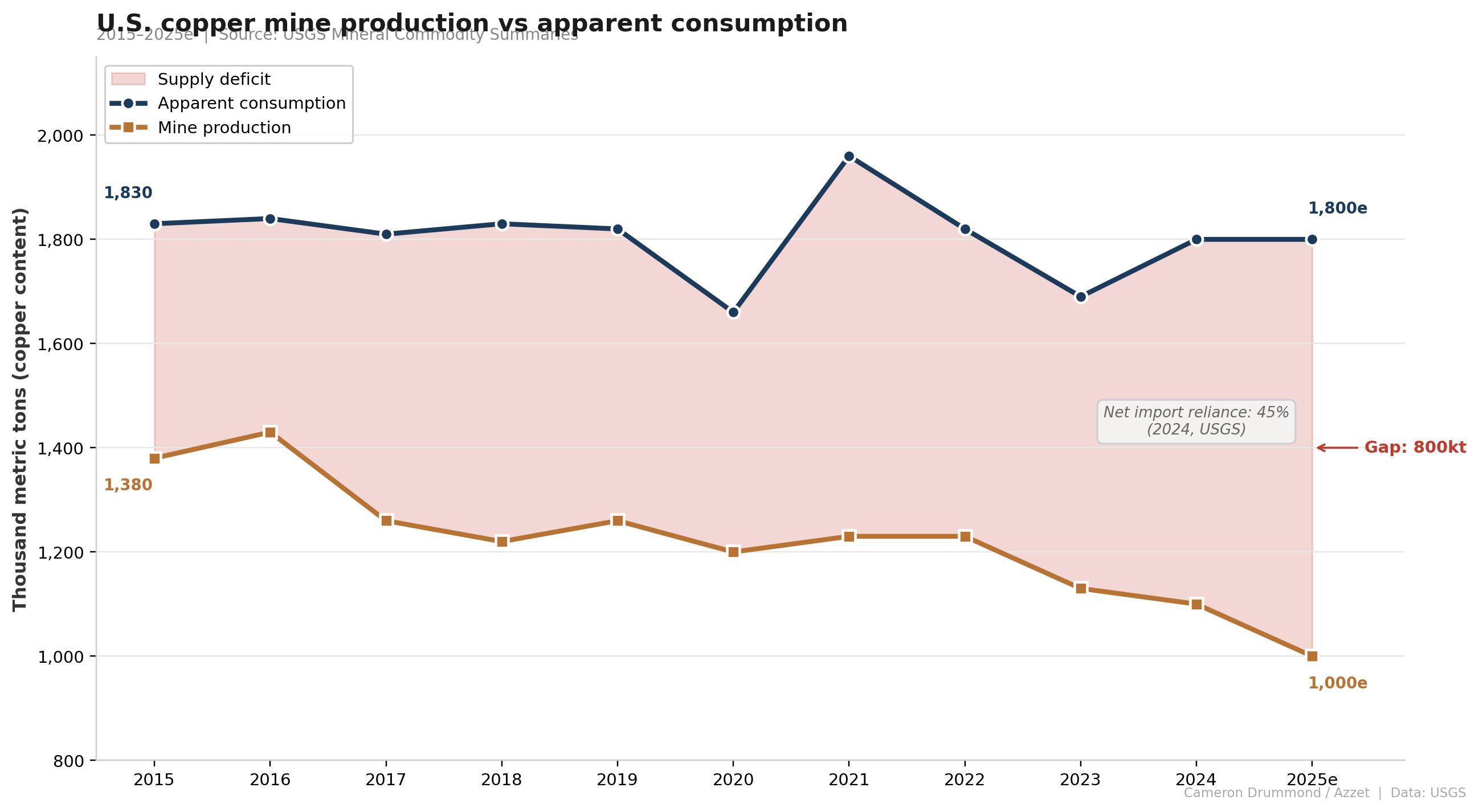
Timing isn't accidental, given that the U.S. produced 1 million tonnes (Mt) of copper in 2025 but consumed roughly 2.5Mt, importing close to 45% of its needs.
USGS added copper to the federal critical minerals list in November 2025, and the supply outlook has only worsened since then.
ING forecasts a 600,000t refined copper deficit in 2026, following a 200,000t shortfall the year prior, driven by cascading mine disruptions and tariff-related trade distortions.
S&P Global warned in January that demand is projected to hit 42Mt by 2040 - a 50% jump - while global mine output is expected to peak at 33Mt in 2030.
That trajectory leaves a 10Mt supply gap by 2040 as AI, electrification, and defence spending all converge on a single commodity.
History suggests that the gap won't close easily - Alaska's Pebble Mine was vetoed by the EPA in 2023 despite holding one of North America's largest copper-gold deposits, Romania's Rosia Montana gold project was killed by UNESCO heritage listing after years of public protest, and the Philippines' Tampakan copper deposit remains frozen by a provincial open-pit mining ban.
Agriculture Secretary Brooke Rollins framed the project as a national security imperative, calling it an example of "bureaucratic and legal chokeholds" preventing onshore mineral production.
That language tells you where the political wind is blowing - critical minerals are no longer a niche Washington conversation, and Resolution Copper is exhibit A.

Sacred ground, unfinished fights
Land transfer may be done, but the opposition is far from over, with a group of Apache women filing an emergency application with the U.S. Supreme Court on 16 March.
Applicants are seeking to block mining at Oak Flat - a site the San Carlos Apache and other tribes have used for centuries for religious ceremonies, prayer, and the gathering of medicinal plants.
They argue the high court's June ruling in Mahmoud v. Taylor opened a fresh legal pathway, citing free-exercise protections for Apache parents directing the religious upbringing of their children.
Justices had already declined to hear Apache Stronghold's earlier case in May 2025, with Gorsuch joined by Thomas in dissent, calling the decision a "grievous mistake".
Justice Department lawyers countered that the handover had already occurred and the court lacked jurisdiction to unwind a completed transaction.
U.S. Solicitor General John Sauer argued the applicants were no longer seeking to preserve the status quo but to reverse it entirely.
"The fight for Oak Flat raises critical issues about the environment and our nation's commitment to Native rights and religious freedom," Apache Stronghold's Wendsler Nosie Sr. said.
The road from land to metal
None of which means copper is arriving any time soon, because nowadays half a trillion gets you a starter kit program which covers drilling, infrastructure, and early underground access to prove up the resource.
Construction will require separate state and federal sign-offs across water, air quality, tailings, and endangered species before any full-scale development can begin.
And the required panel caving at depths >2,000m ranks among the most technically demanding disciplines in underground mining globally.
Rio has navigated this terrain before with Oyu Tolgoi in Mongolia, where underground timelines stretched years beyond projections, and capex blew past original estimates.
BHP understands the mechanics of block caving from its own portfolio, but neither operator is under any illusions about what lies ahead.
Once in production, the operation is expected to generate approximately 1,450 jobs, $149 million in annual wages, and between $80 million and $120 million per year in state and local taxes.
Resolution Copper has cleared its single biggest obstacle - the orebody is world-class, the political tailwind is as strong as it's ever been, and both JV partners can bankroll what comes next.