

Superannuation fund members should see short-term falls in returns due to the Middle East war in the context of the long-term nature of super, according to Chant West.
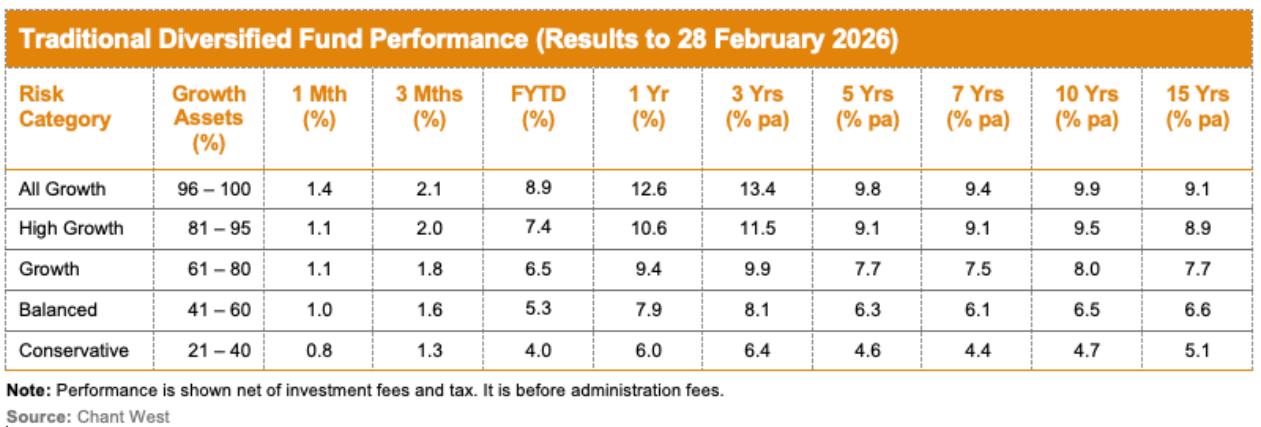
Funds delivered a positive return in February with the median growth fund (61–80% invested in growth assets) gaining 1.1% for the month, but markets have since come under pressure.
Share markets had fallen in response to the escalation of the United States and Israeli conflict with Iran in early March, which pushed oil prices higher and raised interest rate concerns amid rising inflation.
The research, data and analytics provider estimated the median growth fund was down 3.8% so far in March, reducing the financial-year-to-date (FYTD) return to about 2.5%.
Head of Superannuation Investment Research Mano Mohankumar said it was important for fund members to see short-term movements in context during periods of volatility.
“It’s critical for members to keep in mind that super is a long-term investment and there will inevitably be periods of market weakness through their super journey,” he said in a media release.
“While we recognise that members have different levels of comfort when their balance goes backwards, the majority can afford to remain patient, including many older members.

“A lot of Australians don’t take out all of their super as a lump sum at retirement, meaning a substantial amount is likely to remain within the super system in the pension phase, often for many years.
“In reality, their investment horizon is longer than they might think.”
Mohankumar said some people considered moving to lower-risk options or cash when markets fell sharply with a view to moving back later, out of fear or as an attempt to time the market.
“Far more often than not, that approach results in poorer long-term outcomes than if they stay the course,” he said.
“Not only do they crystalise their losses, but also risk missing part or all of the subsequent market rebound. We would encourage those members who are thinking of switching options to see a financial adviser.”
MySuper products had been operating for just over 12 years, so it was important to remember that super was a much longer-term proposition when considering performance.
Since the introduction of compulsory super in July 1992, the median growth fund had returned 8% a year, compared with the inflation rate of 2 .7%, giving a real return of 5.3%, which was well above the typical 3.5% target
Over the last 20 years, which includes three major share market downturns, super funds have returned 6.8%.