The International Monetary Fund (IMF) has lowered its 2026 global growth forecast, warning that the world economy faces continued risks from the Middle East conflict, trade fragmentation and a potential correction in artificial intelligence-driven market expectations.
The IMF now expects the global economy to expand 3.0% in 2026, down from its April forecast of 3.1%, before growth rebounds to 3.4% in 2027. The forecast remains below the 3.5% average growth recorded in 2024 and 2025.
The lender said the global economy had so far avoided a sharper slowdown, with strong demand for artificial intelligence and related technologies helping offset the economic impact of disruptions to energy supplies caused by the war in the Middle East.
However, the IMF warned that inflation pressures were likely to remain elevated, raising its 2026 global headline inflation forecast by 0.3 percentage points to 4.7% from April. Inflation is expected to ease to 3.9% in 2027.
Energy prices remain a key driver of the outlook, with the IMF noting that prices were around 25% higher than before the war began on 28 February and expected to remain elevated.
The updated forecast assumes the Strait of Hormuz will begin reopening in mid-July, with shipping activity gradually returning to pre-war conditions by March 2027. The IMF's baseline scenario assumes an average oil price of US$89 per barrel.
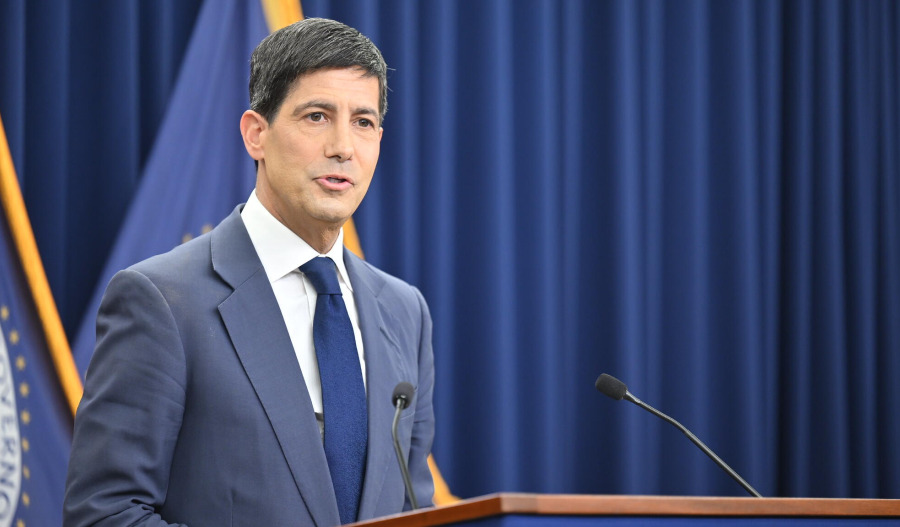
"In effect, we expect a V-shaped recovery, weaker growth this year relative to our pre-war forecast, followed by a rebound next year," Petya Koeva Brooks, deputy director of the IMF's research department, was quoted as saying in this Reuters article.
"The world economy has weathered the shock from the war better than feared so far, with limited evidence of second round effects."
War and AI create uneven outlook
The IMF said the economic impact of the conflict has varied significantly depending on countries' exposure to energy markets and their position in the global technology supply chain.
Energy exporters outside the conflict zone have benefited from higher prices, while economies closely connected to artificial intelligence-related manufacturing have gained from stronger technology demand.
By contrast, energy-importing economies with limited exposure to the technology sector have faced weaker growth prospects.
Global trade growth is expected to slow sharply to 3.5% in 2026, down from 5.0% in 2025, before recovering to 4.3% in 2027.
The IMF attributed the slowdown partly to heavy front-loading ahead of U.S. tariffs in 2025, alongside ongoing trade fragmentation and supply-chain adjustments.
Brooks said the impact of higher oil prices had been limited by strategic reserve releases, increased production outside the Gulf, improving energy efficiency and the expansion of renewable energy.
"There's still a lot of uncertainty," she said.
"A renewed escalation in the conflict could reignite commodity price volatility, tighten financial conditions, strain policy buffers, and worsen food insecurity in low-income countries."
The IMF also warned that a sharp correction in AI-related investments represented another downside risk.


Middle East escalation remains key risk
The IMF's updated outlook was released as renewed military tensions between the United States and Iran raised concerns about the durability of a fragile ceasefire.
U.S. President Donald Trump said a memorandum of understanding with Iran to end the conflict was "over", while U.S. forces launched fresh strikes against Iranian targets.
"A renewed conflict in the region is going to catch the global economy in a worse position than it was the first time," Deniz Igan, who leads the IMF's work on economic updates, told Reuters.
Igan said many countries had already drawn down oil reserves, reducing their ability to absorb another supply shock.
The IMF said inflation expectations had generally remained anchored, although higher energy prices had pushed headline inflation higher.
Regional growth forecasts revised
The IMF left its U.S. growth forecast unchanged at 2.3% for 2026, while slightly raising its 2027 projection to 2.2% from 2.1%.
The euro area outlook was downgraded, with growth expected at 0.9% in 2026, down from the previous forecast of 1.1%, while the 2027 estimate remained unchanged at 1.2%.
Japan's 2026 growth forecast was lowered by 0.1 percentage point to 0.6%, while the 2027 forecast was increased by the same amount to 0.7%.
South Korea was among the biggest beneficiaries of the AI boom, with its 2026 growth forecast upgraded by 0.7 percentage points to 2.6% due to strong semiconductor exports.
China's 2026 growth forecast was raised to 4.6% from 4.4%, following stronger-than-expected first-quarter growth, while India's forecast was slightly reduced to 6.4% from 6.5%.
The Middle East and Central Asia region received the largest downgrade, with growth expectations cut to 0.7% in 2026, down 1.2 percentage points from April, before rebounding to 6.5% in 2027.
Inflation outlook remains challenging
The IMF said global inflation was likely to temporarily reverse its declining trend, rising from 4.1% in 2025 to 4.7% in 2026 before easing again.
Higher energy and food prices are expected to drive much of the increase, while core inflation is expected to return to central bank targets only gradually.
The IMF warned that renewed conflict, higher tariffs or a sharp AI market correction could create further economic pressure.
At the same time, stronger-than-expected AI investment, faster energy market normalisation and improved international cooperation could provide upside risks.
The organisation said policymakers must balance inflation control with economic support while rebuilding fiscal buffers.
"Monetary policy should continue to remain focused on preserving price stability," the IMF said in its World Economic Outlook.
It added that governments should avoid broad subsidies and price controls, instead using temporary and targeted support measures where necessary.