
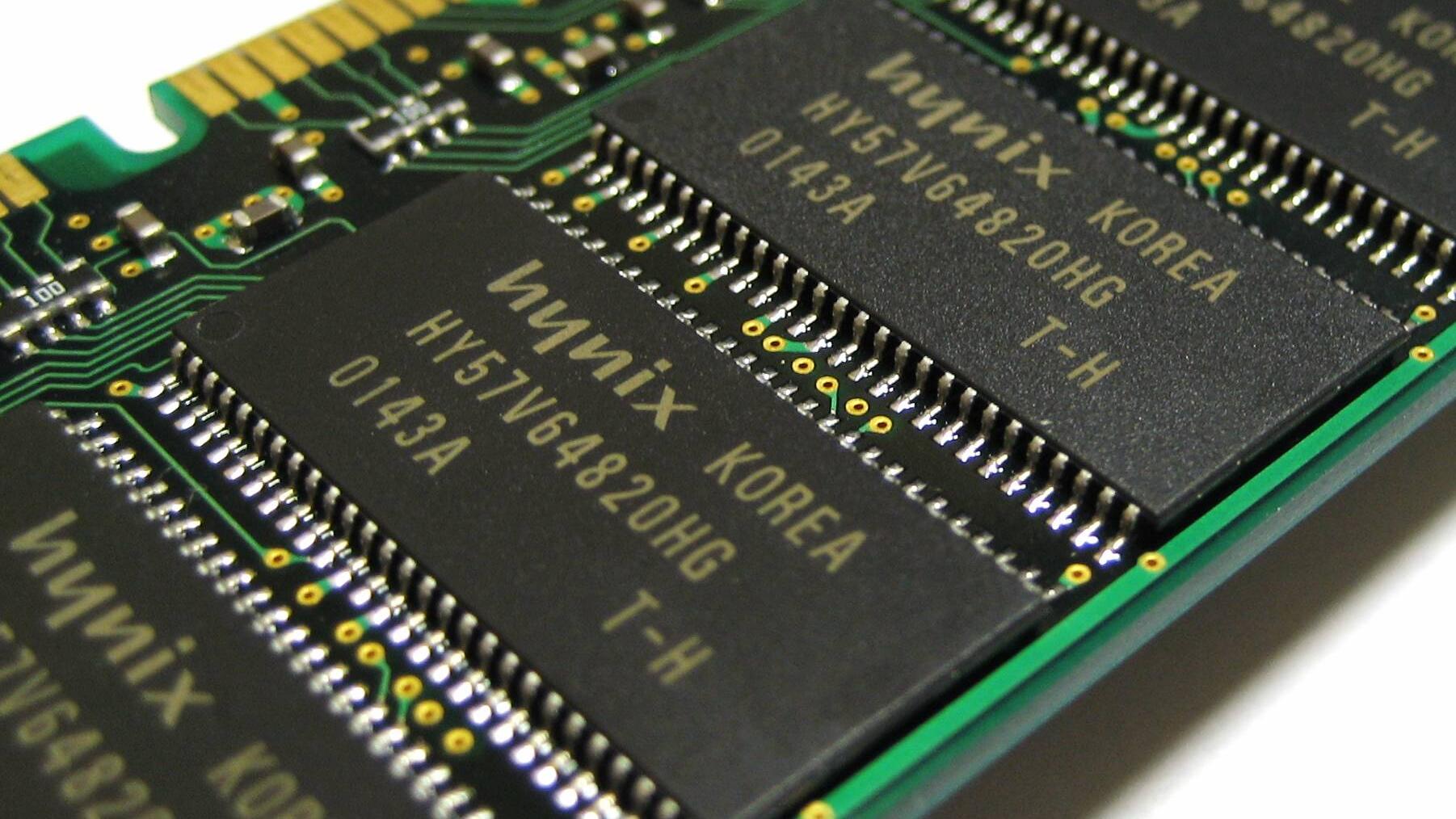
Prices for many consumer electronic devices, including smartphones and computers, are set to spike this year amid a major shortage of memory chips.
These memory components temporarily store data on a device to help it complete tasks like using apps or browsing the internet. Memory prices surged 80-90% in the first month of 2026, a record-breaking spike, according to Counterpoint Research.
The shortage has been driven by companies diverting production towards artificial intelligence chips, and is projected to cause massive declines in the smartphone and PC markets. Relief is unlikely until at least 2028, once new factories come online.
Why is this shortage happening?
Memory prices have skyrocketed so far in 2026, largely due to rising demand for artificial intelligence chips.
Samsung, SK Hynix, and Micron represent around 93% of the market for DRAM memory components, the variety used in consumer electronics. However, these companies are increasingly rerouting memory production to high-bandwidth memory chips, which supply AI data centres and growing AI training demands.
Newer AI models require greater amounts of memory storage to train, and AI companies are drastically scaling up their data centre capacity in order to do so. “The amount of memory that’s needed for AI to be useful is increasing quite substantially,” said Nvidia CEO Jensen Huang in February.
There are more than 11,000 data centres worldwide as of March, and companies are expected to invest almost US$7 trillion in building and upgrading these sites from 2026 to 2030.
Now, prices for remaining DRAM chips are soaring. Samsung’s revenue per bit from DRAM components will rise 116% year-on-year to $0.79 in 2026, per Visible Alpha estimates, while SK Hynix’s will climb by 78% and Micron’s will grow by 54%.


What effect is it having?
The shortage is set to cause a major downturn in device sales this year, particularly smartphones and PCs.
Last year, global smartphone shipments posted their best year since 2021, rising 2% to 1.25 billion units. However, prices are expected to surge due to growing memory costs.
Memory and storage represents 10% to 33% of a smartphone’s bill of materials, per Omdia. DRAM and solid-state drive memory costs will soar by 130% in 2026, Gartner has projected, leading to a 13% increase in smartphone prices.
Smartphone shipments in 2026 will likely plummet as a result, with IDC predicting a 6.8% decline in the year’s first quarter and a 12.9% drop across the year. Chipmaker Qualcomm issued weak guidance for its phone business in February, saying that smartphone manufacturers will build fewer devices this quarter. This is “100% related to memory”, CEO Cristiano Amon said on an earnings call.
PC prices will also spike by 17% in 2026, Gartner forecast. This includes a major surge in prices for higher-end laptops, with Apple saying in March that its newest MacBook Pro model would be priced $400 above previous generations. However, the increase is expected to hit budget-level laptops particularly hard.
“This sharp increase removes vendors’ ability to absorb costs, making low-margin entry-level laptops nonviable,” said Gartner senior director analyst Ranjit Atwal. “Ultimately, we expect the sub-$500 entry-level PC segment will disappear by 2028.”
Lenovo, Dell, HP, Asus, and Acer are all reportedly planning PC price hikes of 15-20%. The PC market is set to decline 11.3% this year, IDC forecast.
Market declines are also being worsened by delayed device releases. Sony is considering postponing its next PlayStation console to 2028 or 2029, according to Bloomberg, and Nvidia has reportedly decided not to launch a gaming GPU this year.
When will it end?
The shortage is likely to last until at least 2028 as the sector waits for new factories to ramp up memory production.
Intel CEO Lip-Bu Tan said in February that memory producers had indicated the shortage would continue for around two years. “There’s no relief until 2028,” he said, as AI will “suck up a lot of memory”.
The shortage is set to end as memory producers ramp up production at new factories, per the Bloomsbury Intelligence and Security Institute (BISI). Micron is currently building a memory fabrication facility in Boise, Idaho, which it expects will begin DRAM production in 2027. It plans to also add a second facility in the same area and another factory in Taiwan in the coming years.
SK Hynix, meanwhile, said in January that it will open the first factory at its new cluster in Yongin, South Korea three months early in February 2027 to meet soaring memory demand.
However, as these factories come online, memory oversupply could become an issue. If AI demand slows while fabrication capacity is expanding, a glut of memory components could enter the market, according to BISI.