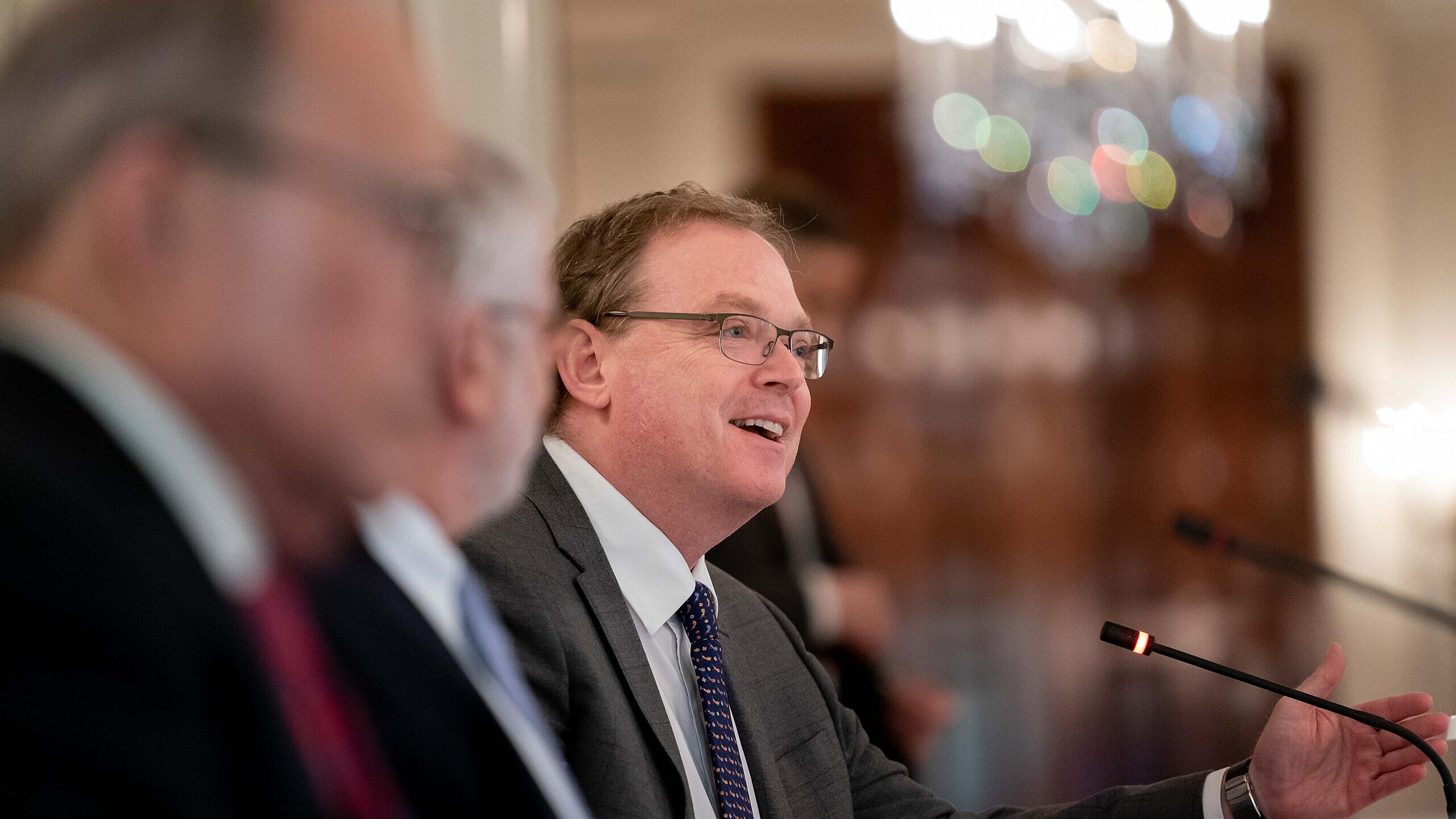
National Economic Council Director Kevin Hassett said on Tuesday (Wednesday AEDT) that the Federal Reserve is not cutting interest rates quickly enough, despite the United States economy growing at a much faster-than-expected pace in the third quarter.
Hassett, a leading contender to succeed Federal Reserve Chair Jerome Powell when his term ends in May, argued that the rapid expansion of artificial intelligence is lifting economic growth while at the same time placing downward pressure on inflation.
“If you look at central banks around the world, the U.S. is way behind the curve in terms of lowering rates,” Hassett told CNBC in a “Money Movers” interview.
The comments came after data showed the U.S. economy expanded at an annualised rate of 4.3% in the third quarter, well above forecasts of 3.3%.
Hassett said the strength of the expansion reflects structural improvements in productivity linked to artificial intelligence.
“The artificial intelligence productivity boom is really clearly in the data”, Hassett said, adding that growth outcomes have consistently beaten expectations.
On average, he said, citing Bloomberg data, economic growth has outperformed forecasts 94% of the time.
Hassett also pointed to President Donald Trump’s trade policies as a key contributor to recent economic performance.

He said around 1.5% of third-quarter growth was driven by tariffs that reduced the U.S. trade deficit, adding to momentum across the broader economy.
He has previously argued that the Trump administration’s trade agenda is working in part because of a narrowing deficit.
The Federal Reserve cut interest rates by a quarter of a percentage point on 10 December, marking its third reduction this year.
However, policymakers signalled that the pace of future cuts could slow, reflecting caution around inflation risks.
The decision was a close one. Three Federal Reserve governors dissented against the quarter-point move, the highest number of dissenting votes since 2019.
President Trump has repeatedly criticised the central bank for not lowering rates more aggressively.
Hassett’s potential elevation to the Fed’s top job has raised concerns among some market participants that he could be too closely aligned with the White House.
Trump said in a national address last week that he will announce his nominee for Federal Reserve chair soon, adding that he will choose “someone who believes in lower interest rates by a lot”.