Gold prices extended losses during Thursday’s Asian trading session, falling to multi-month lows as renewed tensions between the United States and Iran boosted the U.S. dollar and revived concerns about inflationary pressures.
By 3:25 pm AEST (5:25 am GMT), spot gold prices were trading 1.8% lower at US$4,376.56 per ounce.
Market sentiment deteriorated after reports of fresh military strikes involving both countries, dampening earlier hopes of a broader peace agreement and prompting investors to reassess expectations for global inflation and interest rates.
Earlier this week, the U.S. Central Command spokesperson Tim Hawkins said in a statement that U.S. forces had carried out strikes in southern Iran targeting missile sites and vessels allegedly attempting to place naval mines.
U.S. Central Command confirmed further strikes targeting a military site in Bandar Abbas early on Thursday, a strategically important Iranian port city near the Strait of Hormuz.
Iran’s Revolutionary Guards later said they had targeted a U.S. airbase at 4:50 am local time after what they described as an early morning American attack near Bandar Abbas airport, according to Tasnim news agency.
The escalation added fresh uncertainty to markets that had previously hoped diplomatic negotiations could ease tensions and stabilise energy markets.

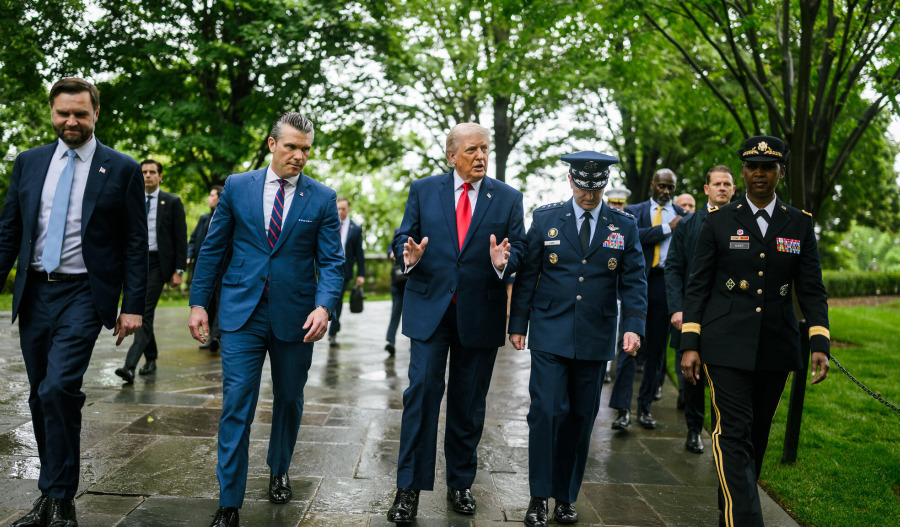
President Donald Trump said he would not rush into a deal with Iran, while reiterating that the Strait of Hormuz would remain “open to everybody” and that the United States would “watch over it”.
Trump also stated on Wednesday that the United States would not ease sanctions on Iran or release frozen Iranian assets as part of negotiations.
Adding to geopolitical pressure, the U.S. Treasury Department announced sanctions against the Persian Gulf Strait Authority, the organisation Iran established to manage operations in the Strait of Hormuz.
The renewed conflict helped drive a rebound in oil prices after sharp declines earlier in the week, reinforcing concerns that higher energy costs could complicate the Federal Reserve’s inflation outlook.
Rising oil prices have increased market expectations that the Fed may need to raise interest rates again before the end of the year, supporting the U.S. dollar while weighing heavily on non-yielding assets such as gold.
The stronger greenback also reduced the appeal of bullion for overseas investors, contributing to the latest leg lower in precious metals prices.
Investors are now closely watching the release of the personal consumption expenditures (PCE) price index, the Federal Reserve’s preferred inflation measure, for further signals on the future direction of U.S. monetary policy.
The inflation data is expected to play a significant role in shaping expectations around interest rate decisions under Federal Reserve chair Kevin Warsh as policymakers weigh persistent inflation risks against slowing economic momentum.