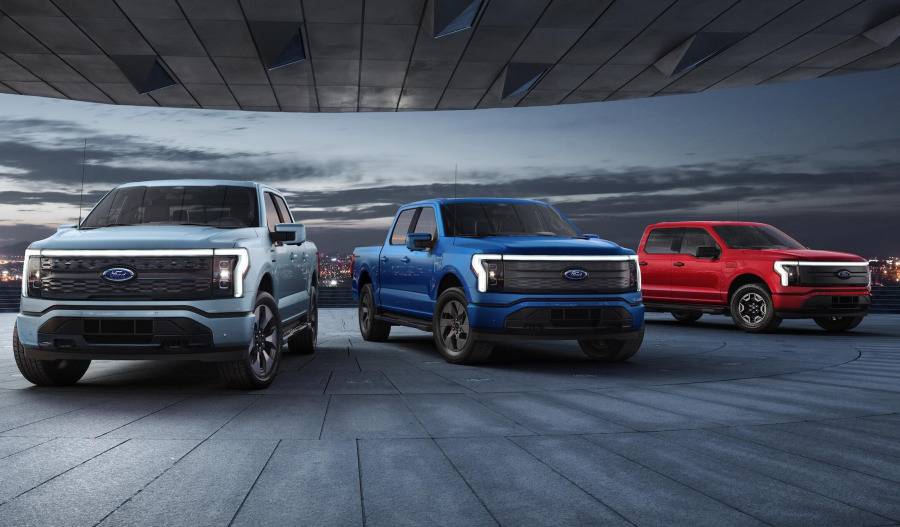
Ford Motors fell short of quarterly earnings estimates but still forecasts 2026 to be a rebound year for the automaker.
Earnings per share was 32% lower than analysts' expectations of 19 cents per share, coming in at 13 cents per share.
This was the company’s first quarterly miss since 2024 and its worst since a 42% difference when reporting its 2021 fourth-quarter earnings.
The earnings miss was primarily driven by unexpected tariff costs of US$900 million related to credits for auto parts not taking effect as early as expected, according to the company.
As of 15 December, Ford confirmed it has $7.7 billion in earnings before interest and taxes for the first quarter, but additional costs dropped that to $6.8 million.
Fires at a Novelis aluminium supplier in New York last year also contributed to the lower than expected earnings.
The supplier isn’t expected to be fully operational until the middle of this year, according to Ford CFO Sherry House.
“We will see a billion-dollar benefit roughly in 2026; however, this year, due to the Novelis impact, we’re going to have tariffs increasing in order to secure aluminium that is roughly the same amount of that savings,” House told reporters.

Despite the miss in earnings, the company reported revenue of $42.4 billion for Q4 2205, surpassing expectations of $41.83 billion. However, revenue was still down 5% year-over-year.
The company reported revenue of $187.3 billion for the full year, up 1% from $185 billion in 2024.
After a volatile 2025, the company expects a strong 2026.
“Improvements in our industrial system, a robust product roadmap that leverages our core strengths, and a disciplined approach to capital efficiency will drive even stronger results in 2026 and beyond,” House said.
“We remain relentlessly focused on three key levers to improve margins: improvements in EVs, highly accretive anti-cyclical businesses that grow and change our risk profile and next generation core products.”
For 2026, the company expects adjusted EBIT of $8 billion to $10 billion; adjusted free cash flow of $5 billion to $6 billion; and capital expenditures of $9.5 billion to $10.5 billion.
House also said Ford’s net tariff impact is expected to be roughly flat year-over-year at $2 billion in 2026.
At the time of writing, Ford (NYSE: F) shares fell 0.15% to $13.57 and rose 0.52% in after-market trading to $13.64. Its market cap is $54.07 billion.