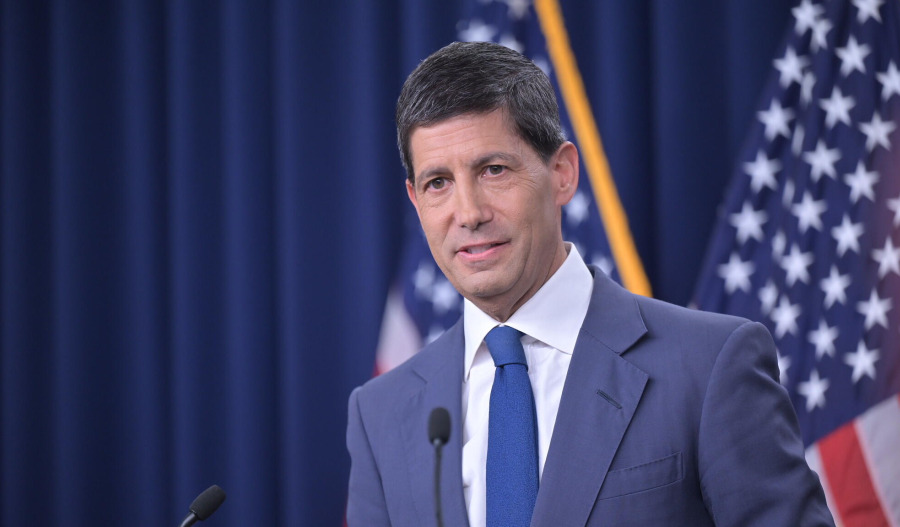
Cleveland Federal Reserve President Beth Hammack on Thursday reiterated her call for higher interest rates, saying persistent inflation means the central bank needs to act.
Hammack told CNBC that a report released on Wednesday showed inflation running at around 3% on an annualised basis.
While the monthly pace of price increases has slowed in recent months, she said inflation remains too high and monetary policy should be tightened.
“I don’t want to prejudge anything. But I believe now is the time to act,” she said in a live CNBC interview from the Fed’s annual symposium in Jackson Hole, Wyoming.
“I believe that we’ve been in an inflationary situation for more than five years. It’s been running well above our target. I don’t see any restriction in policy when I look at financial conditions and when I talk to market participants.”
Hammack made similar comments at the Federal Open Market Committee's July meeting, when she was one of three policymakers who dissented from the decision to keep the Fed's policy rate in a range of 3.5%-3.75%. The three preferred a 25-basis-point rate increase.

She said the Fed still needs to take action against inflation, which is putting pressure on household budgets.
“The longer inflation stays above our objective, the harder it will be for us to bring it back down, and the more pain that individuals and businesses are going to be experiencing,” she said.
“To me, the real problem with us missing on our inflation objective for so long is the risk that an inflationary mindset starts to set in with the public.”
Inflationary pressures this year have been linked to the impact of the Iran war, tariffs and demand associated with artificial intelligence. While policymakers typically look through supply shocks and other factors considered temporary, some Fed officials are concerned that the effects could become entrenched in the economy.
Hammack said she recently met workers in Erie, Pennsylvania, who “were all saying that they’re feeling a sense of despair. They’re working every day, coming in, they’ve got good jobs, and yet they still feel like they can’t make ends meet. They can’t go and afford an ice cream cone on the weekend with their kids.”
Despite Hammack's hawkish stance, market pricing indicates investors expect the Fed to leave rates unchanged at both its September and October meetings, with the next rate increase currently priced for December.