

Economic and consumer confidence have deteriorated in Europe in March as the war in Iran stretches into its fifth week.
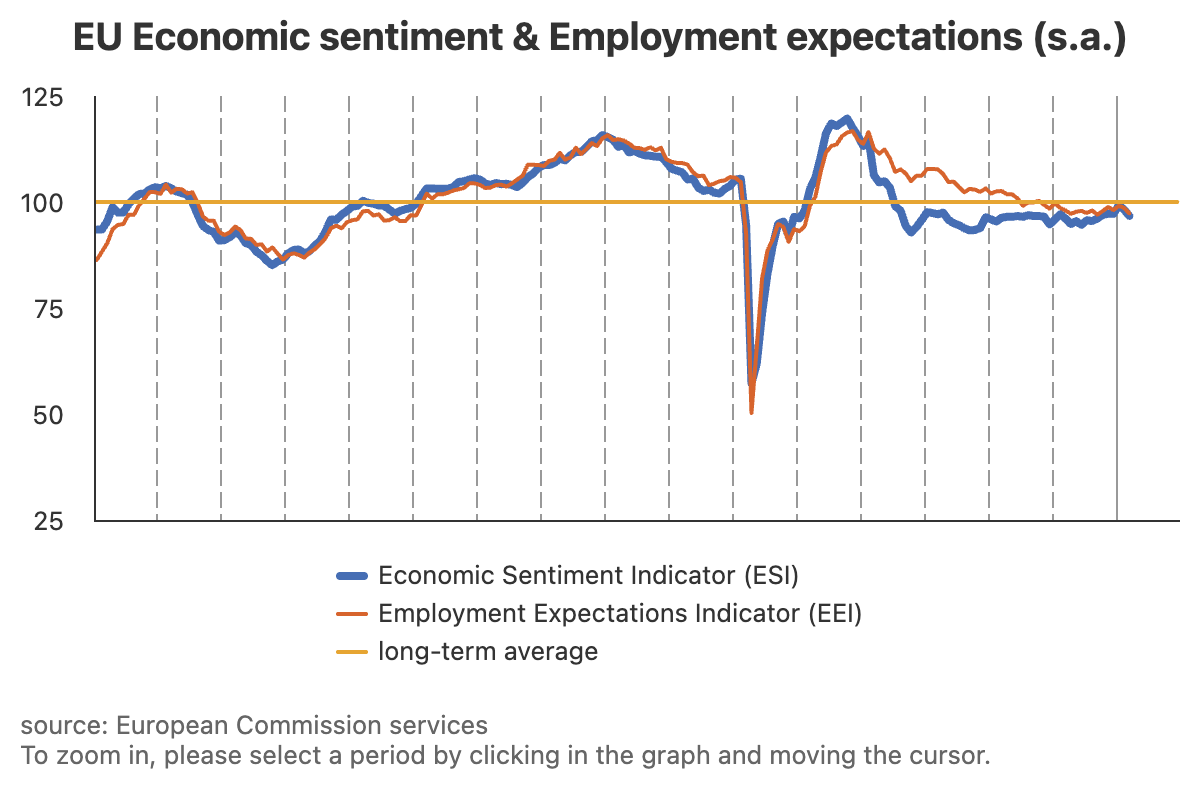
According to preliminary data from the European Commission, economic sentiment in the EU dropped 1.5 points to 96.7 and declined in the euro area by 1.6 points to 96.6.
The figures also measure economic sentiment across five sectors of the European economy and reveal that employment expectations are under pressure in the EU and the eurozone.
In the wake of the Middle East war, employers in retail trade, services and industry sectors are adjusting their employment plans.
This follows the deterioration seen in February, with the Commission warning that the latest data points showed a “marked deterioration of economic sentiment in March”, which had driven both economic sentiment and employment expectations “away from their long-term average of 100.”

Consumer confidence also fell to its lowest level in over two years, “driven by a dramatic decline in consumers’ expectations for the overall economic situation in their country.”
“Consumers also became markedly more pessimistic about their household’s future financial situation and less prone to make major purchases over the next 12 months,” the Commission added.
It follows separate data showing euro zone private sector output fell to a 10-month low and toward contraction territory in March, raising fears of looming “stagflation”.
The European Central Bank said it now expects economic growth of 0.9% in 2026, and headline inflation to average 2.6% this year.
This also comes as European leaders refused to get involved in the U.S. and Israel’s war with Iran, seeing the war as one of choice rather than necessity.