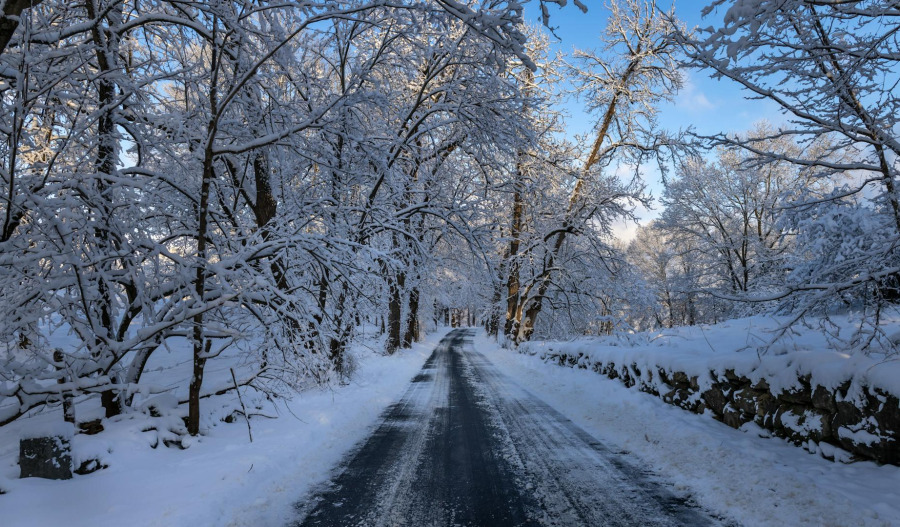
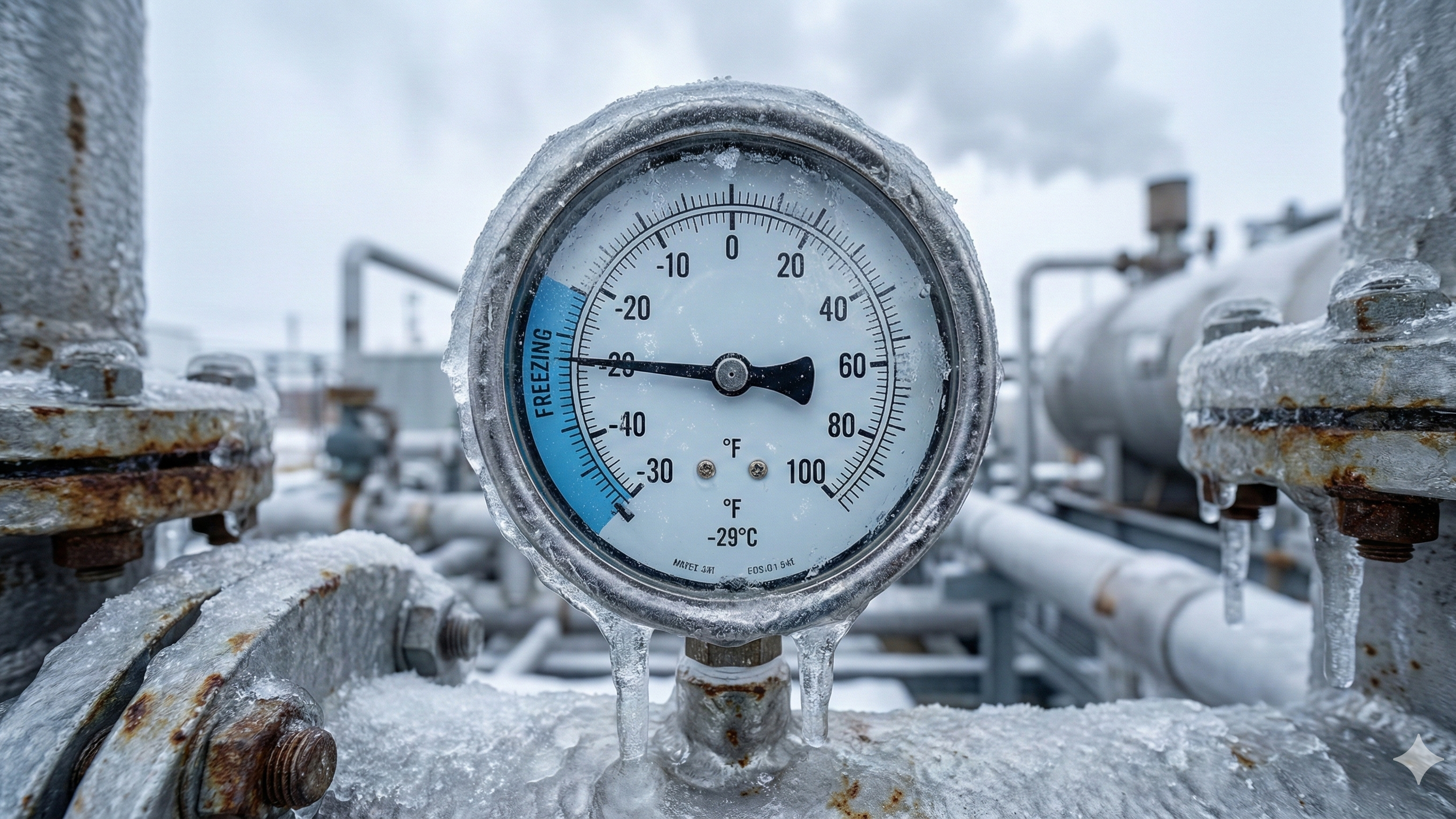
A severe winter storm sweeping across the United States has triggered widespread energy disruptions, knocking nearly 15% of the country’s oil production offline and straining power grids from the Gulf Coast to New England.
As temperatures plummeted, the fragility of energy infrastructure in extreme weather was laid bare, echoing past crises and highlighting the persistent vulnerability of global energy systems.
Production freezes and price spikes
As of Monday, 26 January, U.S. oil producers reported outages of up to 2 Mbpd.
The Permian Basin, the heart of American shale production, bore the brunt of the freeze, accounting for an estimated 1.5 Mbpd of the decline at the storm's peak on Saturday.
While losses eased to roughly 700,000 bpd by Monday, full restoration is not expected until the end of the month.
Major energy players have been forced to curb operations.
ConocoPhillips saw Permian crude production drop by 175,000 bpd, while Chevron reported frozen equipment in Midland, Texas.
ExxonMobil faced shutdowns at gas compressors due to low ambient temperatures, which in turn hampered oil lifting operations.
On the refining side, Exxon’s Baytown complex and Cenovus Energy’s Lima, Ohio refinery both reported weather-related mechanical issues.
The impact has rippled through energy markets.
U.S. crude futures settled at $60.63, while natural gas futures surged nearly 30% to $6.80 per million British thermal units - the highest level since December 2022.
Wholesale electricity prices reflected the strain, with spot prices in Pennsylvania and Maryland skyrocketing 360% to over $400 per megawatt-hour (MWh).

History of cold snaps
While the current disruptions are significant, analysts note they currently pale in comparison to the devastation of the February 2021 Texas freeze (Winter Storm Uri).
During that historic disaster, prolonged sub-freezing temperatures crippled the state’s independent power grid, ERCOT.
In 2021, equipment failures across natural gas, coal, nuclear, and wind facilities left more than 4.5 million homes and businesses without power for days.
The inability to keep gas flowing to power plants created a death spiral for the grid, resulting in at least 246 deaths and economic losses estimated between $80 billion and $130 billion.
By contrast, the current storm has seen roughly two dozen reports of upsets at Texas gas plants - a fraction of the 200+ reported during Uri.
Russia’s weaponisation of gas
The sensitivity of energy supplies to winter weather is not just a technical challenge but a geopolitical one.
Nowhere has this been more evident than in Europe, where Russia has historically leveraged its role as a dominant gas supplier to exert political pressure during the coldest months.
The strategy of "weaponising" winter dates back decades.
In January 2006 and January 2009, Russia’s state-controlled giant Gazprom cut off gas supplies to Ukraine amidst pricing and political disputes.
These cutoffs had immediate downstream effects, leading to shortages in European countries that relied on transit pipelines through Ukraine.
The most dramatic escalation occurred following Russia’s invasion of Ukraine in 2022.
In the lead-up to the conflict, Russia reduced spot market sales and failed to fill European storage sites, creating a supply crunch as winter approached.
Following the invasion, Moscow demanded payments in roubles and slashed flows through major arteries like the Nord Stream 1 pipeline (before its eventual sabotage) and the Yamal-Europe pipeline.
The goal was to freeze Europe into withdrawing support for Kyiv.
Europe avoided catastrophe during the 2022-2023 winter largely due to unseasonably mild weather, a rapid pivot to Liquefied Natural Gas (LNG) from the U.S. and Qatar, and aggressive demand-reduction measures.