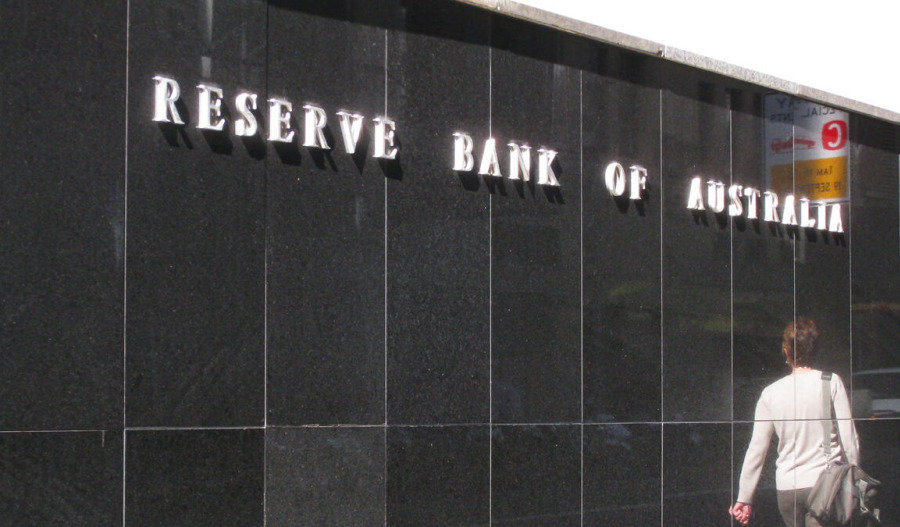
The odds of the Reserve Bank of Australia (RBA) lifting interest rates in February are increasing as the Australian economy strengthens, with inflation data due out on Wednesday likely to be crucial in the decision, according to market economists.
The likelihood of a 25 basis point increase in the official cash rate to 3.85% at the RBA's next meeting on 3 February has increased to 56% from 22% since 16 January, according to the Australian Securities Exchange’s RBA Rate Tracker.
This has been driven by data, including inflation and jobs numbers published in October and earlier this month, showing the Australian economy is stronger than previously believed.
The chances of a rate increase rose to 60% on 22 January when the Australian Bureau of Statistics (ABS) announced unemployment fell to 4.1% in December from 4.3% in November, while employment rose by more than twice the forecast.
Last October, the ABS announced the consumer price index (CPI) rose 1.3% in the September quarter of 2025, the highest rate since March 2023, and to 3.2% annually, according to the latest data from the Australian Bureau of Statistics (ABS).
Goldman Sachs said the stronger inflation and labour market meant a rate hike was “quite possible but not yet most probable”.
“We lean towards the RBA remaining on hold in 2026 - however, recent stronger data on inflation and the labour market have increased the risk of a rate hike as soon as February,” the investment bank said in a research note.
Goldman Sachs noted several hawkish changes in the central bank’s language in its December Board Minutes, including a discussion of “the circumstances in which... an increase in the cash rate might need to be considered at some point in the coming year”.
RBA Capital Markets said the last jobs numbers were not aligned with the central bank’s base case of a jobless rate of 4.4% until December 2027, and increased the risk the RBA would be forced into a fresh hiking cycle.

“While we don’t wish to place too much weight on any single month of labour force data, the picture we are left with here is not consistent with the RBA's base case..,” it said.
It suggested the labour market looked tight and did not make the RBA's job any easier heading into the fourth quarter inflation data to be released on 28 January, and against a backdrop of ongoing capacity constraints across the supply side of the economy.
“We retain our base case call that the RBA will not hike rates this year, but freely admit to feeling increasingly nervous about this call,” it said.
ANZ Research said it expected trimmed mean inflation in the fourth quarter of 2025 to be 0.8% quarter on quarter.
“If these forecasts are realised, we anticipate the RBA will keep the cash rate on hold in February,” the bank said.
But a 0.9% increase would make a rate hike “a little more likely than not” given the decline in the unemployment rate in December.
Commonwealth Bank of Australia (CBA) said it expected inflation to be 0.9% in Q4 2025, well above the pace consistent with the RBA achieving its inflation target.
This would mean annual trimmed‑mean inflation rose to 3.3% from 3.0% in Q3 2025, with headline inflation jumping to 3.8%, both well above the RBA’s 2-3% target range.
“We expect the CPI print will confirm that underlying inflation pressures are strong, with this seeing the RBA hike the cash rate at its February meeting. However, this decision could be finely balanced,” CBA Economics said.