Andy Burnham was formally appointed as Britain's prime minister on Monday, meeting King Charles III hours after Sir Keir Starmer resigned at the same palace.
The handover made Burnham, the former mayor of Greater Manchester, the United Kingdom's seventh prime minister in a decade, extending a churn that has defined British politics since 2016.
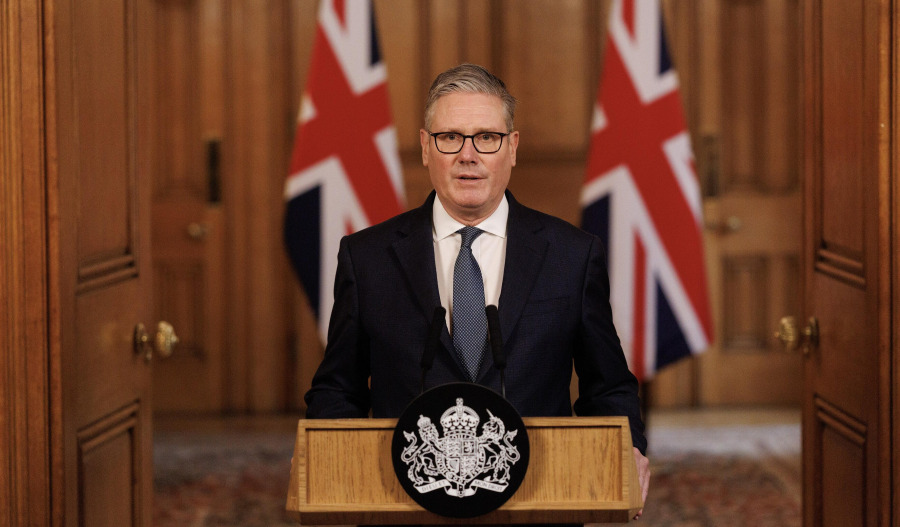
Speaking outside 10 Downing Street without the lectern favoured by his predecessors, Burnham called his appointment a circuit-breaker for Britain.
He promised a 10-year plan later this year, telling reporters he would stick to Labour's existing fiscal rules while using any flexibility within them.
"We will change politics, to make it more collaborative, more about problem solving than point scoring," Burnham said.
Why Starmer resigned
Starmer announced on 22 June he would resign as Labour leader, citing a lack of confidence among his own MPs.
His net approval rating had fallen to −46% by November 2025, an erosion that accelerated after heavy Labour losses in May's local elections.
Burnham's decisive by-election win in Makerfield on 18 June is understood to have been the final trigger for Starmer's resignation four days later.
With no rival able to muster the required nominations, Burnham secured backing from 379 of 401 Labour MPs and was confirmed as leader on 17 July.
Britain's parliamentary system allows a governing party to change leader without a general election, so Burnham takes office with no fresh mandate of his own.

Cabinet reshuffle and market reaction
Burnham moved immediately to reshape his top team, with deputy prime minister David Lammy and chancellor Rachel Reeves both departing on Monday.
No Treasury successor was named, and markets responded within hours to the uncertainty that vacancy created.
The FTSE 100 closed down 0.7% at 10,524.76 points, while the UK 10-year gilt yield climbed toward 5.05%, reflecting a higher risk premium demanded by investors.
Naming a new chancellor is the most immediate signal to watch, a decision that will show whether Burnham holds the fiscal line he promised.
President Trump said he held a "very good conversation" with Burnham on Monday, covering North Sea oil, trade and defence matters.
A face-to-face meeting between the two leaders has been flagged for the near future, with no date yet confirmed by either government.
For investors, the durable question is whether a leader with no election mandate can deliver the stability he has promised.
That test becomes sharper given Labour is still trailing Nigel Farage's Reform UK in the polls, six weeks into Burnham's premiership.