Beijing is the biggest buyer of Iranian crude and stands to lose billions from the Strait of Hormuz closure - yet it has barely lifted a finger since Operation Epic Fury began. The reason was in Paris this weekend, where U.S. and Chinese economic chiefs are currently trying to keep a fragile trade truce from unravelling.
Top U.S. and Chinese economic officials sat down in Paris on Sunday to work through the next phase of their trade truce, with U.S. Treasury Secretary Scott Bessent and Chinese Vice Premier He Lifeng meeting at OECD headquarters to negotiate on tariffs, rare earths, soybeans and export controls.
The talks are meant to clear the way for President Donald Trump's visit to Beijing at the end of March, and on paper, they look like routine great-power housekeeping. The timing, however, is anything but routine.
The discussions come as the U.S.-Israeli war on Iran has effectively shut down the Strait of Hormuz - a waterway through which China receives roughly half of its oil imports and nearly a third of its liquefied natural gas.
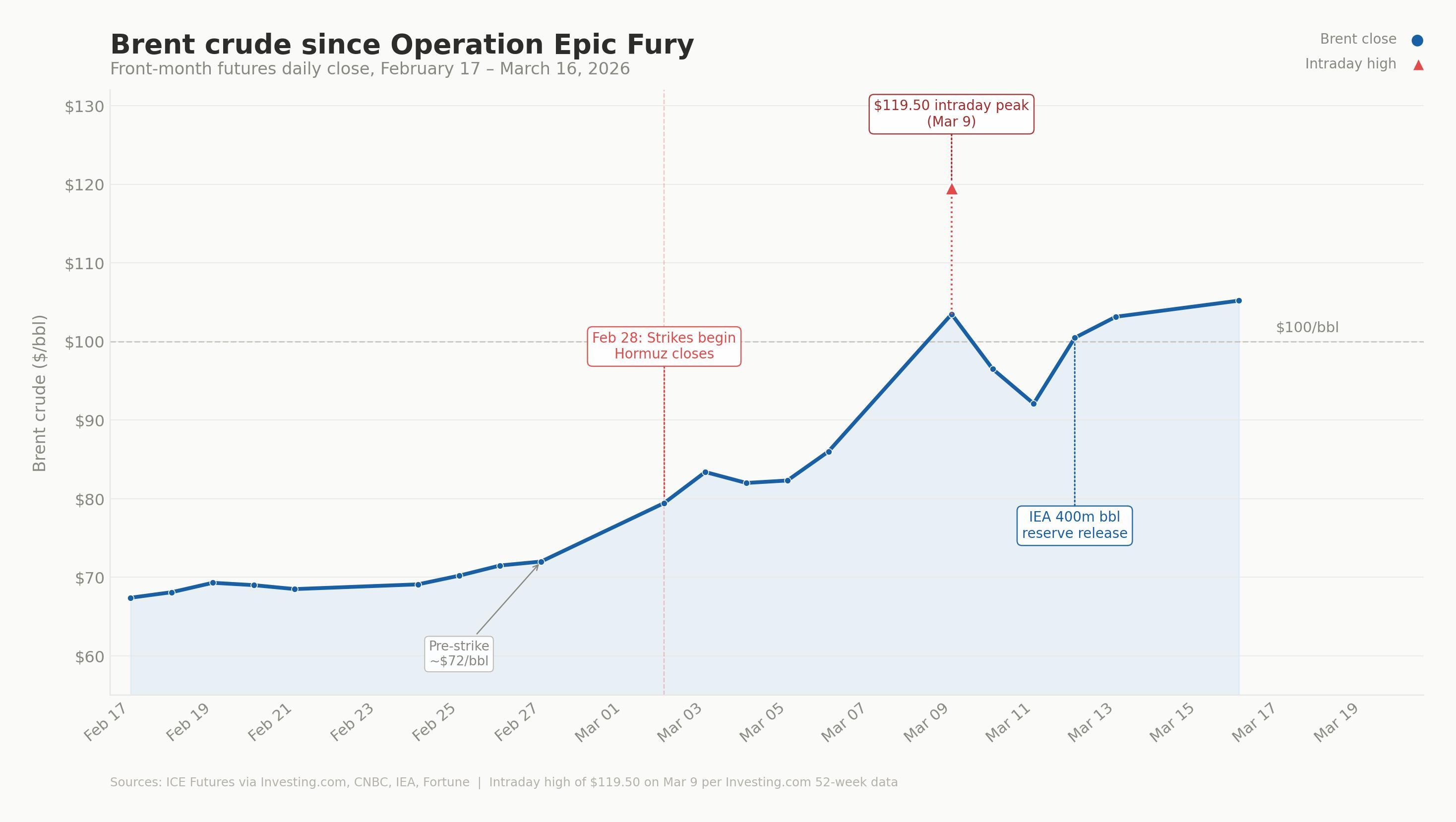
In the two and a half weeks since Operation Epic Fury began on February 28, Beijing's response has amounted to diplomatic boilerplate - a call for an emergency UN Security Council session, some strongly worded statements and not much else.
Its restraint is not an oversight; it's a calculated bet that trade stability with Washington matters more than solidarity with Tehran, even as China absorbs a direct hit to its energy security.
Understanding why requires following the barrels, the balance sheets and the politics.
China's actual exposure
China imported roughly half of its crude oil and almost a third of its LNG from the Middle East in 2025, according to Columbia University's Centre on Global Energy Policy, and the vast majority of those shipments transit the Strait of Hormuz.
Iran's contribution to that total is larger than Beijing officially admits.
Analytics firm Kpler estimates China imported at least 2.6 million barrels per day (Mbpd) of sanctioned crude last year - ~22% of total imports - with 1.38Mbpd coming from Iran alone.
None of it shows up in Chinese customs data, which has not recorded a single barrel of Iranian crude since 2022.
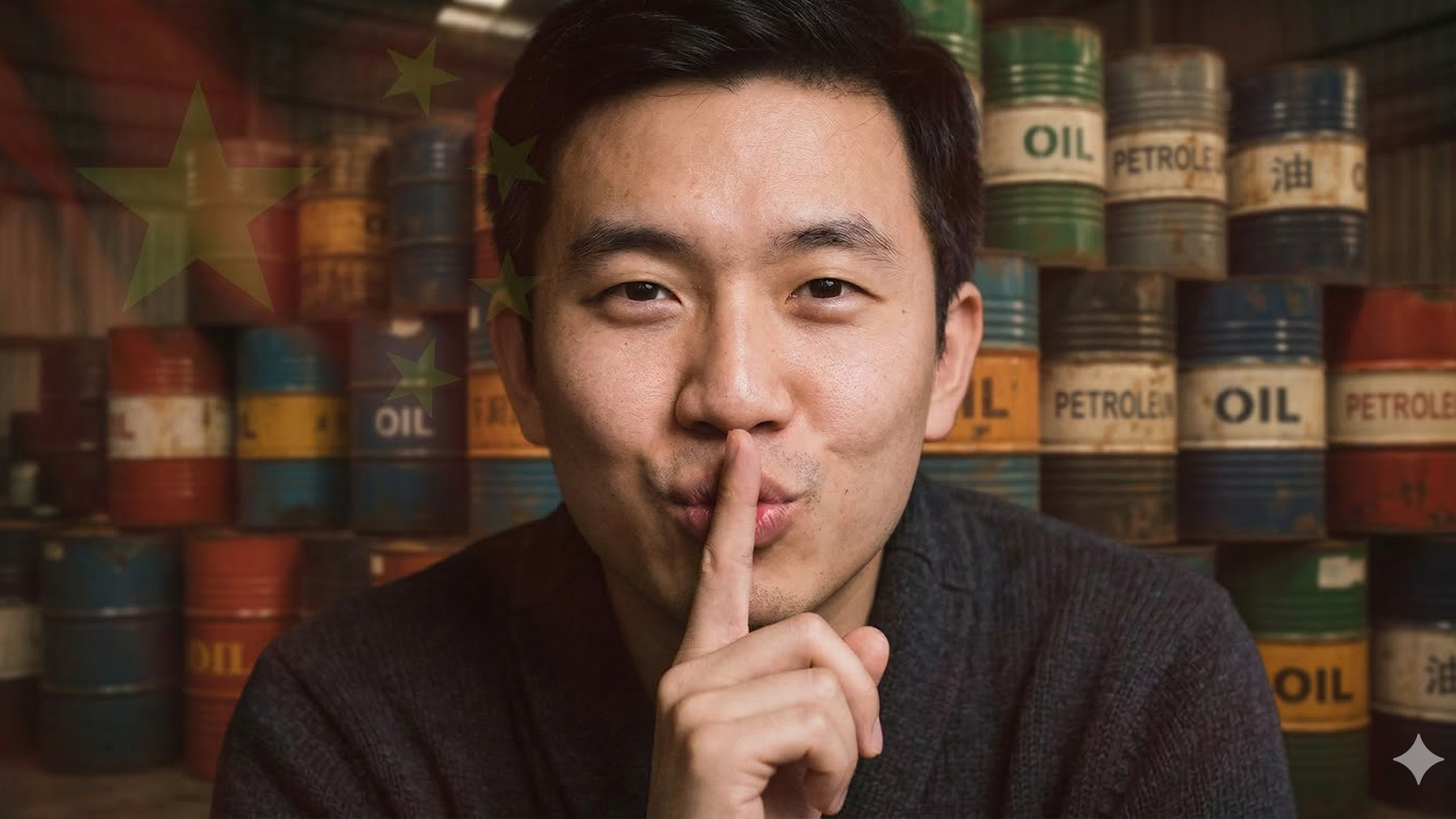
The gap is easily explained: shipments are relabelled with alternative origins such as Malaysia and Indonesia to dodge sanctions, a laundering operation so brazen that China now imports more "Malaysian" crude - 1.3Mbpd - than Malaysia actually produces.
China has become the buyer of roughly 80% of Iran's oil exports, a relationship that saves Chinese refiners an estimated US$8-10 per barrel against market-priced alternatives.
The primary buyers are independent refiners known as "teapots," clustered in Shandong province, which operate on thin margins and depend on those discounts to stay solvent.
So when Operation Epic Fury knocked out Iran's export infrastructure and the Strait of Hormuz closed to commercial traffic, China stood to lose more than any other single country.
The IEA's March Oil Market Report described it as the largest supply disruption in the history of the global oil market, with nearly 20Mbpd of crude and product exports taken offline.
Brent crude surged past $100 a barrel for the first time since August 2022, eventually touching $126/bbl at its peak.
Beijing watched it all unfold and said almost nothing of substance.

Why Beijing stayed quiet
On February 28, China joined Russia in requesting an emergency UN Security Council session, expressed "high concern" over the strikes and urged respect for Iran's territorial integrity.
It then evacuated its nationals, issued travel warnings and went largely silent.
The reasons aren't hard to trace.
For Xi Jinping, the immediate priorities are the upcoming summit with Trump in Beijing, the trade truce that has given China's economy room to breathe, and avoiding any provocation that could collapse either.
The Busan trade deal, struck between Trump and Xi in October 2025, trimmed U.S. tariffs on Chinese imports, paused China's rare earth export controls for a year and froze the expansion of a U.S. blacklist banning Chinese firms from purchasing high-technology American goods.
That truce seems like it's constanstly under strain.
U.S. Trade Representative Jamieson Greer has launched new Section 301 investigations into alleged unfair trade practices targeting China and 15 other major trading partners, while a parallel probe into forced labour across 60 countries could ban certain Chinese imports outright.
Picking a fight with Washington over Iran - a country where China's actual strategic investment totals a modest $4.7 billion since 2005, according to Carnegie Endowment research - would risk unravelling economic arrangements worth orders of magnitude more.
"China sees no benefit in heightening tension with the US over Iran," International Crisis Group senior analyst William Yang told CNN.
"It still attaches greater importance to maintaining the trade truce and overall stability in the bilateral relationship with the U.S., so it will not want to jeopardise the positive momentum that it has built with the Trump administration over the last year."
No bandwidth
Beijing's restraint also reflects the reality that China's leadership has enough on its plate domestically.
The National People's Congress set its 2026 GDP growth target at 4.5-5% during the Two Sessions in early March - the lowest target on record stretching back to the early 1990s.
The figure is an acknowledgement that persistent deflation, a collapsing property sector and weak consumer confidence are constraining the economy in ways stimulus alone will not fix.
Fixed-asset investment fell 3.8% in 2025 - the first annual decline in decades - while real estate investment plunged 17.2%.
Premier Li Qiang made a rare acknowledgement that U.S. tariffs were affecting the economy and described local government financial stress severe enough to delay salary payments to public employees.
The Two Sessions also set out a 15th Five-Year Plan anchored around technological self-reliance, AI development and boosting domestic consumption - none of which is served by provoking Washington over a country most Chinese strategists regard as an unreliable partner.
Beijing's leadership has little incentive to wade into a volatile Middle Eastern war while it remains consumed by domestic stability and long-term economic restructuring, as Al Sharq Strategic Research noted in a recent assessment of China's wartime posture.
Stockpiles bought Beijing time
If China can afford to watch from the sidelines, it is partly because it prepared for exactly this kind of disruption.
Throughout 2025, with international crude benchmarks holding steady around $60/bbl, China bought far more crude than it immediately needed and stacked it into commercial and strategic storage.
Crude oil stocks rose by an estimated 54 million tonnes (t) - roughly 400 million barrels, or 1.1Mbpd - during 2025, according to industry estimates, following a similar build in 2024.
By the end of 2025, total storage exceeded 1.5 billion barrels according to Kpler monitoring data, providing approximately 121 days of import coverage - well above the IEA's 90-day benchmark.
State-owned oil majors Sinopec and CNOOC are building 11 new storage sites with a combined capacity of 169 million barrels, scheduled for completion across 2025-2026.
There is also the floating buffer.
As of February 27, the day before the strikes, roughly 191 million barrels of Iranian crude sat on the water globally according to Kpler, with approximately 127 million barrels already located in the Malacca Strait, Singapore Strait, South China Sea and surrounding waters.
Those barrels are readily accessible and give Beijing breathing room even with Hormuz shut.
"China has been very wisely stockpiling a lot of crude last year so they have a buffer to overcome the current crisis," Rystad Energy head of geopolitical analysis Jorge Leon told OilPrice.com.
Oil, not alliance
Underlying the silence is a point Western analysts frequently overstate: Beijing's relationship with Tehran has always been transactional - or as Foreign Affairs put it bluntly, China cares about the oil, not the regime.
China and Iran signed a 25-year, $400 billion strategic cooperation pact in 2021 to bolster economic and security ties, but few of the projects envisioned in the deal have materialised.
Beijing has grown frustrated with what it sees as Tehran's inconsistency and unreliability, and Chinese strategists have concluded that Iran's power and revolutionary credentials are overstated.
Iran depends on China for 80% of its oil export revenue, and China depends on Iran for roughly 13% of its seaborne crude imports - a significant but replaceable share.
"Iran needs China, but China does not need Iran," University of Pennsylvania postdoctoral fellow Aaron Glasserman wrote in Foreign Policy.
Beijing has already been diversifying.
After the first attack on Iran in June 2025, China redirected Gulf oil purchases toward more stable suppliers, including the UAE, Saudi Arabia and Oman, while Brazil saw a 28% increase in crude exports to China during 2025.
Russia, already the single largest source of Chinese oil imports at 17.5%, stands to gain the most from the disruption and has begun redirecting supply from India toward China.
Moscow is also using the crisis to push the case for the Power of Siberia 2 gas pipeline, agreed at the political level in September last year, arguing that maritime supply routes to China can be severed by the U.S. at any moment.
The smart money's on China continuing to play the long game, by absorbing short-term energy costs, drawing down stockpiles if needed, quietly diversifying supply chains and banking the diplomatic credit that comes from not making Washington's war any harder.