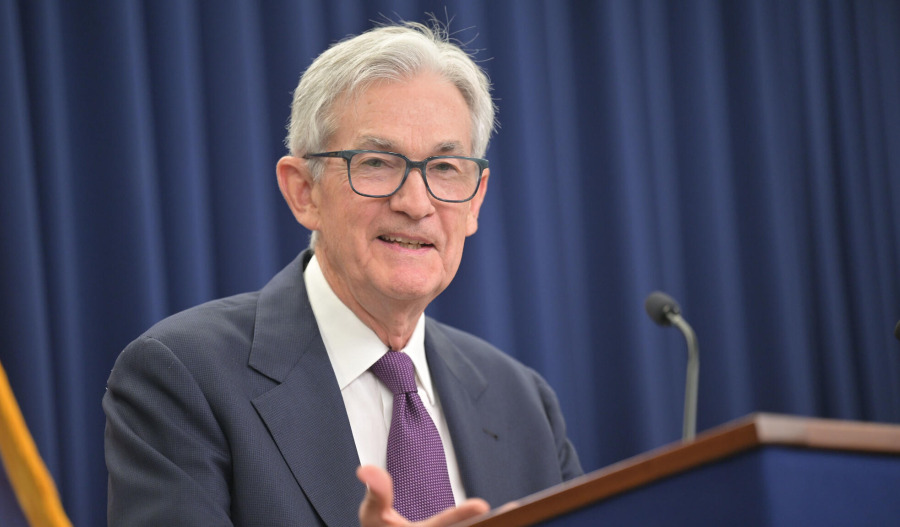
Asia-Pacific markets mostly declined on Thursday, tracking mixed leads from Wall Street as rising oil prices and geopolitical tensions weighed on sentiment, while investors continued to digest the Federal Reserve’s latest policy decision.
Oil prices extended gains after reports indicated that United States President Donald Trump had instructed aides to prepare for a prolonged blockade of Iran.
Additional upward momentum followed news that the United States had rejected Tehran’s proposal to reopen the Strait of Hormuz, signalling that the naval blockade would remain in place until an agreement is reached over Iran’s nuclear programme.
By 12 pm AEST (2 am GMT), Australia’s S&P/ASX 200 had fallen 0.7%, while Japan’s Nikkei 225 slipped 0.5%. In contrast, South Korea’s KOSPI 200 bucked the regional trend, rising 1.2% to fresh record highs.
Economic data across the region painted a mixed picture. In Japan, factory output unexpectedly declined in March, highlighting the impact of supply disruptions linked to Middle East tensions.
Industrial production fell 0.5% from the previous month, according to the Ministry of Economy, Trade and Industry, marking a second consecutive monthly contraction and missing expectations for a 1.1% increase.
However, Japan’s retail sector showed resilience. Retail sales rose 1.3% month-on-month to ¥14.3 trillion, exceeding forecasts.
On an annual basis, sales increased 1.7%, while total commercial sales reached ¥58.8 trillion, with volumes rising 3.2% compared to February.

In South Korea, retail sales rebounded strongly, rising 1.8% month-on-month in March following a revised 0.3% decline in February. The improvement was driven by increased demand for consumer durables, including communication devices, computers and household appliances.
On a yearly basis, retail sales grew 5%, marking the fastest pace since January 2022.
China’s manufacturing sector continued to expand, offering some support to the regional outlook. The official manufacturing purchasing managers’ index (PMI) edged down slightly to 50.3 in April from 50.4 in March but remained above the 50 threshold that separates expansion from contraction.
The reading exceeded expectations and suggested that industrial activity remained resilient despite external pressures from geopolitical developments.
Overnight in the United States, major indices ended mixed. The Dow Jones Industrial Average fell 0.6%, extending its losing streak, while the S&P 500 slipped 0.04%. The Nasdaq Composite, however, edged 0.04% higher.
Commodity markets also reflected heightened volatility. Brent crude rose 5.7% to $110.44 per barrel, driven by supply concerns, while spot gold declined 1.2% to $4,544.25 per ounce, its lowest level since 2 April.
Elsewhere, Chinese equities closed higher on Wednesday, with the Shanghai Composite gaining 0.7% to 4,107.5 and the CSI 300 advancing 1.1% to 4,810.3.
Hong Kong’s Hang Seng Index climbed 1.7% to 26,111.8, while India’s BSE Sensex added 0.8% to 77,496.4.
European markets ended lower, reflecting global caution. The UK’s FTSE 100 dropped 1.2% to 10,213.1, its lowest level since 1 April. Germany’s DAX declined 0.3% to 23,954.6, and France’s CAC 40 fell 0.4% to 8,072.1.