Asia-Pacific equities traded higher on Thursday, tracking Wall Street’s overnight rally, as optimism grew that progress in United States-Iran negotiations could help ease Middle East tensions.
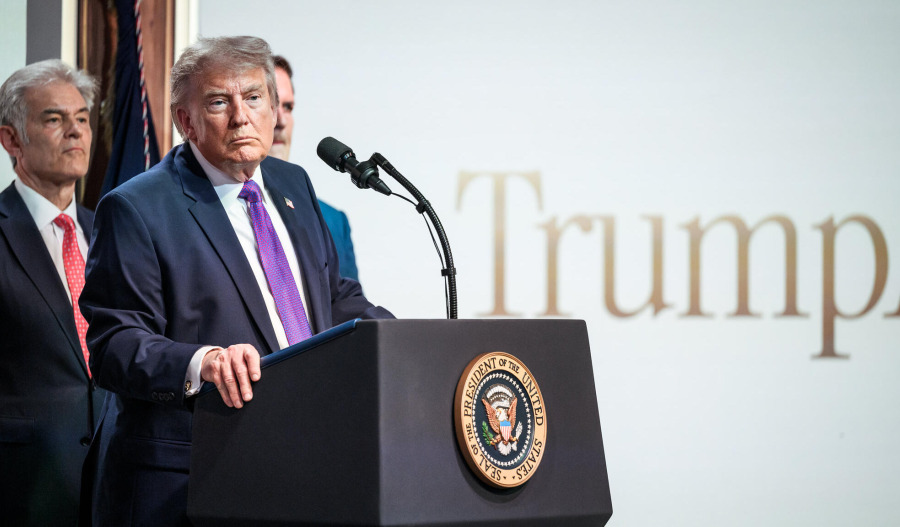
United States President Donald Trump said Washington was in the “final stages” of negotiations with Iran, according to a pool report, fuelling expectations of a potential de-escalation in the region and supporting risk appetite across global markets.
By 11:45 am AEST (1:45 am GMT), Australia’s S&P/ASX 200 rose 1.4%, South Korea’s KOSPI surged 6.9%, and Japan’s Nikkei 225 advanced 3.4%.
Among data releases, South Korea’s inflation pipeline showed renewed pressure, with producer prices rising at the fastest pace in more than 28 years last month, driven by persistently high oil prices.
The producer price index (PPI) lifted 2.5% month-on-month and 6.9% year-on-year, marking the strongest annual gain in over three years.
The Bank of Korea noted that producer prices have now increased for eight consecutive months, signalling potential upward pressure on consumer inflation in the months ahead as higher input costs filter through the economy.
In Australia, labour market data surprised to the downside, with the unemployment rate rising to 4.5%, above market expectations for a steady 4.3% reading.
The Australian economy shed 18,600 jobs in April, compared with forecasts for a 17,500 gain, according to the Australian Bureau of Statistics (ABS).
Flash PMI data also pointed to renewed weakness in private sector activity. The Flash Australia Manufacturing PMI fell to 50.2 from 51.3, while the Services PMI Business Activity Index dropped sharply to 47.7 from 50.7.
The report noted: “Although the Australian private sector economy moved back into contraction mode in May, according to Flash PMI® data by S&P Global, the decline in output was softer than that seen in March.

"Still, new orders fell at the fastest pace since September 2021, and employment was down for the first time since the end of 2024. Meanwhile, business sentiment was at its joint-weakest on record, as concerns over elevated inflationary pressures lingered.”
In Japan, Flash Manufacturing PMI eased to 54.5 from 55.1, while the Services PMI slipped to 50.0 from 51.0, signalling stagnation in the services sector for the first time in over a year.
S&P Global said overall private sector activity expanded at its slowest pace in five months, with manufacturing output supported partly by stockpiling amid ongoing disruption linked to the Middle East conflict.
Japan also reported a stronger-than-expected trade surplus of ¥301.9 billion (A$2.66 billion), compared with forecasts for a deficit. Exports rose 14.8% year-on-year in April, marking an eighth straight month of gains, while imports increased 9.7%.
However, machinery orders fell sharply, dropping 9.4% month-on-month to ¥1,010.9 billion in March, the steepest decline since November and well below expectations.
On Wall Street, major indices closed higher on Wednesday, with the Dow Jones Industrial Average gaining 1.3%, the S&P 500 rising 1.1%, and the Nasdaq Composite adding 1.5%.
In commodities, Brent crude tumbled 5.6% to US$105.02 per barrel, while spot gold rose 1.4% to US$4,543.11 per ounce.
In China, the Shanghai Composite slipped 0.2% to 4,162.2 and the CSI 300 edged down 0.04% to 4,850.7.
Hong Kong’s Hang Seng fell 0.6% to 25,651.1, while India’s Sensex gained 0.2% to 75,318.4.
European equities closed higher on Wednesday, with the UK FTSE 100 up 1% to 10,432.3, Germany’s DAX rising 1.4% to 24,737.2, and France’s CAC 40 advancing 1.7% to 8,117.4.