Asia-Pacific markets traded mixed on Monday as investors assessed renewed tensions between the United States and Iran, while rising oil prices heightened concerns over the economic impact of prolonged instability in the Middle East.
Investor sentiment remained cautious after President Donald Trump rejected Iran’s latest proposal aimed at ending the conflict, fuelling fears that the war could continue for an extended period.
Iran reportedly submitted a revised proposal to U.S. negotiators focused on ending the conflict across the region. However, Trump dismissed Tehran’s response, describing it as “TOTALLY UNACCEPTABLE!” in a Truth Social post.
Meanwhile, Israeli Prime Minister Benjamin Netanyahu told CBS News on Sunday that the conflict with Iran was “not over”, reiterating that both Israel and the United States remained committed to limiting Tehran’s nuclear capabilities.
Netanyahu’s remarks came ahead of Trump’s expected trip to China later this week, where he is scheduled to meet Chinese President Xi Jinping.
By 11:30 am AEST (1:30 am GMT), Australia’s S&P/ASX 200 had fallen 0.9%, Japan’s Nikkei 225 slipped 0.2%, while South Korea’s KOSPI 200 surged 4.5%.

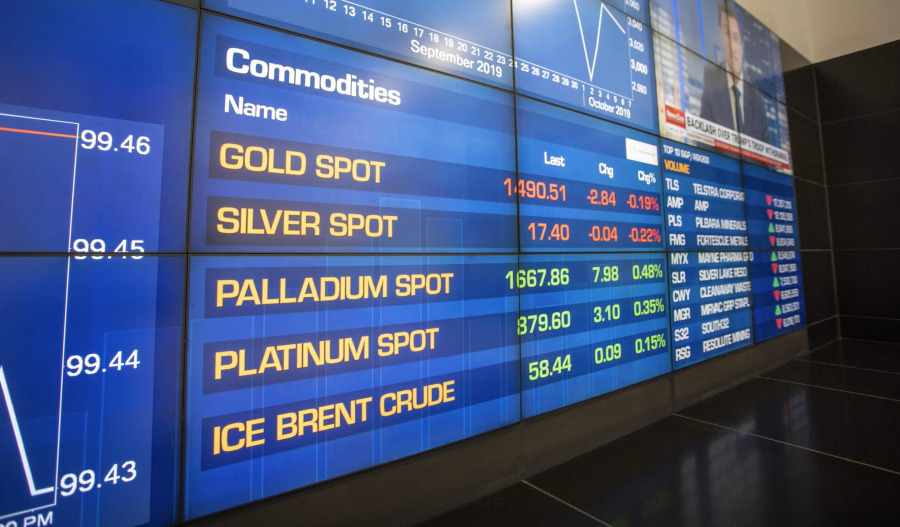
Oil prices extended gains following the latest geopolitical developments. Brent crude futures for July delivery rose 3.37% to US$104.66 per barrel, while West Texas Intermediate crude futures for June climbed 3.39% to $98.65 per barrel.
On Wall Street, major U.S. indexes ended higher on Friday, supported by stronger-than-expected labour market data and continued strength in technology shares.
The Dow Jones Industrial Average edged 0.02% higher, the S&P 500 gained 0.8%, and the Nasdaq Composite rose 1.7%, with both the S&P 500 and Nasdaq finishing at fresh record highs.
Among commodity markets, Brent crude settled 1.2% higher at $101.29 per barrel, while spot gold prices rose 0.7% on Friday to $4,715.93 per ounce.
Chinese equities also ended higher on Friday. The Shanghai SSE Composite Index gained 0.5% to 4,201.3, marking its highest close since July 2015, while the CSI 300 advanced 0.6% to 4,902.3, its strongest finish since January 2022.
Elsewhere in the region, Hong Kong’s Hang Seng Index fell 0.9% to 26,393.7, while India’s BSE Sensex declined 0.7% to 77,328.2.
European markets closed lower on Friday, as Britain’s FTSE 100 fell 0.4% to 10,233.1, Germany’s DAX lost 1.3% to 24,338.6, and France’s CAC 40 declined 1.1% to 8,112.6.