Asia-Pacific markets traded mixed on Friday, following a volatile session on Wall Street, as investors continued to offload assets across equities, government bonds and commodities amid escalating conflict in the Middle East.
Heightened geopolitical tensions have triggered widespread selling, with attacks on critical oil and gas infrastructure sending energy prices sharply higher and fuelling global market uncertainty.
The latest escalation saw Iran strike Ras Laffan Industrial City in Qatar, the world’s largest liquefied natural gas facility, in retaliation for Israeli attacks on the South Pars gas field.
QatarEnergy chief executive Saad al-Kaabi said the damage would remove around 17% of the country’s LNG export capacity for between three and five years.
The disruption has intensified pressure on global energy markets, with oil and gas prices surging as supply concerns mount.
Despite the escalation, there were tentative signs of de-escalation. U.S. President Donald Trump said Washington would not deploy ground troops, while Benjamin Netanyahu indicated Israel would refrain from further strikes on Iranian energy infrastructure.

Meanwhile, U.S.-aligned nations, including the United Kingdom, Canada, France, Germany and Japan, issued a joint statement expressing their readiness to support efforts to secure safe passage through the Strait of Hormuz, a critical route for global energy flows.
By 11:35 am AEDT, Australia’s S&P/ASX 200 had fallen 0.3%, Japan’s Nikkei 225 remained closed for the Vernal Equinox public holiday, while South Korea’s KOSPI 200 rose 0.5%.
Overnight in the United States, major indices finished lower, with the Dow Jones Industrial Average declining 0.4%, the S&P 500 falling 0.3%, and the Nasdaq Composite slipping 0.3%.
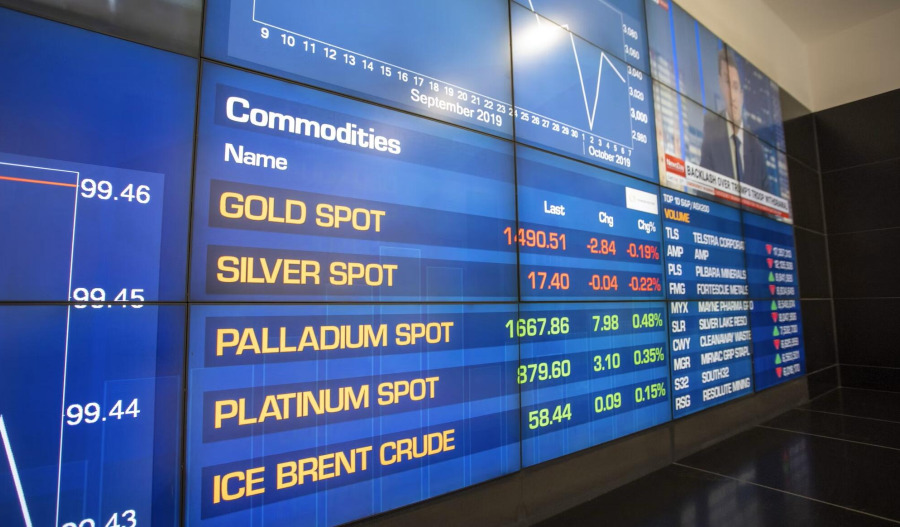
Commodity markets remained volatile. Brent crude rose 1.2% to settle at US$108.65 per barrel, while spot gold dropped 3.5% to US$4,650.72 per ounce.
Across Asia, mainland Chinese equities weakened on Thursday, with the Shanghai Composite falling 1.4% and the CSI 300 declining 1.6%.
Hong Kong’s Hang Seng Index dropped 2%, while India’s BSE Sensex slid 3.3%.
European markets also came under pressure, with the UK’s FTSE 100 falling 2.4%, Germany’s DAX declining 2.8% and France’s CAC 40 dropping 2%.