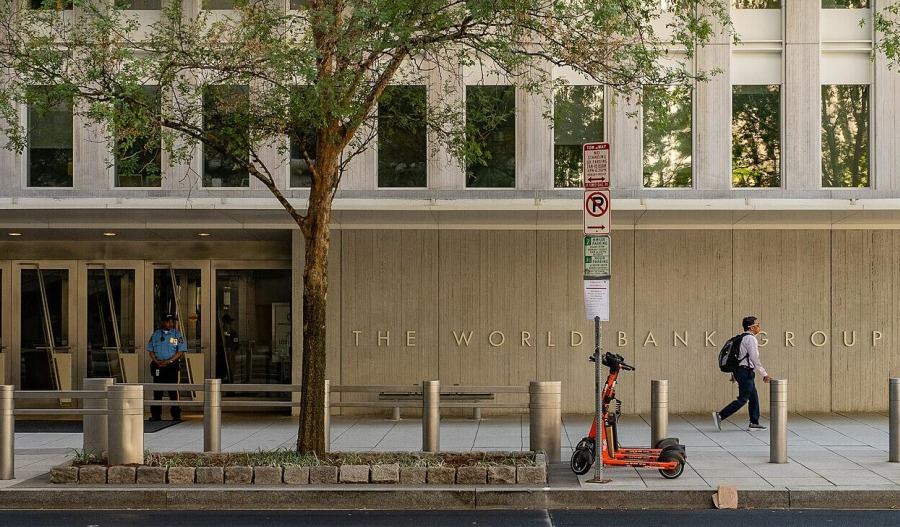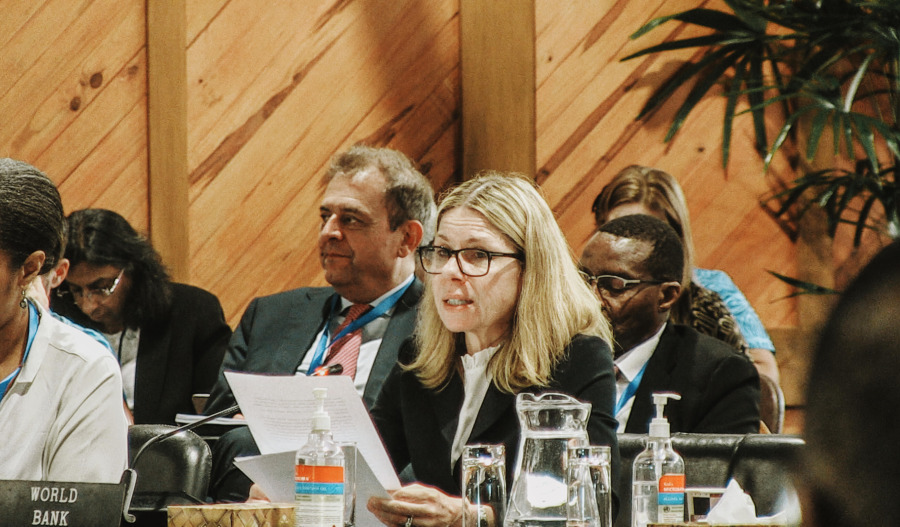
The Washington D.C.-based World Bank could mobilise between US$80 billion and $100 billion in financing over the next 15 months to support countries hit hardest by the war in the Middle East, outlining a response that would exceed the institution’s $70 billion deployment during the covid crisis.
Proposed funding, announced on the sidelines of the spring meetings of the International Monetary Fund and World Bank, reflects a rapid escalation in concern among global economic institutions over the war’s widening impact on growth, inflation and financial stability.
Early projections indicate the shock is already feeding through energy markets and fiscal balances, particularly in developing economies.
The bank’s president, Ajay Banga, told the market yesterday that $20 billion to $25 billion could be made available in coming months, allowing countries to draw down up to 10% of previously approved programme funds ahead of schedule.
An additional $30 billion to $40 billion could be generated within six months by repurposing existing programmes.
Additional financing will require the use of the bank’s balance sheet capacity if the conflict persists.
“I’m trying to create a toolkit that has a tiered response capacity,” Banga told an event hosted by the Bretton Woods Committee, signalling contingency planning for a prolonged conflict.
IMF slashes growth projections
Meanwhile, the IMF has already revised its outlook downward.
In its latest World Economic Outlook, released on 14 April, the fund cut global growth projections, citing war-driven energy price increases.
It said global output would have been upgraded to 3.4% without the Iran war, but now expects weaker growth alongside higher inflation across all modelled scenarios.
On a more cheery note, IMF managing director Kristalina Georgieva reminded the market that the global economy could still recover quickly if the war is contained within weeks, but warned that a prolonged war would deepen economic damage.
The IMF is also in discussions with affected countries to assess financing needs tied to rising energy costs and supply chain disruptions.
A joint statement from the IMF, World Bank and the International Energy Agency described the shock as “substantial, global, and highly asymmetric”, with low-income and energy-importing countries bearing the greatest burden.
The organisations cited disruptions across energy, food and labour markets, compounded by uncertainty around key supply routes, including the Strait of Hormuz.
But even if hostilities cease, officials warned that energy markets may take time to stabilise due to infrastructure damage and delayed supply recovery.
The IMF has advised governments to adopt targeted, temporary measures to shield households from higher energy costs, cautioning against broad subsidies that risk fuelling inflation.

Asian economies to be hardest hit
Fiscal pressures are already intensifying, particularly across Asia, where economies remain heavily dependent on Middle Eastern oil.
Prior to the conflict, around 80% of crude shipments through the Strait of Hormuz were destined for Asian refineries.
Japan and South Korea sourced more than 90% and 70% of their oil imports from the Gulf, respectively, while China and India still rely on the region for around half their supply despite diversification efforts.
Governments across the region have responded with extensive subsidy programmes to contain domestic fuel prices.
These include price caps, compensation schemes for refiners and direct fiscal support.
According to industry estimates, if oil prices remain at $100 per barrel for four months, Asia’s total subsidy bill could exceed $80 billion.
The fiscal impact varies by country but is significant.
In India, subsidy-related costs could reach 0.7% of gross domestic product and 7.2% of government revenue in the 2025–26 fiscal year.
Meanwhile, Indonesia risks breaching its statutory fiscal deficit limit of 3% if elevated prices persist, while Thailand’s fuel subsidy fund is already in deficit.
IMF flags excessive defence spending
The IMF warned in its outlook that rising defence spending linked to geopolitical tensions could further strain public finances, crowd out social investment and complicate inflation control.
High public debt levels and weakening institutional credibility in some economies are expected to amplify vulnerability to external shocks.
At the same time, the fund also noted potential upside risks, including faster productivity gains from artificial intelligence (AI) and easing trade tensions, however, these are unlikely to offset the immediate drag from the conflict.
Energy market volatility remains a central concern.
A sustained escalation pushing oil prices towards $125 per barrel could trigger a global recession, with significant spill over effects on both energy-importing and exporting economies.
For now, modest declines in oil prices have offered limited relief, but policymakers and institutions remain focused on securing a ceasefire and restoring stable supply flows through critical shipping routes.
Until then, the combined response of multilateral lenders and national governments is expected to play a decisive role in cushioning the global economy from a deepening shock.