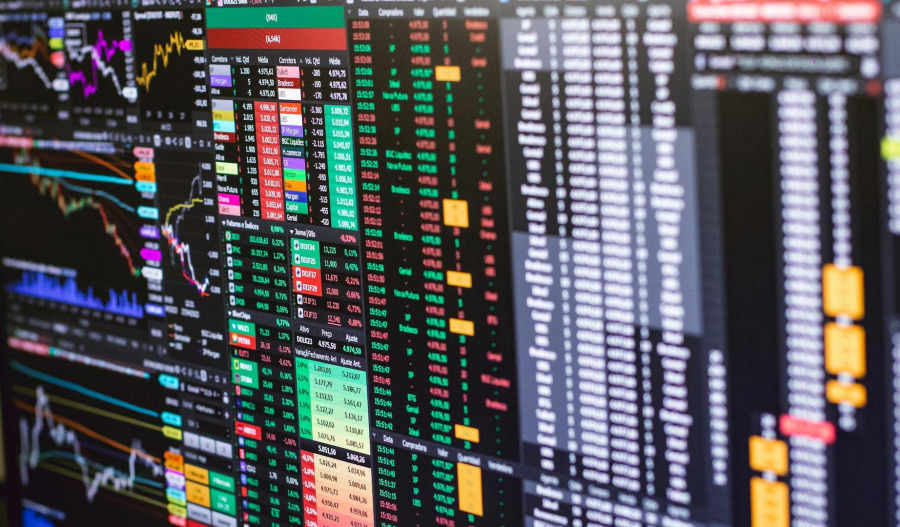

Wall Street closed lower on Friday (Saturday EST), with all three major United States indexes falling more than 1% as surging Treasury yields and renewed inflation concerns soured risk appetite.
The Dow Jones Industrial Average fell 537.3 points, or 1.1%, to 49,526.2, the S&P 500 lost 92.7 points, or 1.2%, to 7,408.5, and the Nasdaq Composite dropped 410.1 points, or 1.5%, to 26,225.2.
Benchmark Treasury yields climbed as higher energy prices fuelled concerns about persistent inflation, prompting investors to rotate out of equities and into bonds.
The 10-year Treasury note surged 2.5% to 4.597%, its highest level since May 2025, following Trump’s “Liberation Day” tariff announcement. The 2-year Treasury yield rose 1.6% to 4.079%.
Markets were also digesting the outcome of President Donald Trump’s meeting with Chinese President Xi Jinping, which concluded with limited immediate progress and little indication Beijing would assist in resolving the U.S.-Iran conflict.
According to a White House release, Trump and Xi agreed to pursue a “constructive relationship of strategic stability” based on fairness and reciprocity.
The leaders also agreed that Iran “cannot have a nuclear weapon”, called for the reopening of the Strait of Hormuz, and reaffirmed a shared goal of denuclearising North Korea.
The agreement included the creation of two new bilateral bodies - the U.S.-China Board of Trade and the U.S.-China Board of Investment - aimed at overseeing trade and investment discussions.
China also agreed to address U.S. concerns surrounding rare earth supply chains and approved an initial purchase of 200 Boeing aircraft for Chinese airlines.

Beijing further committed to buying at least US$17 billion (A$23.78 billion) worth of U.S. agricultural products annually between 2026 and 2028.
Technology stocks led the market decline as investors locked in profits following recent gains in the sector.
Intel fell more than 6%, while Advanced Micro Devices dropped 5.7% and Micron Technology slid 6.6%. Nvidia lost 4.4%, and Cerebras Systems shed 10% after surging 68% in its Nasdaq debut a day earlier.
Microsoft bucked the trend, rising 3.1% after Bill Ackman's Pershing Square disclosed a new stake in the software giant.
Dexcom jumped 6.6% after announcing plans to appoint two independent directors and revamp a board committee in partnership with activist investor Elliott Investment Management.
Ford fell 7.5%, giving back some of its recent gains after rallying nearly 21% over the previous two sessions on optimism surrounding its energy storage business.
On the economic front, U.S. industrial production rose 0.7% in April, exceeding expectations for a 0.3% increase, according to Federal Reserve data.
Manufacturing output rose 0.6%, utilities output climbed 1.9%, while mining output edged down 0.1%.
Industrial capacity utilisation rose to 76.1% in April, above consensus forecasts of 75.8%.