United States benchmark averages closed higher on Friday but ended the week lower as investors remained focused on volatile government bond yields and uncertainty over developments in the Middle East.
The Dow Jones Industrial Average rose 517.8 points, or 1%, to 53,277.0, while the S&P 500 gained 33.2 points, or 0.4%, to 7,674.4. The Nasdaq Composite added 113.3 points, or 0.4%, to 26,180.5.
For the week, the Dow fell 0.9%, the S&P 500 declined 1.4%, and the Nasdaq dropped 2.1%.
Investors have closely tracked U.S. Treasury yields in recent sessions, with concerns over higher borrowing costs weighing on risk appetite. Stocks fell on Thursday as yields climbed, while equities advanced a day earlier when bond yields eased.
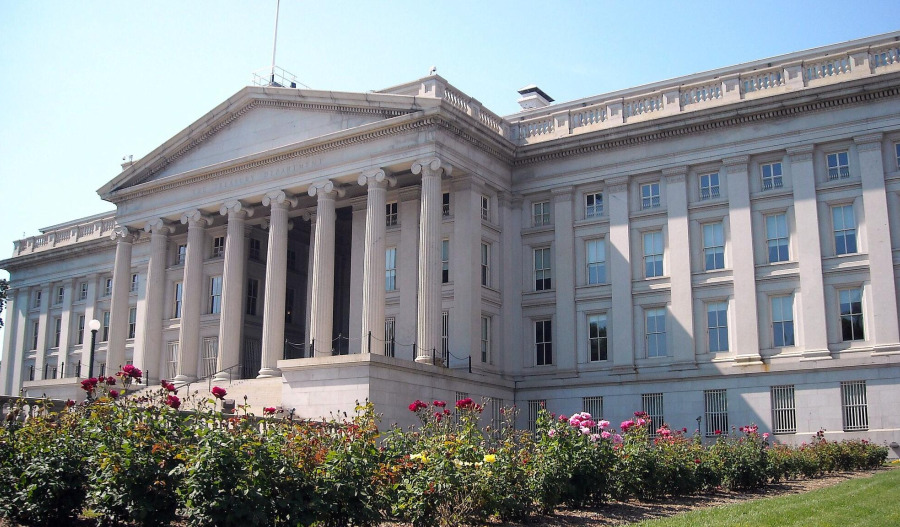
U.S. Treasury Secretary Scott Bessent said on Thursday that the government could increase its Treasury repurchases further, following a surprise announcement that it would spend twice the expected amount on bond buybacks.
Friday's economic data also supported sentiment, showing the U.S. services sector recorded its strongest growth in nearly two years in August, driving a sharp acceleration in overall business activity.
This offset weaker manufacturing growth, which was affected by reduced inventory building and supply disruptions linked to the Iran war.

Oil prices, however, continued to fuel inflation concerns. Crude futures settled higher for a sixth consecutive session after U.S. President Donald Trump threatened economic sanctions against Iran's trading partners, raising concerns about tighter supplies.
Brent crude gained 6.4% over the week, while U.S. crude rose 5.7%.
Among individual stocks, Ross Stores gained 4.4% after the discount retailer raised its annual profit forecast and reported better-than-expected quarterly results.
Robinhood surged 13.7%, while Coinbase Global climbed 8.2% and Strategy rose 6% as bitcoin advanced 6.4% to its highest level since mid-May.
Markets will turn to a busy week of corporate and economic developments, with Nvidia, Intuit, Salesforce and CrowdStrike among the companies scheduled to report quarterly results.
Investors will also receive July's Personal Consumption Expenditures (PCE) price index, the Federal Reserve's preferred inflation measure.
Attention will also focus on Fed Chair Kevin Warsh's speech at the Jackson Hole symposium later in the week.
On the bond markets, 10-year and two-year Treasury yields rose 0.6% and 1.2%, respectively, to 4.736% and 4.24%.