

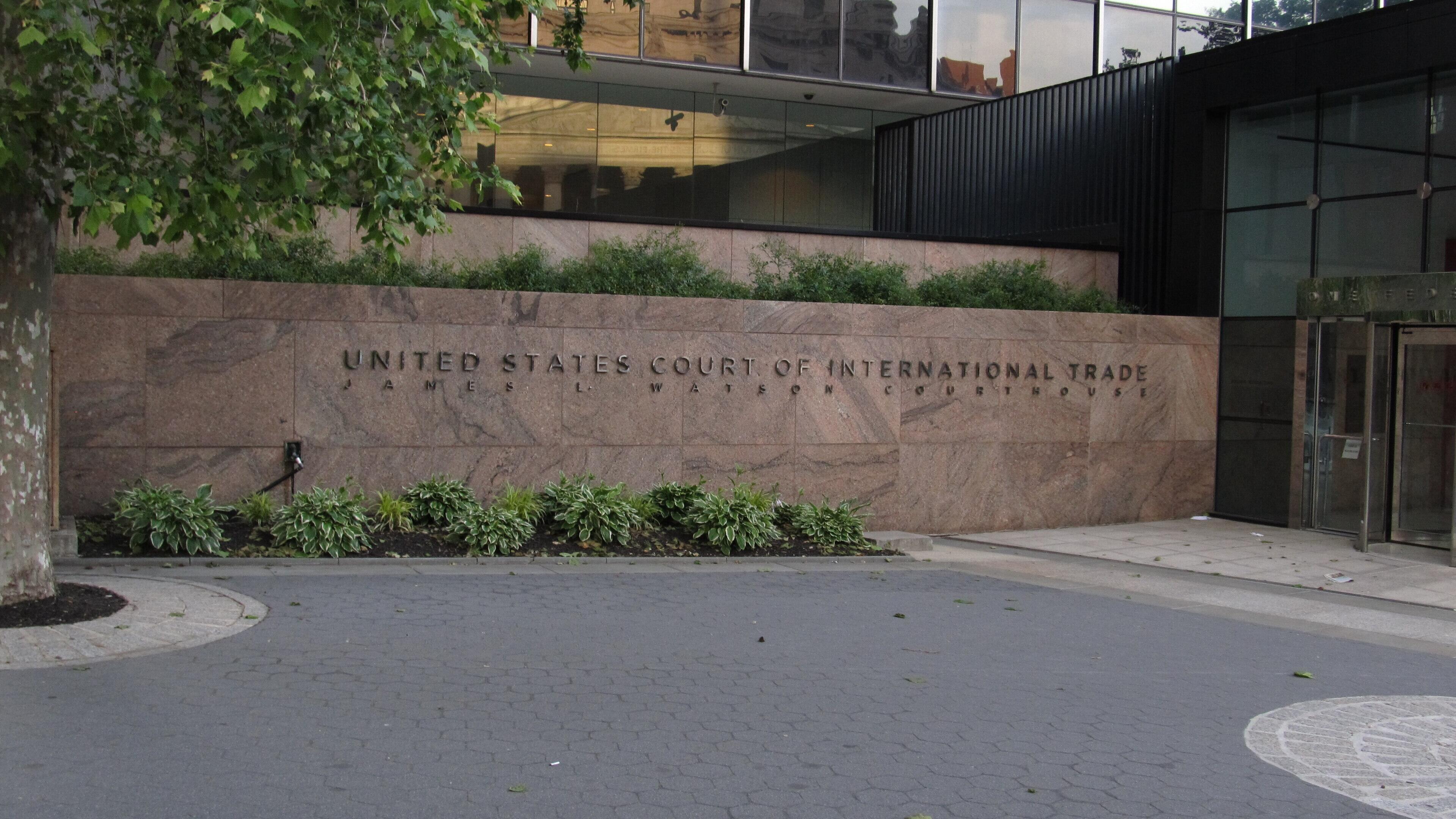
A United States trade court has dealt another setback to President Donald Trump’s tariff agenda, ruling that his temporary 10% global tariffs imposed under a decades-old trade law were unlawful, although the decision only blocks the duties for two importers and the State of Washington.
The U.S. Court of International Trade ruled 2-1 that Trump’s use of Section 122 of the Trade Act of 1974 to impose the tariffs was unjustified.
However, the court stopped short of issuing a nationwide injunction, meaning the levies will remain in effect for most importers while appeals proceed.
The tariffs are currently scheduled to expire in July.
The ruling represents another legal obstacle for Trump’s broader trade strategy and comes just one week before he is expected to discuss ongoing trade tensions with Chinese President Xi Jinping in Beijing.
It also sets the stage for a potentially lengthy legal dispute over tariff refunds only three months after the U.S. Supreme Court struck down Trump’s wider 2025 global tariffs imposed under national emergency powers.
Trump criticised the court decision and blamed “two radical left judges” for the outcome.
"So, nothing surprises me with the courts. Nothing surprises me," Trump told reporters, according to USA Today. "We get one ruling and we do it a different way."
Despite the setback, the Trump administration is continuing efforts to revive broader tariffs through Section 301 of the Trade Act of 1974, a provision aimed at addressing unfair trade practices and one that has survived repeated legal challenges.
The administration currently has three Section 301 tariff investigations underway, with findings due in July.
The New York-based Court of International Trade rejected requests from a coalition of 24 mostly Democrat-led states seeking a universal injunction that would have blocked the tariffs for all importers.

"Private plaintiffs make no specific arguments for a universal injunction … The potential for increased costs to one plaintiff is not an appropriate basis for the imposition of a universal injunction. Accordingly, the court declines to enter a universal injunction," the ruling stated.
The court determined that most of the states involved in the lawsuit lacked standing because they were not direct importers that had paid or could pay the Section 122 tariffs.
Washington state was treated differently after submitting evidence that tariffs had been paid through the University of Washington.
The two private plaintiffs in the case, toy manufacturer Basic Fun! and spice importer Burlap & Barrel, argued that the tariffs represented an attempt by the administration to sidestep the Supreme Court’s earlier decision invalidating Trump’s tariffs imposed under the International Emergency Economic Powers Act.
Following that Supreme Court ruling, Trump turned to Section 122, which permits temporary duties of up to 15% for a maximum of 150 days to address serious balance-of-payments deficits or prevent a sharp depreciation in the U.S. dollar.
Thursday’s decision concluded that the statute was not intended to address the type of trade deficits cited by the administration in Trump’s February order.
“This decision is an important win for American companies that rely on global manufacturing to deliver safe and affordable products. Unlawful tariffs make it harder for businesses like ours to compete and grow,” said Jay Foreman, chief executive of Basic Fun!
“We are encouraged by the court’s recognition that these tariffs exceeded the President’s authority. This ruling brings needed clarity and stability for companies navigating global supply chains," he added.
Jeffrey Schwab, who represented the importers, said the narrow application of the ruling created uncertainty over how the matter would unfold.
The Trump administration had argued that the United States faced a serious balance-of-payments issue, pointing to a US$1.2 trillion annual goods trade deficit and a current account deficit equal to 4% of gross domestic product.
However, former International Monetary Fund First Deputy Managing Director Gita Gopinath previously disputed that rationale, saying to Reuters: “We can all agree that the U.S. is not facing a balance-of-payments crisis, which is when countries experience an exorbitant increase in international borrowing costs and lose access to financial markets.”