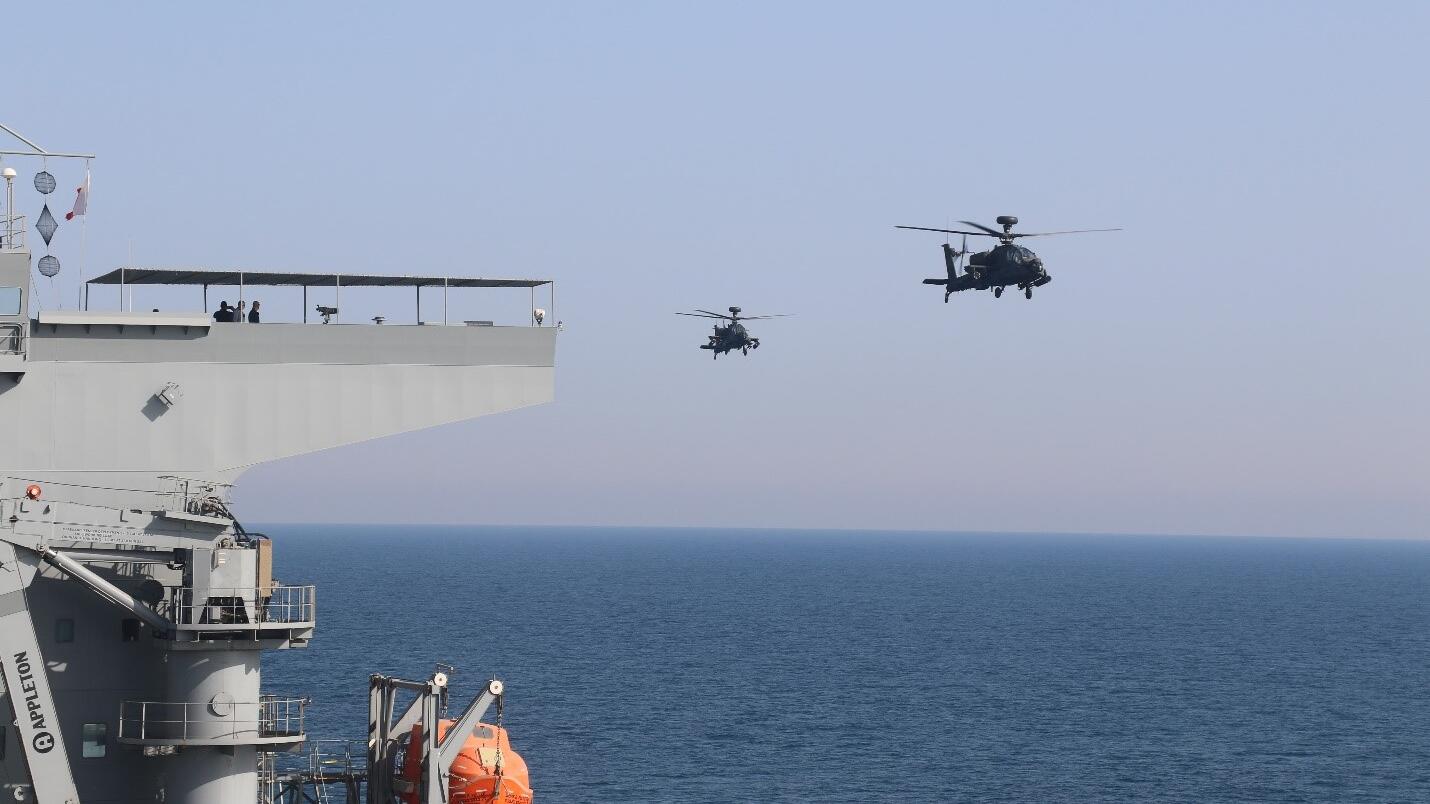
United States forces launched military strikes against Iran on Tuesday evening in retaliation for the downing of an American Army Apache helicopter, significantly escalating tensions in the Middle East and casting further doubt on prospects for a negotiated settlement between Washington and Tehran.
U.S. Central Command (Centcom) said the operation was conducted in response to the helicopter incident that occurred near the Strait of Hormuz.
The “self-defense strikes” are “a proportional response to unjustified Iranian aggression,” Centcom said in a post on X.
The military action was ordered by President Donald Trump after he earlier accused Iran of shooting down a U.S. Apache helicopter that had been patrolling the strategically vital waterway.
In a post on Truth Social, Trump said the two crew members survived the incident.
“The two pilots involved in the attack are safe and uninjured,” Trump wrote. “Nevertheless, the United States must, of necessity, respond to this attack.”
The latest confrontation threatens to unravel an already fragile ceasefire arrangement between the United States and Iran, which has been repeatedly tested by outbreaks of violence despite remaining technically in effect.
Iranian state media reported explosions in multiple locations around the Strait of Hormuz on Tuesday evening following the U.S. strikes.
Iran's Tasnim News Agency subsequently reported that Tehran would respond to the American military action.
Iran has not directly accepted responsibility for the downing of the helicopter. State broadcaster IRIB reported that no offensive military operations had been conducted in the strait during the previous 24 hours.
Earlier on Tuesday, before the U.S. strikes were launched, Iranian Foreign Minister Abbas Araghchi warned of the risks associated with foreign military forces operating near Iranian territory.
“Foreign forces in proximity to our territory are at constant risk on account of their own human errors, plain accidents, or potentially being caught in crossfire,” Araghchi said in a post on X.
“To reduce risk, best solution is for them to leave,” Araghchi said, adding, “We prefer language of diplomacy but speak other languages too.”
Peace deal hopes remain uncertain
Despite the military escalation, Trump continued to express optimism that a diplomatic breakthrough could still be achieved.
The president said a deal aimed at ending the conflict and preventing Iran from obtaining nuclear weapons could be reached within days.
Speaking to reporters after attending Monday's NBA Finals in New York, Trump said negotiators were finalising a “very, very good deal that will not in any way allow nuclear weapons”.
He also said the Strait of Hormuz would reopen “immediately” following any agreement.
According to Sky News Arabia, a draft agreement has been submitted to the United States for review and is considered “preliminarily acceptable” by the White House.
Trump reiterated late Monday that the two sides were nearing completion of a “very, very good deal” that would permanently prevent Iran from obtaining nuclear weapons and reopen the Strait of Hormuz.
Such a deal could be signed “in two or three days,” he said.
However, the president has repeatedly suggested throughout the conflict that an agreement was imminent, yet no formal deal has materialised. The war passed the 100-day mark on Sunday.

Lebanon conflict adds pressure
At the same time, fighting continues on another front involving Israel and the Iran-backed Hezbollah movement in Lebanon.
Israeli forces struck the southern Lebanese port city of Tyre, killing at least eight people in what was reported as the deadliest attack on the city since hostilities resumed in March after Hezbollah launched rockets into Israel.
The ongoing conflict in Lebanon has complicated Trump's efforts to transform the current ceasefire arrangements into a broader and more durable regional settlement.
Iran and Israel also exchanged airstrikes earlier this week, with two people reported killed in Tehran.
Axios reported that Trump had privately warned Israeli Prime Minister Benjamin Netanyahu against expanding military operations against Iran.
"I said, 'Bibi, you better be careful, or you will be on your own very soon.'"
Tehran has consistently maintained that any comprehensive peace agreement with Washington would depend partly on ending the fighting in Lebanon.
Meanwhile, Israeli troops operating near the Lebanese border in the Ramim Ridge area killed one person on Tuesday after returning fire during an incident, according to the Israeli military.
Israel has continued military operations against Hezbollah throughout the broader conflict, arguing that the Lebanon campaign should remain separate from any U.S.-Iran ceasefire arrangement. Hezbollah has likewise maintained attacks against Israeli targets.