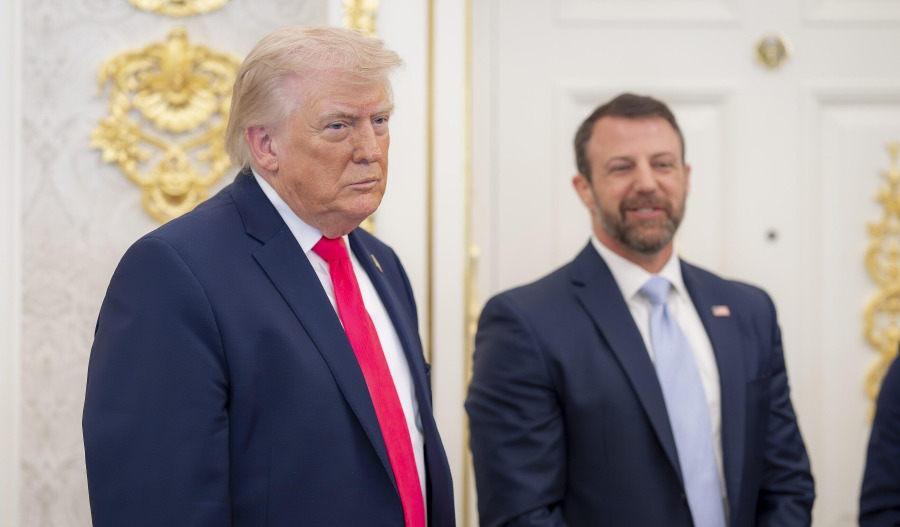
United States equity markets rallied strongly on Wednesday (Thursday AEST) after United States President Donald Trump announced a two-week suspension of military action against Iran, easing geopolitical tensions and sending oil prices sharply lower.
The Dow Jones Industrial Average surged 1,325.5 points, or 2.9%, to close at 47,909.9, marking its strongest daily gain since April 2025. The S&P 500 advanced 166.0 points, or 2.5%, to 6,782.8, while the Nasdaq Composite jumped 617.2 points, or 2.8%, to 22,635.0.
The rally followed confirmation that Washington and Tehran had agreed to pause hostilities after a five-week conflict that had disrupted energy flows through the Strait of Hormuz, a critical artery for global oil shipments.
Oil prices recorded steep losses as supply concerns eased. West Texas Intermediate crude futures plunged more than 16% to settle at US$94.41 per barrel, marking their largest daily drop since April 2020. Meanwhile, Brent crude fell around 13% to $94.75 per barrel.
“I agree to suspend the bombing and attack of Iran for a period of two weeks,” Trump said in a post on Truth Social. “We received a 10-point proposal from Iran, and believe it is a workable basis on which to negotiate.”
The ceasefire agreement is contingent on Iran reopening the Strait of Hormuz, with Tehran signalling it would allow passage for two weeks, provided all attacks cease.
However, uncertainty remains after Iranian officials indicated the agreement may already have been tested, with reports of disruptions to tanker traffic following regional strikes.
Markets extended gains after Trump added that the United States would work with Iran to remove nuclear material and explore potential tariff and sanctions relief, raising hopes of a broader diplomatic breakthrough.

Technology and semiconductor stocks, which had come under pressure during the conflict, led the rebound. The VanEck Semiconductor ETF rose 5.8%, while Broadcom climbed 5% and Micron Technology gained 7.7%.
Conversely, energy stocks retreated as crude prices slumped. Exxon Mobil lost 4.7%, and Chevron fell more than 4.3%, reversing gains accumulated during the conflict-driven oil rally.
Airline and travel-related stocks also moved higher despite ongoing uncertainty. Delta Air Lines rose 3.8% even after issuing a weaker-than-expected second-quarter profit forecast and withholding full-year guidance due to the geopolitical backdrop.
Peers Southwest Airlines and United Airlines climbed 6.7% and 7.9%, respectively.
In the leisure sector, Carnival Corporation surged 11.2%, while Norwegian Cruise Line gained 7.6%, as lower fuel costs and improved travel sentiment buoyed the sector.
Retailer Levi Strauss & Co. also jumped 10.7% after raising its full-year sales and profit outlook.
Meanwhile, minutes from the Federal Reserve’s March policy meeting indicated growing openness among policymakers to further interest rate hikes, as officials lifted their 2026 inflation forecasts in response to the oil price shock triggered by the conflict.
On the bond markets, yields edged lower, with the 10-year Treasury yield falling 0.1% to 4.295% and the 2-year yield declining 0.2% to 3.792%.