Negotiations between the United States and Iran have paused during funeral ceremonies for Ayatollah Ali Khamenei, despite recent comments from U.S. President Donald Trump and international mediators suggesting progress had been made towards a broader peace agreement.
Iranian President Masoud Pezeshkian paid tribute to the country's former supreme leader in a post on X, describing Khamenei's death as a defining moment while urging national unity.
Pezeshkian said Khamenei's death had caused widespread grief but insisted the country would endure.
He described Khamenei's death as "martyrdom" and said it was "the dawn of a new chapter of solidarity, steadfastness, and flourishing".
Iranian authorities have scheduled funeral ceremonies from 4 July to 9 July across Iran and Iraq, months after Khamenei was killed in an airstrike on the opening day of the U.S.-Israeli conflict with Iran on 28 February.
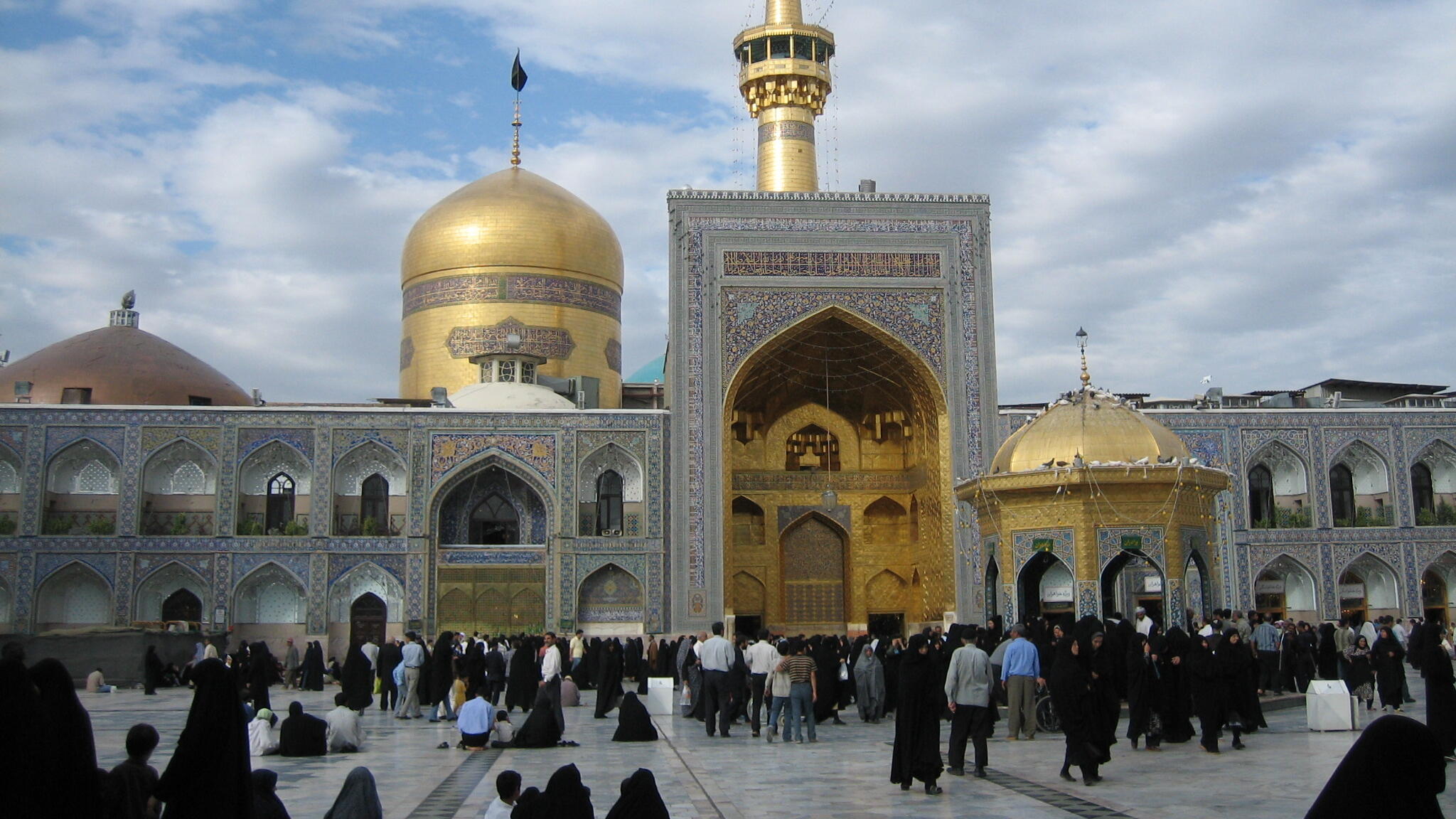
The ceremonies will be held across Tehran, Qom and Mashhad in Iran, as well as Najaf and Karbala in Iraq.
The pause in negotiations comes as Iranian Foreign Minister Abbas Araghchi renewed criticism of the United States' military presence in the Middle East, arguing it has undermined regional stability.
Responding on X to a post by US Central Command outlining a regional security meeting involving military officials from Bahrain, Egypt, Jordan, Kuwait, Lebanon, Oman, Qatar, Saudi Arabia, Syria, the United Arab Emirates and Yemen, Araghchi questioned Washington's role in the region.
"Has CENTCOM brought security or insecurity to our region? The answer is clear," Araghchi said on X.
The CENTCOM post highlighted a meeting led by Admiral Brad Cooper in Bahrain under the headline, "CENTCOM Leads Regional Security Dialogue with 12 Nations in Bahrain."
Araghchi, who remains one of Iran's senior negotiators in discussions with Washington, added that regional stability could only be achieved without external involvement.
"Peace in our region can only be sustained when comprehensive and inclusive, with no outside interference," Araghchi added in his post.
His comments have been interpreted by some observers as reflecting continuing tensions in negotiations despite earlier optimism from Washington and mediators.
Another point of disagreement remains the future administration of the Strait of Hormuz, one of the world's most strategically important shipping routes.

Iranian deputy parliament speaker Hamidreza Haji-Babai said the United States should acknowledge Iran's authority over the waterway.
"The Strait of Hormuz is a symbol of the Islamic Republic of Iran's authority, and the United States must respect the power of the Islamic Revolutionary Guard Corps in this strategic waterway," he told the state-owned IRNA news agency, according to reporting by CBS News.
The United States has consistently rejected any suggestion that Iran should impose tolls or restrict access through the strait.
Meanwhile, Oman, a US ally that also opposes tolls, has begun discussions with Iran on how administration of the waterway could be managed in the future.
Questions also remain over the timetable for a broader peace agreement.
A memorandum of understanding signed by the United States and Iran on 17 June gave both sides 60 days to negotiate a comprehensive settlement to formally end the conflict.
To date, negotiators have met only twice, once directly and once indirectly, with discussions now suspended during the funeral period.
The agreement identifies Iran's denuclearisation as one of its principal objectives, though analysts say little substantive progress has been made on the issue.
The memorandum allows the negotiating period to be extended by mutual agreement.
Robert Murrett, an academic and former U.S. Navy vice-admiral, told CBS News that "many of us expect that there will be extensions after the initial 60-day period".
Elsewhere in the region, Lebanon's President Joseph Aoun defended his government's negotiations with Israel while insisting the country would not surrender any territory.
"We will not relinquish a single inch of Lebanese land," he said in a statement posted by the presidency on X, "and let judgment be passed on us through implementation, for the goals we have set before our eyes do not differ from the goals of all Lebanese."
"I commend the tremendous effort exerted by the Lebanese negotiating delegation, both civilian and military, in the American capital," he added, referring to talks between Lebanon and Israel in Washington.
His comments followed remarks by Israeli Defence Minister Israel Katz, who said Israeli forces would remain in parts of Lebanon, Syria and the Gaza Strip within designated security zones "until further notice".
The negotiations have drawn criticism from Hezbollah, which has described the diplomatic process with Israel as "appeasement".