

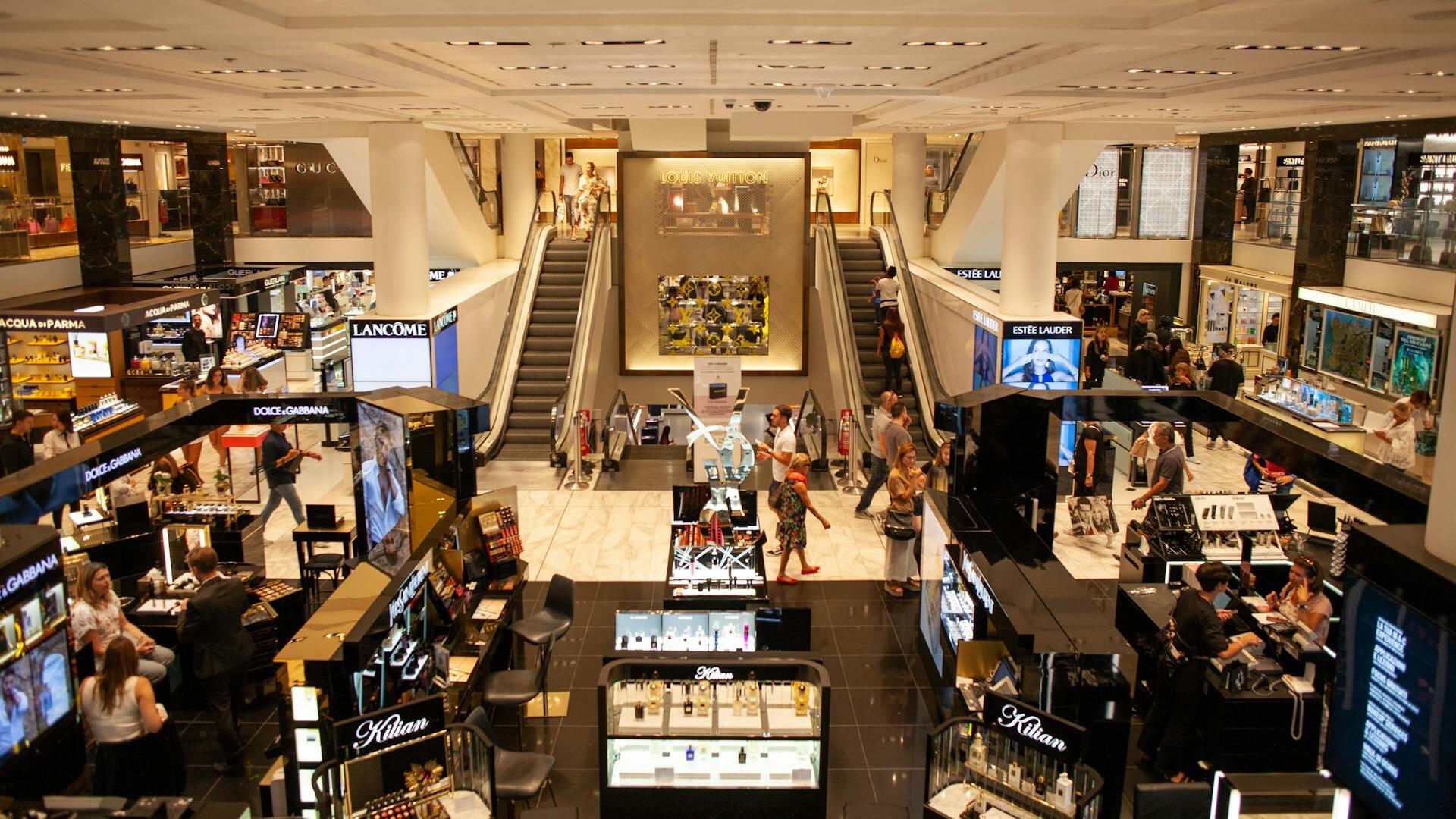
After carrying the economy on its shoulders for most of the year, American shoppers hit the brakes in December, the most important month on the retail calendar.
The official count showed retail sales unchanged from November, after a solid rise the month before.
Markets were expecting a rise of 0.4%, but instead, households chose caution.
Strip out a volatile like category cars, and the picture barely improves.
The message was clear: the holiday rush ran out of steam.
Consumer spending accounts for more than two-thirds of U.S. economic activity, so when shoppers pause, the entire system feels it.
December’s spending didn’t just stall; it fell behind rising prices.
Inflation lifted the cost of living again, meaning households bought less in real terms even if the dollars spent looked steady on paper.
Retail data isn’t adjusted for inflation, so flat sales in a rising-price environment quietly translate into shrinking volumes.
This explains why December felt weaker than it first appeared.
Consumers were paying more and getting less, and the gap between wages and prices remains narrow, especially for households without savings buffers or share portfolios to lean on.
The divide between those who can spend and those who can’t is becoming structural.
Wealthier Americans kept shopping through much of the year, buoyed by share market gains and rising asset values.
Meanwhile, lower- and middle-income households did not enjoy that cushion and pulled back as everyday costs stayed stubbornly high.
Economists call this a “K-shaped economy” - aka an uneven recovery where different income groups move in opposite directions - and December’s data underlined that imbalance.
Spending weakened on big-ticket and discretionary items - furniture, appliances, clothing - while essentials held up a little better.
The categories that rely on confidence fell away; furniture sales slid, electronics lost ground and clothing stores posted declines.
Even online sales barely moved, a surprise result given that it was the peak holiday season.
The strongest gains came from building materials and garden centres.
Buried inside the report was a quiet yet important signal that could have easily gone unnoticed.
A measure known as the “control group” - aka the slice of retail spending that feeds directly into GDP calculations - fell for the month.
That puts pressure on fourth-quarter growth forecasts and raises doubts about how durable the economy’s late-year momentum really was.
Earlier estimates suggested strong growth heading into year-end.
However, severe winter weather disrupted travel and retail activity late in the month, muddying the data.
Tariffs also weighed on prices for goods like appliances and home furnishings, pushing consumers to delay or downgrade purchases.
Meanwhile, uncertainty around jobs is creeping in.
Hiring growth has slowed, wage increases are easing, and upcoming employment data is expected to show only modest gains.
Labour costs are still rising, but at their slowest pace in years, which is good news for inflation control, yet less comforting for household income growth.
Some economists argue that December was merely a pause, with spending pulled forward into earlier months, followed by a natural lull.
However, others see something more concerning: fatigue.
Tax refunds may provide a short-term lift early in the year.
But without stronger real income growth, consumer spending is unlikely to regain its previous pace.
While December data didn’t signal a crash, it did, however, mark a shift.
After years of pushing through higher prices, American consumers finally blinked, and the rest of the economy has no choice but to pay attention.
